
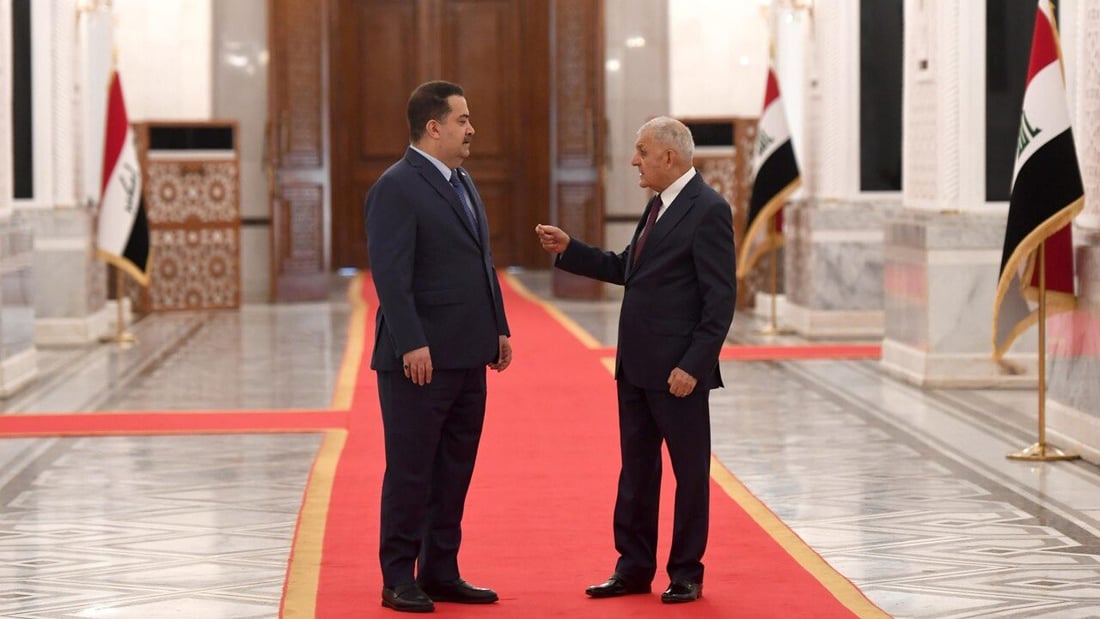
(Photo: Al-Sudani's media office)
Monitor
PM Sudani, President Rashid: ‘state resources must not be used for electoral purposes’
BAGHDAD — Prime Minister Mohammed Shia Al-Sudani and President Abdul Latif Jamal Rashid emphasized Wednesday that government positions and public resources must not be used to sway voters in Iraq’s upcoming parliamentary elections, warning that such practices could undermine trust in the democratic process.
In a joint meeting in Baghdad, the two leaders discussed the country’s political climate and preparations for the Nov. 11 elections, stressing that “state resources—both human and material—must not be used for electoral purposes,” according to a statement from Al-Sudani’s media office. They also said that “government positions must not be exploited to influence voter will.”
The warning follows increased scrutiny from civil society organizations over electoral abuses. Earlier this month, Hogir Chato, general coordinator of the Shams Network for Election Monitoring, said vote buying had become more blatant and coercive in the run-up to the elections. In some areas, he said, observers have documented what he called “the purchase of entire candidates.”
Iraq’s Independent High Electoral Commission has since formed monitoring committees to track violations, warning that political entities involved in buying or selling biometric voter cards or misusing state assets could face criminal prosecution and be barred from running.
The sixth Council of Representatives is scheduled to be elected on Nov. 11, 2025, with campaigning set to begin on Oct. 9.
Iraq’s parliament consists of 329 seats.
Statement from Al-Sudani’s media office:
Prime Minister Mohammed S. Al-Sudani met today, Wednesday, with President Abdul Latif Jamal Rashid. The meeting focused on the overall situation in the country, emphasizing the importance of safeguarding Iraq’s sovereignty and supporting the government’s efforts to address the various challenges facing the region, as well as taking firm action against violations targeting the security and safety of citizens.
The two sides also reviewed mechanisms for cooperation between the three presidencies to enhance institutional performance, advance key sectors, and improve the living and service conditions for Iraqi citizens.
The meeting also addressed the administrative and financial matters between the federal government and the Kurdistan Regional Government, with both sides affirming the need to continue working on solutions following the constitutional and legal frameworks in force, in a manner that ensures social justice and sustainable development. Emphasis was placed on the need for unified positions and visions among all national forces and parties, and prioritizing Iraq’s higher interests.
The meeting further reviewed the ongoing preparations for holding the upcoming parliamentary elections on schedule. It was stressed that state resources—both human and material—must not be used for electoral purposes, and that government positions must not be exploited to influence voter will. These measures are essential to bolster public trust in the democratic process, ensure election integrity, and encourage active participation so that the results reflect the true will and aspirations of the Iraqi people and preserve the country’s democratic path.