
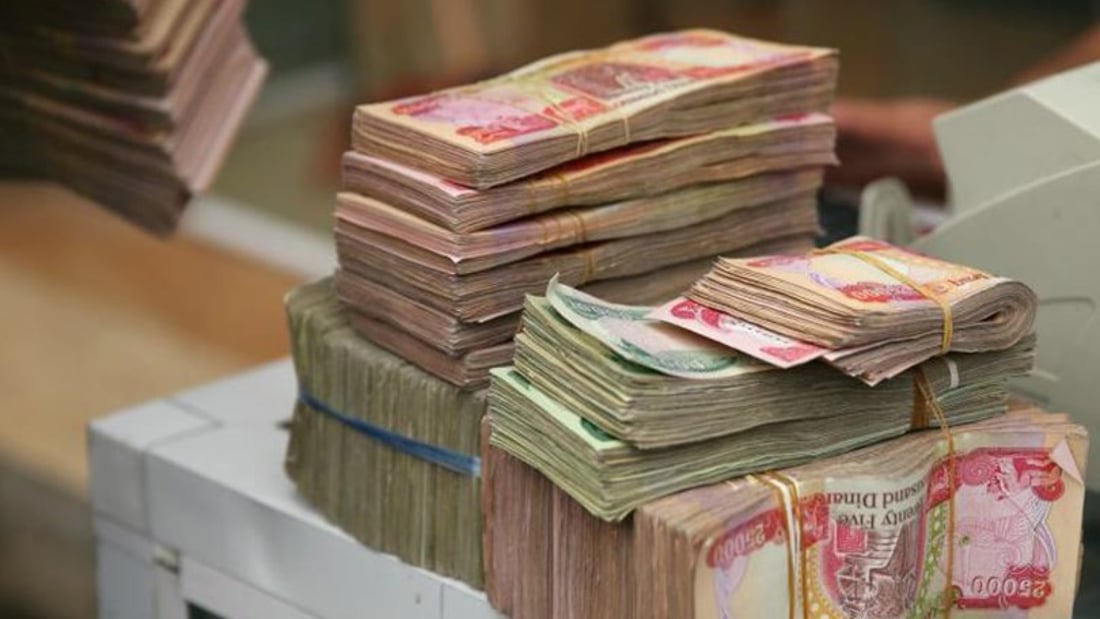
Stacks of Iraqi dinars are seen at a money exchange office
Media monitor
Marsoumi questions record 217 trillion dinar “crisis budget” after devaluation
BAGHDAD — Economist Nabil al-Marsoumi criticised the government for devaluing the dinar while preparing a 217 trillion dinar budget for 2027, the largest in Iraq’s history, saying citizens were being made to pay for years of mismanagement.
“The government prepared a new budget and changed the dollar exchange rate, calling it a crisis budget. How can a crisis budget amount to 217 trillion dinars, the largest in Iraq’s history?” he told Al-Rabiaa TV. “If you have a crisis paying salaries, how can you increase salaries and social welfare in the new budget from 90 trillion to 101 trillion dinars?” Operating spending in the draft exceeds 160 trillion dinars, he said, accusing the Finance and Planning ministries of preparing a budget that did not reflect the country’s finances.
The new rate would raise about 10 to 11 trillion dinars a year, he estimated, an amount he said could be found elsewhere, from customs duties and better tax collection. “The government chose to change the exchange rate because it is the fastest and most effective option, spreading the pain across everyone,” he said. “They want citizens to bear the cost of 25 years of mismanagement of economic policies, during which successive governments failed to invest surplus funds in many years and neglected numerous solutions.” He also asked what had become of revenue from state-owned property he valued at more than 100 trillion dinars.
“With this decision, employees have lost 15% of their salaries or more in purchasing power, because we do not yet know how large the cumulative impact will be,” he said. On the parallel market, where most retail prices are set, $100 was already selling for 160,500 dinars before the change, above the new official rate of 1,520 per dollar.
The Central Bank’s media director said on Wednesday that proposals had gone as high as 1,900 dinars and that financing salaries had been depleting reserves. Marsoumi himself reported on Sunday that revenues had covered only 76% of salaries and welfare in the first seven months of the year.