
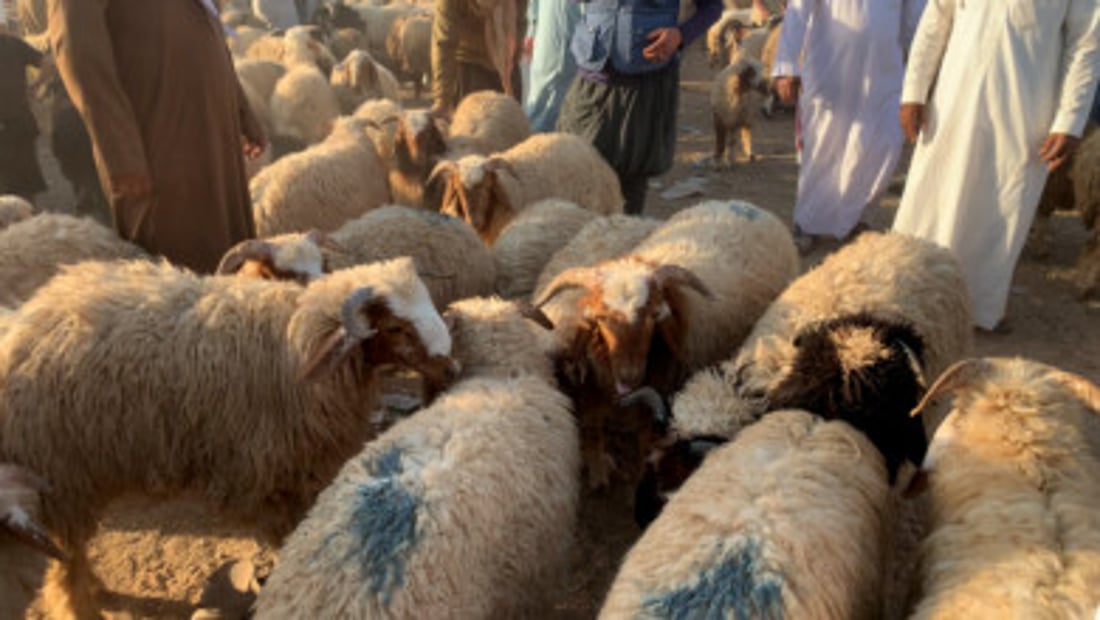
Sheep are offered for sale at the Barghiliya livestock market in Ayadiyah, western Nineveh governorate. (Photo: 964media)
Sheep prices climb west of Mosul as imports stay scarce
NINEVEH — Sheep prices have risen sharply at the Barghiliya livestock market in Ayadiyah, west of Mosul, with a pair of lambs going for around 800,000 dinars and some animals fetching more than a million, traders say, while imported sheep remain scarce despite the reopening of the Rabia crossing with Syria.
Some sheep in higher demand are selling for as much as 1.5 million dinars, about $980, said trader Khudair Abu Ahmed, who called the rise “strange and unusual” and said prices have been shifting week to week. Most animals come from western Nineveh, the Jazira region and the surrounding area, he said, with Iraqi sheep among the most expensive and sought after.
Lambs start at around 400,000 dinars and reach a million a head depending on type, size and quality, said trader Fadhil al-Araouri, with some sheep at about 1.2 million and ewes with lambs as much as 1.6 million, roughly $1,050. Buyers come from Baghdad, Mosul, Tal Afar and Ayadiyah, and animals at Barghiliya and Rabia are sold by the head while some Mosul markets price by weight.
The prices have squeezed the trade. A Baghdad trader, Abbas, said buying at these levels leaves little profit for anyone moving animals to the capital, blaming limited supply and higher feed and transport costs, and said meat at around 20,000 dinars a kilogram — about $13 — does not necessarily leave butchers and traders enough after purchase and transport.
Supply from Syria has been restricted since the spring. The Agriculture Ministry suspended livestock transit from Syria toward Iraq and the Gulf in late May after foot-and-mouth outbreaks in several Syrian governorates, and in June held a shipment of 1,750 cattle at the Trebil crossing with Jordan after veterinary authorities found the animals infected. Iraq had its own major outbreak earlier in 2025.