
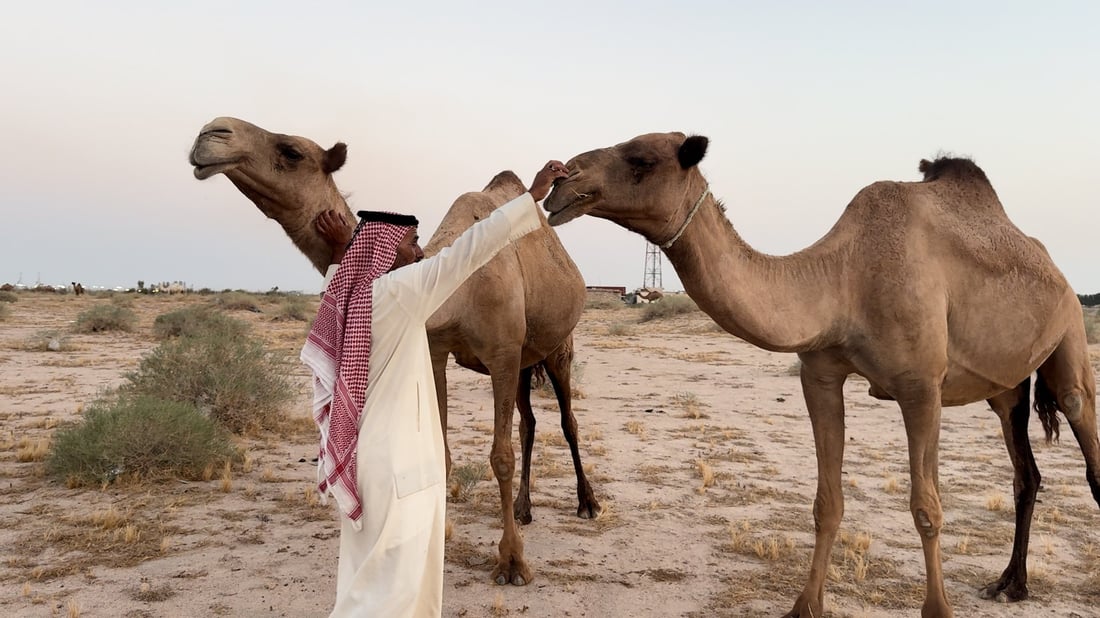
A herder keeping a 300-year Iraqi camel line off the Gulf market
BASRA — In the desert near the Kuwaiti and Saudi borders, Falih Ankazz keeps about 100 camels including the Shabibiya, an Iraqi line he says Bedouin families in the south have maintained for more than 300 years, and which he refuses to sell despite buyers in Kuwait and the Gulf.
The line came from his parents and grandparents and is tied to the Al-Sawalim community, he told 964media. Other old Iraqi lines survive among the Al-Saadoun, Al-Jasham and Al-Muntafik, though numbers have fallen sharply.
The Iraqi animals are adapted to the south’s heat, humidity and colder winters, and are lighter and more agile than the black Majahim raised in Kuwait and elsewhere in the Gulf, he said. They also behave differently, preferring open grazing and constant movement. “The camels like to wake up in one place and spend the evening in another,” Ankazz said. Their mood shifts around midday when they become keener to move, and they form close bonds with a herder over years — he compared their loyalty to soldiers, saying some will gather around him when they sense danger and a herder under threat can shelter inside the herd.
A hundred females produce around 50 calves a year. Camels start at about 3 million dinars in southern Iraq, roughly $2,000, and a good breeding male can exceed 20 million, about $13,000, depending on lineage. Old Iraqi lines fetch far more in the Gulf: Ankazz said a rare Iraqi female recently sold in Kuwait for about 60,000 Kuwaiti dinars.
He does not sell from the old line, treating the animals as a family inheritance and part of the life he was raised in.