
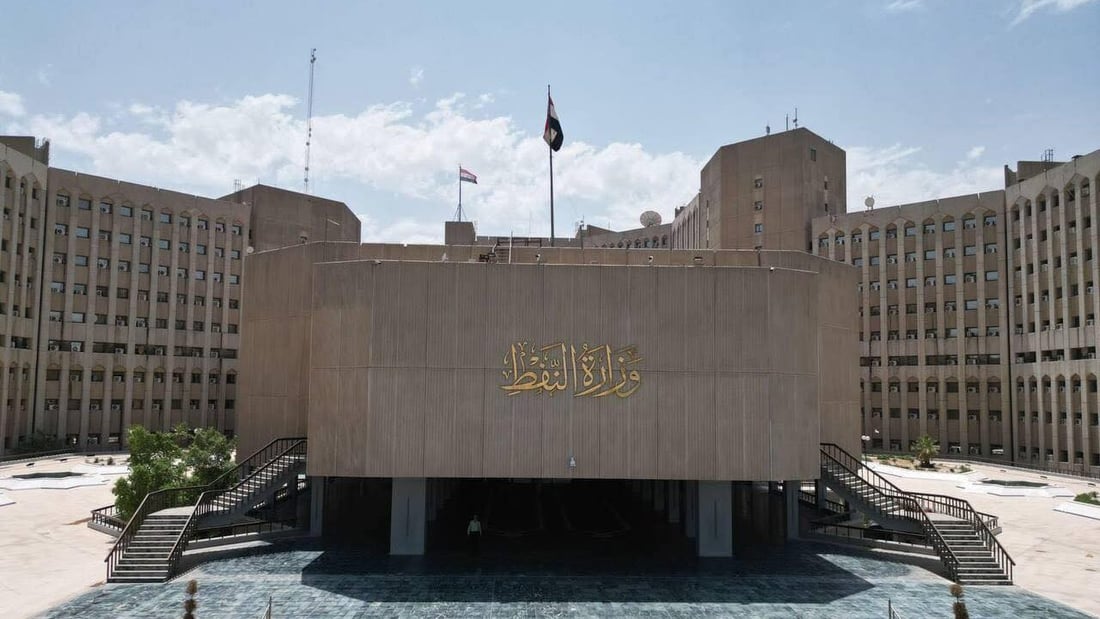
Iraq's Ministry of Oil headquarters
Zaidi sets 10 million barrel a day target for 2030
BAGHDAD — Iraq is aiming to produce about 10 million barrels of oil a day by 2030, roughly triple its pre-war output, under a strategy the prime minister reviewed with senior Oil Ministry officials.
Ali al-Zaidi chaired the meeting on the 2027-2030 plan, attended by the finance and oil ministers, his office said. Production should match the size of Iraq’s reserves, its capabilities and its population, he said, directing officials to make full use of associated gas to meet domestic energy needs and eventually end gas imports. The plan calls for increased output from Kurdistan Region fields and expanded exploration, and Zaidi told the ministry to prepare a conference for major international companies to attract investment and technology.
The target is a long way from current output. Iraq exported about 526,000 barrels a day in May and June, against roughly 3.3 million before the war, and 10 million would be around the level Saudi Arabia produces. Oil Minister Bassem al-Abadi said in July that Iraq was in talks with OPEC to raise its production quota and export ceiling: “The current government insists that Iraq should receive the share it deserves.”
The ministry signed seven agreements with international companies during Zaidi’s visit to Washington, Abadi said, with HKN developing the Hamreen fields, Chevron taking on West Qurna 2, previously run by Lukoil, along with four exploration blocks near Nasiriyah and the Balad field, and Halliburton taking over Nahr Bin Omar and Sindbad. A consortium of Chevron, TI Capital and Qatar’s UCC is to develop pipeline infrastructure.