
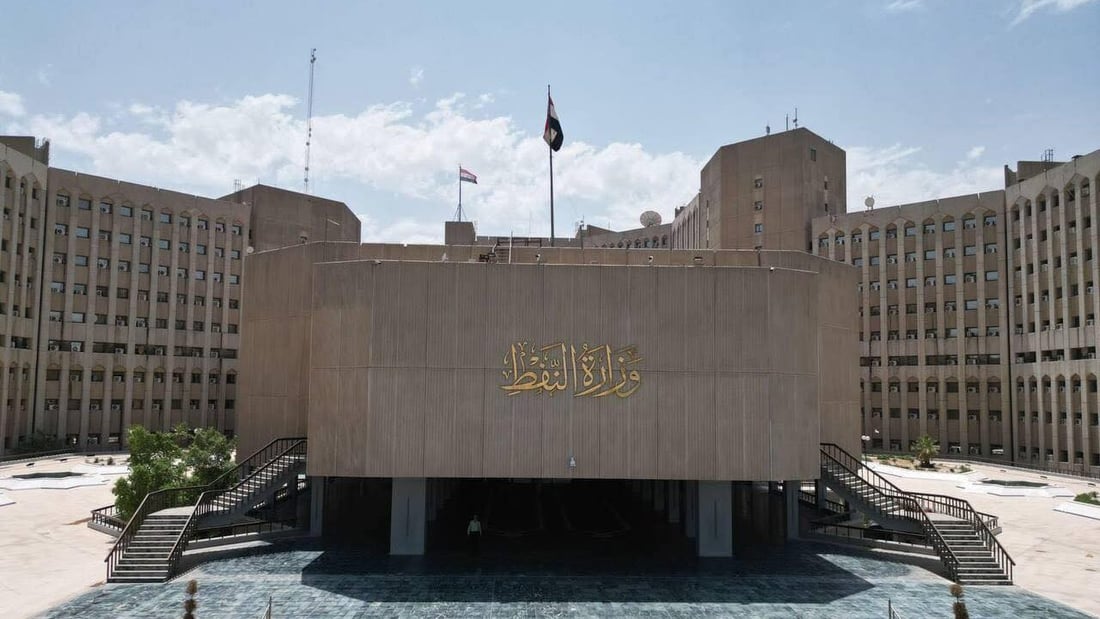
Iraq's Ministry of Oil headquarters
Iraq denies OPEC exit reports, says government remains committed to quota review
BAGHDAD — Iraq’s Oil Ministry on Thursday denied reports that Baghdad was threatening to leave OPEC if its production quota was not increased, saying such claims do not reflect the government’s official position.
The ministry said neither Prime Minister Ali Al-Zaidi nor the government had raised the issue of withdrawing from the producers’ group.
“What was raised regarding Iraq threatening to end its membership in OPEC does not reflect the official position of the Iraqi government,” the ministry said. “The prime minister or the Iraqi government did not raise the issue of withdrawal.”
The statement followed reports this week suggesting Iraq could suspend or end its OPEC membership unless the organization increased the country’s production quota.
The ministry reiterated that Iraq has consistently called for a reassessment of production ceilings to better reflect members’ sustainable production capacity, in line with OPEC agreements and Iraq’s security and economic circumstances.
It said OPEC and its allies have already commissioned an independent review of members’ maximum sustainable production capacity, with Iraq participating, and have begun gradually restoring previously reduced output. Iraq is expected to recover its full voluntary production cuts over the coming months, increasing its production ceiling, the ministry said.
Reuters reported Thursday, citing a senior Oil Ministry official, that Iraq would study all available options if its quota was not increased and that officials had discussed leaving OPEC, while preferring to remain if granted a larger quota.
Separately, journalist Hadley Gamble wrote on X that Al-Zaidi told her in an interview, yet to be broadcast, that Iraq would consider “suspending” its OPEC membership if it could not produce in line with its capacity.
The National also reported, citing Oil Ministry spokesperson Salim Al-Rikabi, that Iraq could leave OPEC if its request for a higher quota was not granted. “If that does not happen, there will be a decision regarding staying in or exiting the organisation,” he is quoted by The National as saying.
Asked by 964media about the apparent discrepancy, Rikabi said: “The ministry’s statement is clear and reflects the government’s official position.”
The ministry said member states recognize Iraq’s circumstances after decades of wars, sanctions and attacks on its oil infrastructure, and that Baghdad aims to restore its position as OPEC’s second-largest producer through the organization’s technical and consensus-based mechanisms.
The United Arab Emirates quit the producers’ group on May 1 after a long-running dispute over production quotas, becoming the largest producer ever to leave the organization.
Iraq, OPEC’s second-largest producer, has long argued its production quota should better reflect its expanding production capacity.