
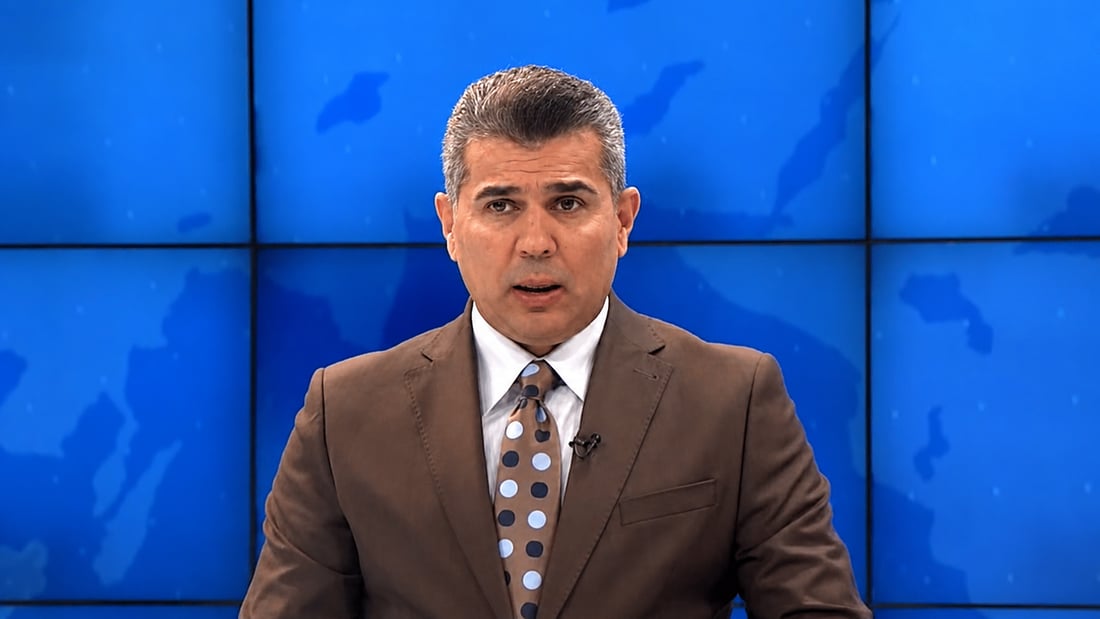
Security Media Cell chief Lt. Gen. Saad Maan
Army hands city centre security to police in four northern governorates
BAGHDAD — Responsibility for security in city centres in Diyala, Salah al-Din, Nineveh and Kirkuk is being transferred to the Interior Ministry, and an operations command has been moved from Salah al-Din to the Muthanna desert, the Security Media Cell chief said in an account of the government’s first 100 days.
Operational sectors have been reorganised according to the nature, scale and location of threats, Saad Maan said, with the East Salah al-Din Operations Command renamed the Badia Operations Command and its area of responsibility set in the desert of Muthanna.
Air defence has become a priority, he said, citing Prime Minister Ali al-Zaidi’s Aug. 13 visit to the Air Defence Command. “The commander-in-chief directed the adoption of a multi-year development plan, the acceleration of procurement contracts and linking the air defence development project to the project for protecting air sovereignty.” Iraq is also setting up intelligence coordination channels and centres with neighbouring countries and tightening control of its borders.
On weapons, Maan said the policy had moved “from being a political slogan to a clear and defined government path,” aimed at establishing that security and military decisions issue exclusively from state institutions and preventing multiple centres of decision-making. The government has also held that Iraqi territory “must not be a launching point for any attack on neighboring countries or an arena for settling scores and regional conflicts.”
The July 22 order merging the Joint Operations Command with the Office of the Secretary to the Commander-in-Chief created the Office of the Commander-in-Chief of the Armed Forces, which Maan said brings information, decision-making and follow-up into one headquarters and handles direction, monitoring and evaluation while ministries and specialised commands keep planning and implementation.
Zaidi said in Washington in July that there would be no justification for armed factions after Sept. 30, when the coalition mission ends. His security adviser said in late August that the date marks the start of talks rather than a deadline for handing over weapons.