
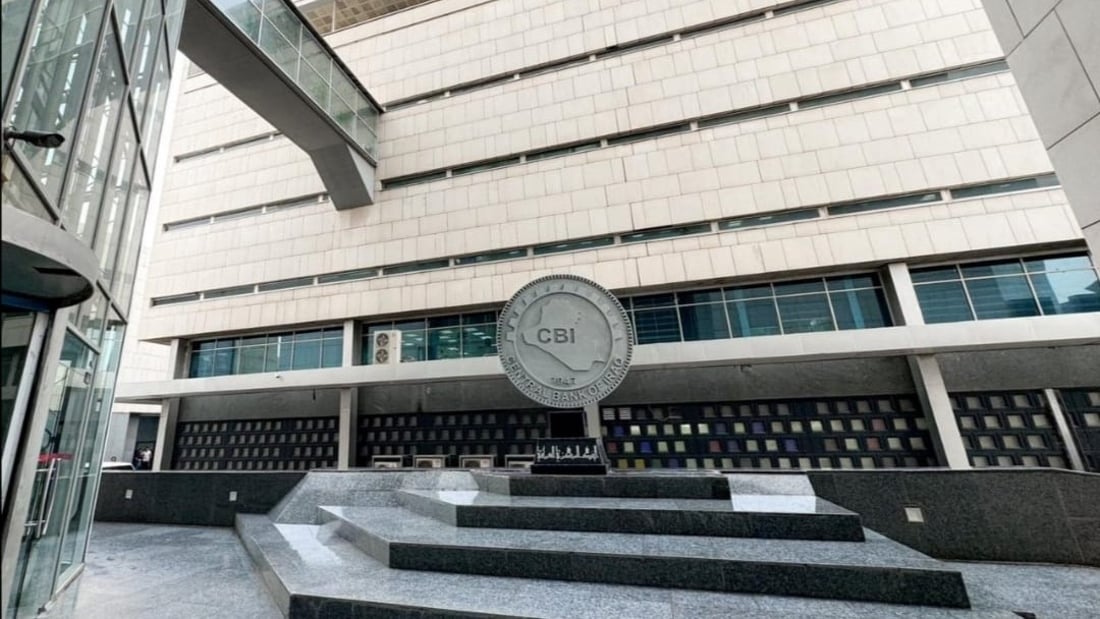
The Central Bank of Iraq Building
Iraqi banks told to build databases of politicians and relatives to the third degree
BAGHDAD — Iraqi banks have been directed to build databases covering politicians and their relatives to the third degree as part of tighter scrutiny of politically exposed persons, banking and regulatory sources told 964media.
The instruction reached banks through the Central Bank and covers transfers, beneficial owners, commercial activity and sources of funds, the sources said. “The Central Bank directed Iraqi banks to work on establishing dedicated databases for politicians and their first-, second- and third-degree relatives, as part of know-your-customer procedures and enhanced monitoring of sources of funds and account activity,” a financial source said, speaking on condition of anonymity.
Personal security staff may be added. “Discussions are also moving toward including personal security personnel within the scope of monitoring, after cases were recorded in which the names of security personnel or associates were used to conduct transactions or move funds on behalf of political figures,” the source said.
The requirements draw on Financial Action Task Force recommendations and the U.S. Treasury, according to the source, with attention also on individuals and companies previously linked to money smuggling, to keep the banking system from being used for transfers that could route around sanctions on Iran. Each bank will build its own database first, updating classification and risk data, with information-sharing between banks considered later so politicians can be identified more quickly when accounts are opened or transfers made.
The Federal Commission of Integrity will take part, the source said, “given that it possesses financial disclosure data for officials and political figures,” allowing declared finances to be compared against account activity where indicators emerge.
The Central Bank issued a directive on Aug. 29 requiring banks and financial institutions to apply due diligence to accounts linked to politically exposed persons. The timing coincides with a U.S. push against Iranian financial networks: the Treasury sanctioned networks across several countries on Aug. 7 that it said moved hundreds of millions of dollars for Iran through shadow banking, and Treasury Secretary Scott Bessent warned Iran’s trading partners on Aug. 24 about expanded secondary sanctions and the risk of losing access to the U.S. financial system.