
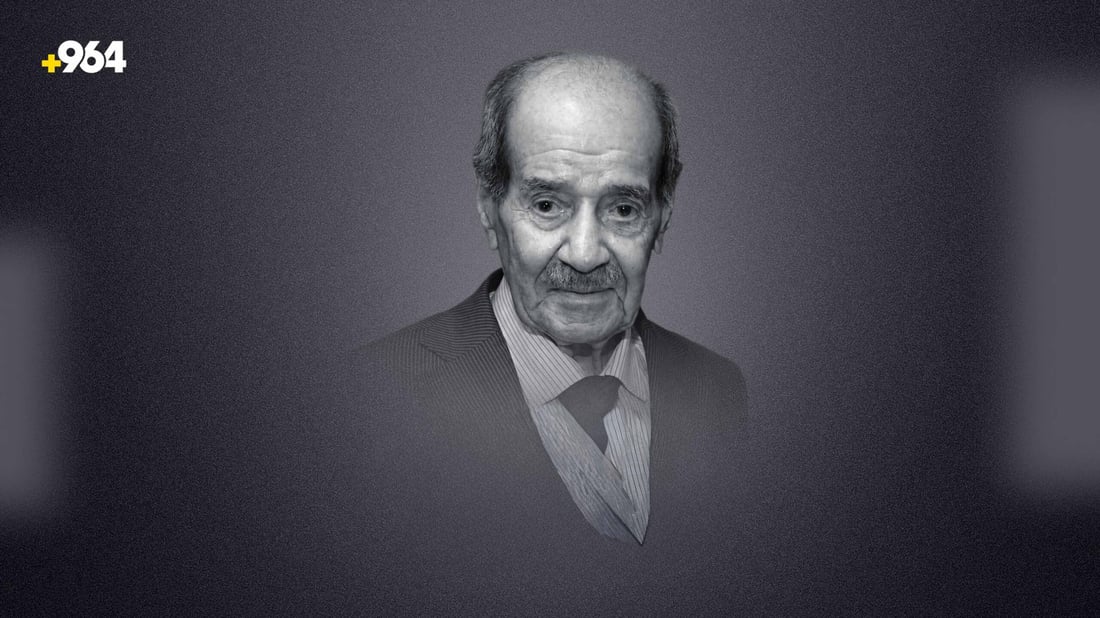
Renowned Kurdish writer and novelist Hussein Arif, who died Wednesday at the age of 90.
Hussein Arif, Kurdish novelist and Rwanga movement co-founder, dies at 90
SULAYMANIYAH — Hussein Arif, the Kurdish novelist and short story writer who helped found the Rwanga literary movement, died late Wednesday in Sulaymaniyah at the age of 90.
Born in the city in 1936, he was known above all for his novel “The City,” or Şar, published in 1986. It covers 16 years from 1942 to 1958 and is bound up with Sulaymaniyah and the political and social life of the city in that period. He also wrote the short story collection “The Wolf Pack” and the collection “Sweet Tea,” along with dozens of stories and literary essays. Researchers have pointed to his use of Kurdish history as a recurring element, worked into his narratives rather than set out as history.
Arif was among the founders of Rwanga, the literary group that emerged in 1970 with Sherko Bekas, Jalal Mirza Karim, Kake Mem Botani, Jamal Sharbazheri and others. Its programme called for literature that reflected contemporary ideas and Kurdish society within the wider human experience, and it shaped the direction of Kurdish writing that followed. The group published three issues of a magazine of the same name. Arif later worked with Bekas, a friend and colleague, on establishing and developing the Sardam Printing House. Bekas died in 2013.
He served in the first Kurdistan Parliament after the 1991 uprising, and during the civil war of the 1990s joined other members in a sit-in lasting about a month, calling for an end to the fighting between the parties.