
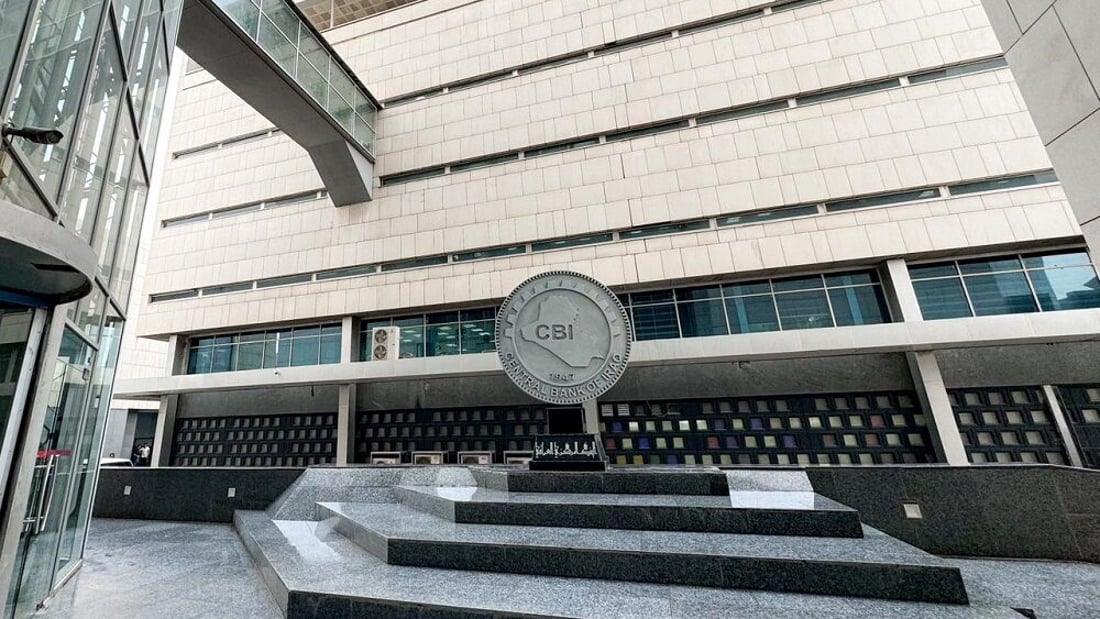
The Central Bank of Iraq (CBI) headquarters in Baghdad
Foreign Payments Guaranteed
Iraq’s Central Bank tells traders to report stalled pre-devaluation transfers
BAGHDAD — The Central Bank of Iraq on Thursday told traders whose import payments have not reached suppliers abroad to check with their banks or complain, saying it was still funding transfers approved before the Oct. 7 devaluation.
In a statement, the bank said it would keep meeting banks’ requests for foreign currency to finance imports of goods and services at the official rate of 1,520 dinars per dollar. It also said it was still covering foreign transfers that meet its rules and fall under funding it approved for banks before Oct. 7. Its departments are following up with the banks to make sure the money reaches recipients.
Traders and companies whose transfers are delayed should ask the banks that submitted their requests for the reason, or file a complaint on the Central Bank’s online complaints platform, the statement said. It did not say how many transfers were held up or how much money was involved.
The bank has addressed the same transfers twice before. On Oct. 10 it told traders whose import transfers were due before Oct. 7 to check with their banks that the payments had gone through. It said it had already funded the banks’ accounts to cover those payments and would make sure traders were not charged the difference in the exchange rate.
On Oct. 20, it said it had processed all pending import transfer requests that met its conditions, and that it would act against banks that delayed transfers without reason or demanded extra payments.
On Tuesday, the Central Bank renewed its warning to banks and electronic payment companies not to add unjustified fees or margins to dollar transactions for traders and travelers. Banks buy dollars from the Central Bank at 1,510 dinars and may keep 10 dinars per dollar for profit and commissions when they sell at 1,520, Mahmoud Dagher, an adviser to the Central Bank governor and the bank’s spokesperson, said in an interview with Al-Rabiaa TV.
“The Central Bank provides dollars at the official rate to traders and travelers, and to every registered trader who has documents and bank accounts,” Dagher said. He said some of Iraq’s trade is with countries where it has no correspondent banking ties, the links banks use to move money abroad, which makes it hard to supply dollars for that trade.
The government devalued the dinar on Oct. 7, raising the official public rate to 1,520 dinars per dollar from 1,320 and making the dollar about 15% more expensive. The Central Bank now buys dollars from the Finance Ministry at 1,500 dinars and sells them to banks at 1,510.
The parallel market has stayed well above the official rate. Baghdad exchange shops sold $100 for 169,500 dinars on Thursday morning, about 11.5% more than the official 152,000.