
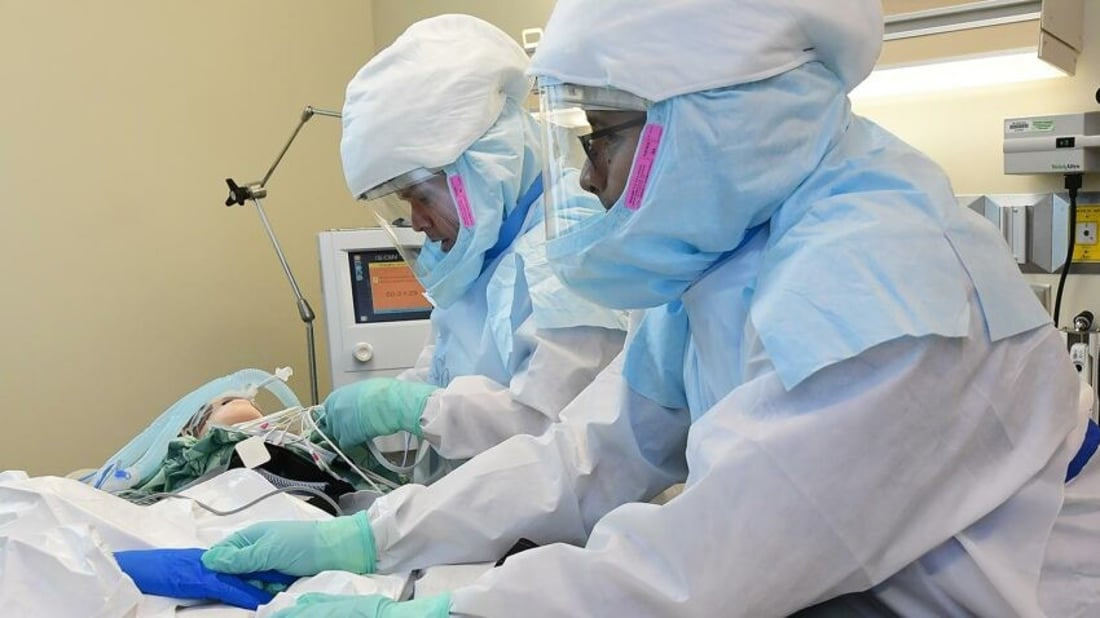
FILES: Medical staff wearing protective suits treat a patient under intensive care precautions for hemorrhagic fever.
Iraq records 313 hemorrhagic fever cases and 24 deaths this year
BAGHDAD — Iraq has confirmed 313 cases of hemorrhagic fever and 24 deaths so far this year, already more cases than it recorded by late September last year, though the death toll is well below the 42 reported over the same period in 2025, the Health Ministry said Thursday.
Fourteen new cases and one death, in Nineveh, were recorded this week, spokesperson Saif al-Badr said. The new cases were in Basra, Najaf, Nineveh, Dhi Qar, Maysan, Baghdad, Babil, Erbil, Diwaniyah and Karbala.
Dhi Qar accounts for more than a third of the national total with 119 cases and nine deaths. Basra has 31 cases and one death, Maysan 23, Muthanna 21 with two deaths, Nineveh and Diyala 18 each and Baghdad-Rusafa 17. Duhok is the only governorate with no recorded infections.
The disease is seasonal, peaking in warmer months when contact with livestock rises and animals are traded and slaughtered more often. It is carried by ticks and spreads through contact with the blood or tissue of infected animals.
Badr said early symptoms are fever, headache, body aches and fatigue, with some cases progressing to hemorrhagic symptoms, and urged anyone with symptoms to seek treatment immediately, particularly butchers, livestock breeders and traders. He said people should buy meat only from licensed slaughterhouses, avoid slaughtering in residential areas, wear protective clothing and gloves when handling livestock or meat, control ticks, wash hands and disinfect equipment, and freeze and thoroughly cook meat.
The ministry is running awareness campaigns and working to strengthen early detection and treatment with veterinary and regulatory authorities, he said. Iraq’s National Center for Crisis and Disaster Management declared a nationwide state of readiness in early June to curb the spread.