
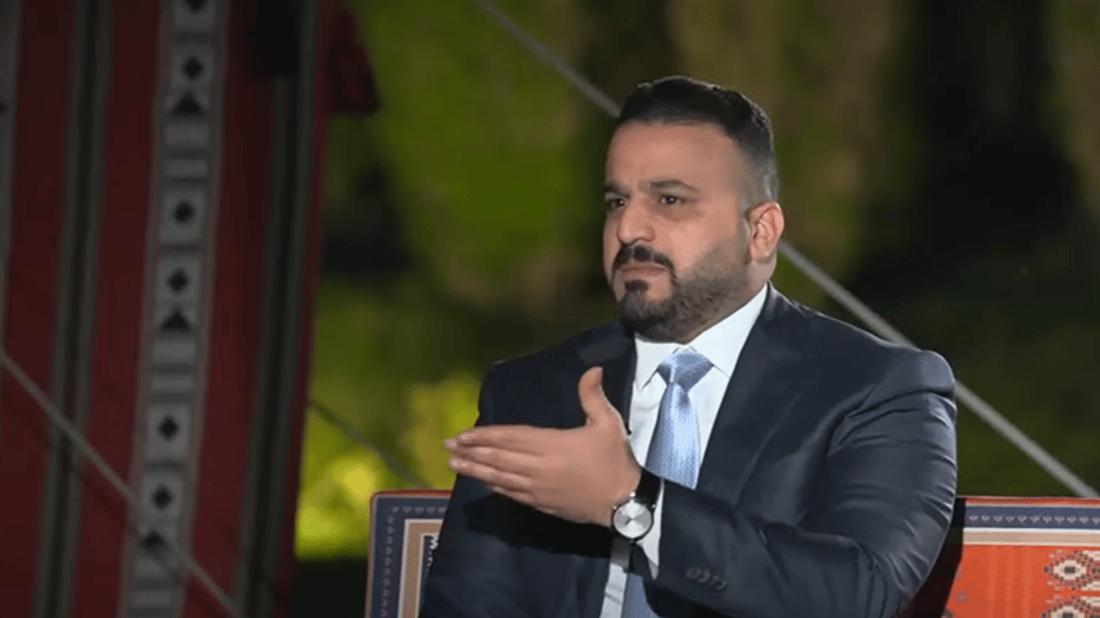
Former Iraqi MP Sajad Salem
Media monitor
Ex-MP questions weapons handover, alleges faction holds billions abroad
BAGHDAD — A former Iraqi lawmaker has questioned the transparency of Iraq’s weapons handover process, describing the measures as “unclear” and raising pointed questions about what weapons exist, who holds them and what will happen to the Popular Mobilization Forces.
Speaking on Al-Rasheed TV, Sajad Salem said “the measures are unclear and their results are also unclear,” asking how many weapons are involved, what type and scale, and whether combat forces will be dismantled or remain intact. “What guarantees are there that these weapons will not return in the event of the simplest confrontation, or at an Iranian request?” he said.
Salem argued that the mechanisms for surrendering weapons remain undefined and accused those involved of playing for time. “The mechanisms for handing over weapons are unclear and appear to be a process of procrastination and delay to buy time before the United States,” he said, adding that “we have lost national dialogue” on the issue and that no supervisory committee exists to resolve it at a national level.
He linked the process to broader US policy toward Iran, describing armed factions as “clearly classified as followers or agents of Iran in Iraq,” and claimed some factions have increased communication with US officials in an effort to remove Treasury Department sanctions, saying the only mechanism for doing so is “providing information about others.”
Salem also alleged that one unnamed Iraqi armed faction holds assets worth between $6 billion and $10 billion outside Iraq, spread across Spain, Italy, Lebanon, Turkey, Iran, Gulf countries and Russia, and warned those assets “could face seizure.”
Iraq began the formal integration of Saraya al-Salam into the state security structure at a ceremony in Samarra last Thursday. The move follows Muqtada al-Sadr’s May 27 announcement that the group would come under state authority, though Sadr made similar declarations in 2017 and 2019 without full implementation. The precise command structure for compliant factions has not been publicly detailed, with official statements using broad terms such as “integration” and “restructuring” without specifying whether fighters will be absorbed individually into army units or remain as intact formations.
Harakat al-Nujaba, Kataib Hezbollah and Kataib Sayyid al-Shuhada have rejected disarmament, describing their weapons as “a trust and a duty.”