
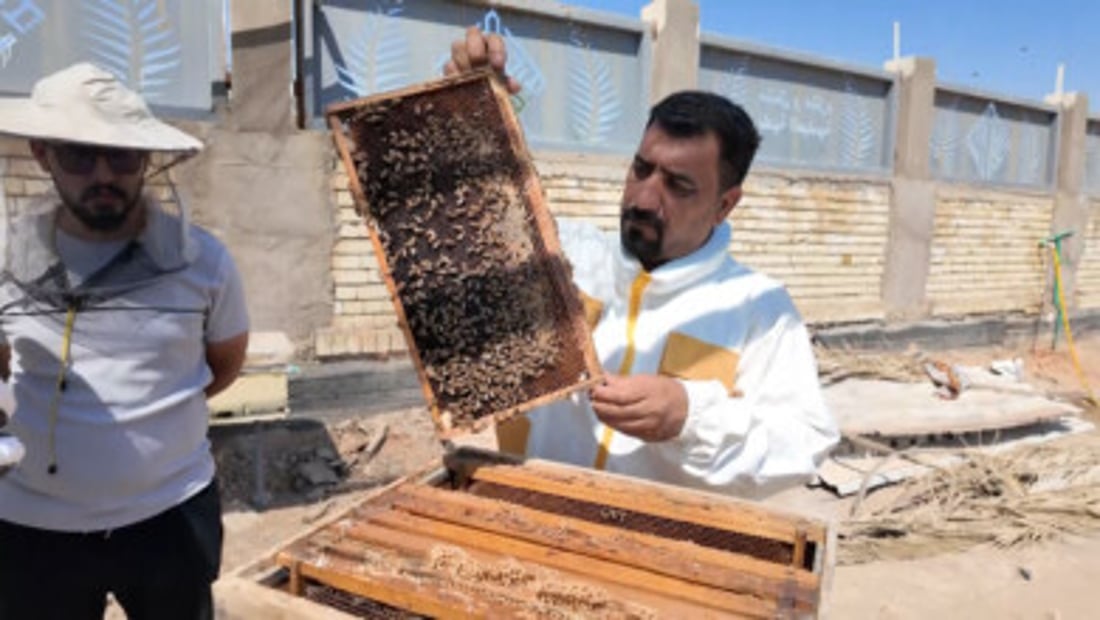
(Photo: 964media)
Najaf beekeepers say honey adulteration can no longer be seen, only tested
NAJAF — Adulterated honey has become hard to tell from natural honey even for beekeepers with decades of experience, members of the Najaf Beekeepers Association said, as summer heat pushes producers toward feeding bees sugar.
Feeding sugar solution during the production season “amounts to adulteration because it affects the nature of the product,” said Muslim al-Shafie, secretary of the association’s fund. “Using it outside the season to protect bees from death is an emergency measure.” Methods have developed to imitate the colour, taste and smell of natural honey, he said, so that visual inspection no longer distinguishes them: “The matter becomes dependent on the beekeeper’s conscience and integrity.” Laboratory testing is the only reliable way to tell, he said.
Association head Mohammed Aliawi said sugar feed is sometimes necessary to keep colonies alive through winter or a hard summer, but is not appropriate during the spring nectar season, when natural nectar provides a balanced composition that artificial feeding disturbs.
The heat is what creates the pressure. Rising temperatures dry flower nectar quickly and damage pollen, Aliawi said. “Bees are forced to divide their efforts between collecting water and collecting nectar during short periods of time, which may push colonies to abandon their hives if they are unable to regulate the temperature and humidity inside them,” he said, describing the problem as most pronounced in central and southern Iraq.
Forage is also scarce. Summer feeding begins with eucalyptus flowering at the end of spring, followed by clover and crops including cucumber and watermelon, but most agricultural land in Najaf is under wheat and rice, neither of which suits bees. Producing a kilogram of honey requires visits to very large numbers of flowers, Aliawi said, which makes it impossible for individual beekeepers to plant enough themselves without wider and more varied agricultural cover.