
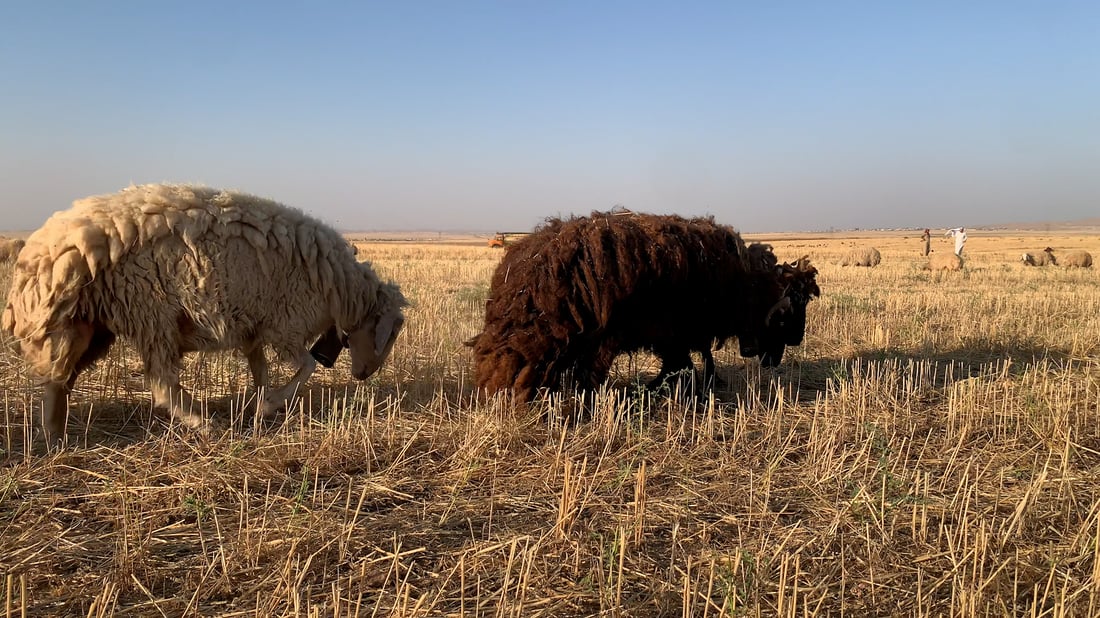
Sheep graze on crop stubble in Rabi’a, Nineveh Governorate. Photo by 964media.
Rabi’a shepherds find summer pasture relief but face water, veterinary costs
NINEVEH — Shepherds in the Rabi’a steppe are benefiting from abundant summer grazing this year, moving flocks across the remains of wheat and barley fields and potato crops, but water shortages and veterinary expenses continue to weigh on livestock owners.
The seasonal pasture has helped reduce reliance on purchased feed after winter months when costs were much higher, according to local shepherds. But the suspension of the Jazira irrigation project has left water sources scarce across the area.
Tariq Muflih, a shepherd in the Rabi’a steppe, told 964media that his workday begins at 4 a.m. and continues until noon, with sheep grazing on “farz,” the leftover material from harvested wheat and barley fields.
Muflih said livestock raising requires constant spending. Feed prices last year ranged from 700,000 Iraqi dinars, about $458, to 1 million dinars, about $654, per ton, though he said prices have fallen this year.
Animal diseases remain another burden. Muflih cited plague, poisoning and sheep pox among the illnesses that can affect flocks.
“We have no other work,” he said, referring to his family’s dependence on sheep raising for income.
The Naimi breed is among the most common sheep raised in the Rabi’a area, according to Muflih. He said ewes may give birth once or twice a year depending on the level of care and nutrition they receive.
Better feeding and attention can allow some ewes to produce two births in a year, he said, encouraging herders to invest more in their flocks despite the additional costs.
Goats are also raised in the area, including Shami and local breeds. Muflih said goats require more care, particularly during winter and birthing periods, when they need warm shelter, regular feeding and closer attention.
Their longer milk-production period can, however, provide herders with an additional source of income compared with sheep, whose milking season is shorter.