
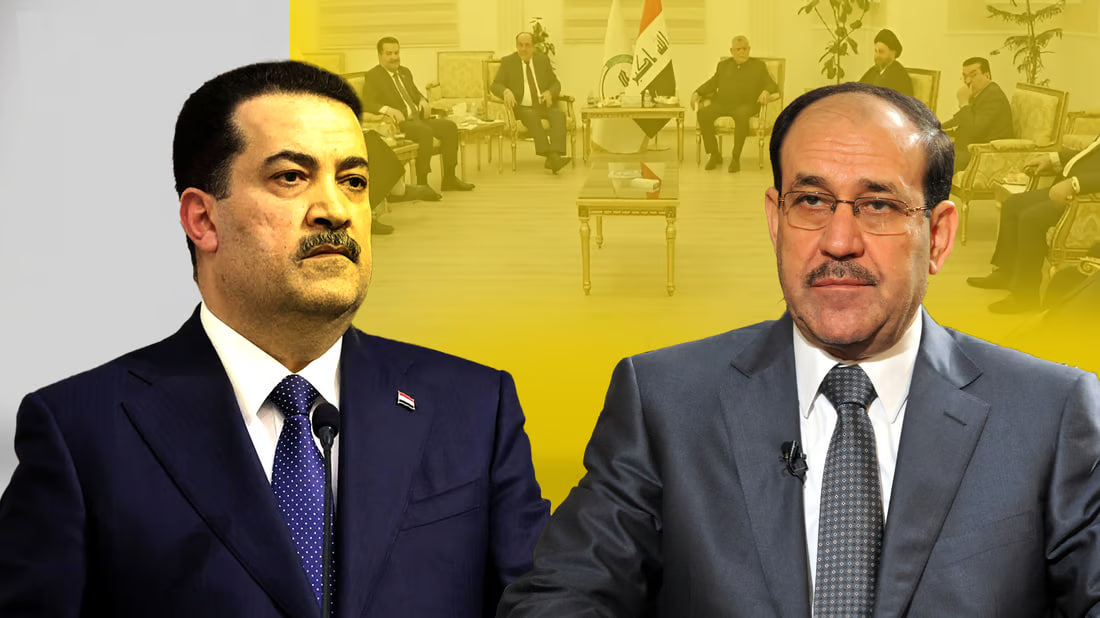
Mohammed Shia al-Sudani (left) and Nouri al-Maliki appear in a composite image against the backdrop of a meeting of Shia Coordination Framework leaders in Baghdad
Media Monitor
Sudani’s coalition released from Maliki nomination concession, says bloc MP
BAGHDAD — The Reconstruction and Development Coalition and its leader Prime Minister Mohammed Shia’ al-Sudani are no longer bound by a previous concession to support Nouri al-Maliki’s nomination as prime minister, coalition MP Aliya Nsaif said Wednesday, citing both domestic and international opposition to his candidacy.
“The Reconstruction and Development Coalition today is dealing realistically with internal and regional data,” Nsaif told Dijlah TV. “As long as there is a national space rejecting the nomination of Mr. Maliki, and there is also regional and international rejection, based on these two internal and external rejections we are now released from that concession.”
The Coordination Framework nominated Maliki on Jan. 24 following Iraq’s November 2025 elections. After being nominated, he faced mounting pressure to stand down but refused to formally withdraw, repeatedly absenting himself from Framework meetings and leaving the alliance in the position of having to either force him out or proceed with a nominee Washington had publicly rejected. U.S. President Donald Trump warned that Washington could reconsider its support for Iraq if Maliki became prime minister, and the Foreign Ministry said the U.S. message included an “explicit hint” of sanctions.
Nsaif also addressed the assault on Bahaa al-Araji, head of the coalition’s parliamentary bloc, who was struck inside parliament after expressing opposition to Iraq’s involvement in the regional conflict. “When a member of parliament expresses his opinion and says he does not want to drag Iraq into the ongoing war and that the commander-in-chief should decide, does this position require that he be slapped?” she said. “What is this terrorism? This is terrorism of the word.”
She said some factions had reacted emotionally due to their historical and religious ties with Iran, but warned against escalatory rhetoric. “I say to them: this is the Islamic Republic — go there if you have energy and want to release it. Do not make this people bear responsibility.”