
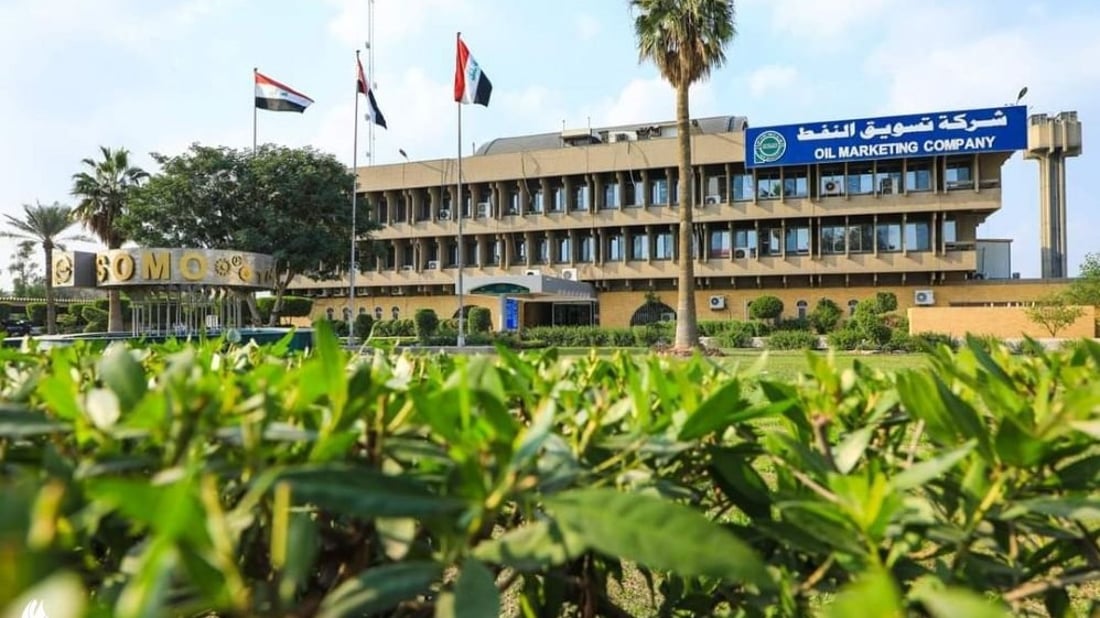
Headquarters of Iraq’s State Oil Marketing Organization (SOMO) in Baghdad.
Iraq’s SOMO prioritizes Asia for crude exports while expanding European market share
BAGHDAD — Iraq’s State Oil Marketing Organization has adopted a strategy prioritizing Asia as its primary crude export destination while maintaining a presence in European and American markets, SOMO Director Ali Nizar al-Shatri said Tuesday.
Al-Shatri said Asia receives the largest share of Iraqi crude exports, with India, China and South Korea the main targets “given their refining capacities and stable demand levels.” Europe receives the second-largest share, followed by the United States.
Contractual volumes of Basra Medium crude sold to European companies rose 38% in 2023 compared to 2022, al-Shatri said, benefiting from shifts in European import patterns following the Russia-Ukraine war and sanctions on Russian oil. He said future growth in Europe remains limited, however, due to policies aimed at reducing fossil fuel reliance and shifting toward alternative energy through 2030.
SOMO focuses its customer base on major state-owned and integrated oil companies that own refining systems, al-Shatri said, an approach that “enhances demand sustainability and contributes to managing risks associated with market fluctuations.” Companies are assessed based on refinery ownership, financial suitability and the absence of international sanctions, and those that do not qualify are informed of the reasons. Annual contracts are standard, with some agreements extended to 10 years with established firms.
Al-Shatri also said crude purchase requests are accepted only through SOMO’s official email and that the organization does not deal with applications submitted through intermediaries, agents, international organizations or diplomatic missions.
The announcement comes as regional tensions have raised concerns about export routes. Iraqi Foreign Minister Fuad Hussein stressed the importance of protecting the Strait of Hormuz on Sunday after Iran’s IRGC warned vessels that passage was no longer permitted, leaving at least 150 tankers stranded on either side of the waterway. The strait carries about one-fifth of the world’s crude oil and liquefied natural gas.