
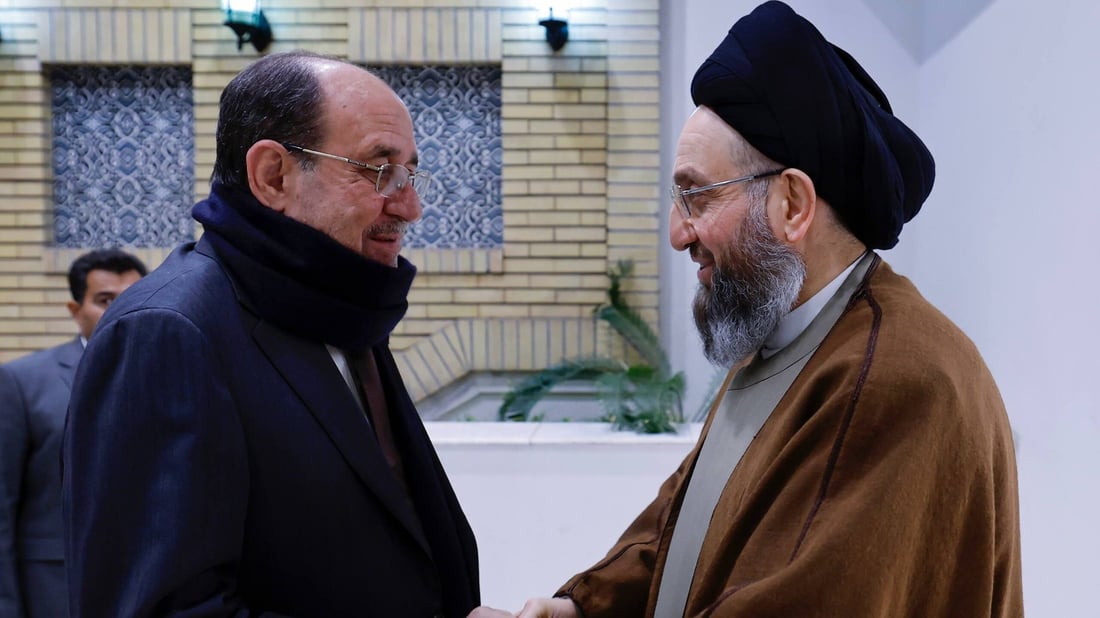
Hikma spox says Maliki backers must take ‘responsible stance’ after Trump post
BAGHDAD — Hussam al-Hasani, spokesperson for Ammar al-Hakim’s Hikma Movement, said forces within the Coordination Framework that nominated Nouri al-Maliki for prime minister must now take “a responsible stance” and “bear responsibility” in light of the U.S. reaction.
Al-Hasani made the remarks in an interview with Utv, commenting on the fallout from President Donald Trump’s social media post rejecting al-Maliki’s nomination.
He said the Hikma Movement’s reserved position toward al-Maliki “is not aligned with nor supportive of Trump’s post,” adding that the movement expressed “official regret” over the U.S. president’s remarks. The movement did not vote for al-Maliki when the Coordination Framework announced him as its nominee.
“We do not personalize matters with Mr. al-Maliki, and we hold him in full respect and appreciation,” al-Hasani said, calling the movement’s reservation “an Iraqi, national, principled and fraternal position.”
He advised members of al-Maliki’s State of Law Coalition to “defend their choice without attacking others,” saying the current moment “does not reflect the depth of the relationship among the Coordination Framework’s forces.”
Al-Hasani said the movement views al-Maliki as “a responsible national leader and secretary-general of the Dawa Party,” adding that areas of agreement outweigh disagreements.
“The problem lies with the media machines of some spokespeople,” he said, adding that they are pushing matters “into a situation Iraq cannot bear.” He described the current confrontation as driven by media activity rather than disputes between leaders.
The Shiite Coordination Framework nominated al-Maliki, who served as prime minister from 2006 to 2014, generating debate within Iraq. Trump said in a post that the United States would not continue its support for Iraq if al-Maliki returned to office.
In a recent interview, al-Maliki said Trump does not know him personally and suggested misinformation led to the post opposing his nomination. He stepped down in 2014 under domestic and international pressure after army defenses collapsed and Mosul fell to the Islamic State group.