
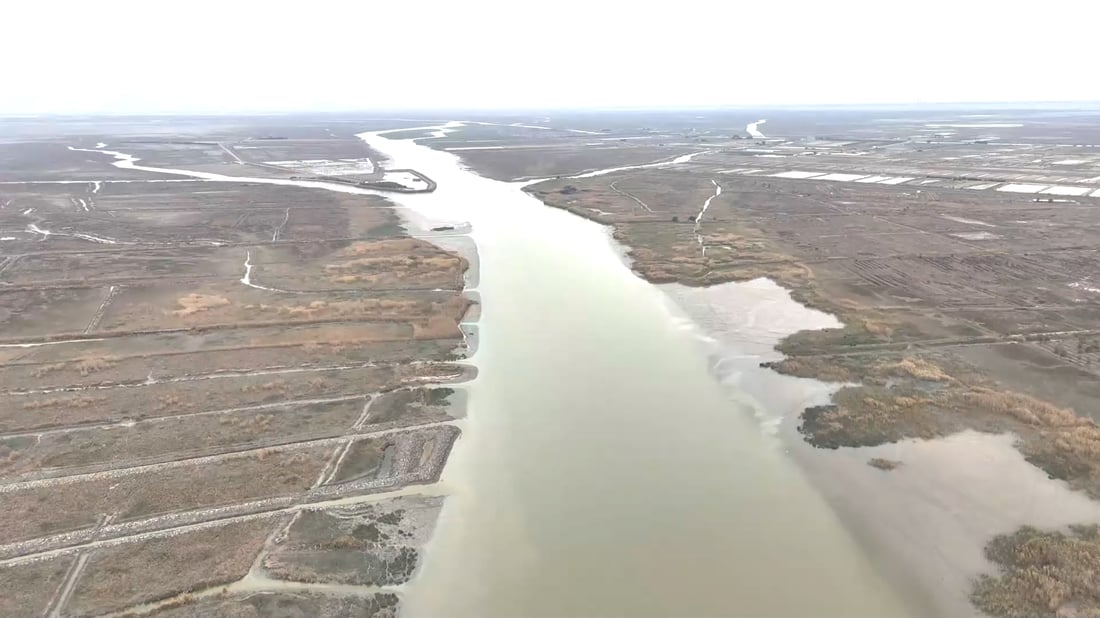
Aerial view of Al-Mashhab Marshes in northern Basra, one of the few wetlands withstanding climate changes while many other marshes in Iraq have dried up. (Photo: 964media)
Iraq’s Agriculture Ministry outlines projects to combat climate impacts
BAGHDAD — Iraq’s Ministry of Agriculture announced a series of projects and plans to mitigate the effects of climate change, including a study on the use of Geographic Information Systems or GIS to monitor the movement of sand dunes.
Iraq is considered one of the countries most vulnerable to the effects of climate change, facing rising temperatures, severe drought, declining rainfall, and increasing desertification.
Deputy Minister Mahdi Al-Jubouri said climate change, reduced water inflows, and lower rainfall “reflected negatively and caused an increase in the areas of desertification and those at risk across the country,” according to remarks reported by the Iraqi News Agency.
He said the ministry has implemented several actions to counter desert encroachment, including a sand dune stabilization project and the use of modern irrigation technologies in cultivating crops and pasture plants.
Iraq faced its worst water shortage in eight decades in 2025, with reserves at their lowest levels in 80 years due to drought, climate change, and upstream dam projects in Turkey and Iran.
The ministry has also supported the propagation of the Paulownia tree “as an effective barrier against dust storms,” Al-Jubouri said, and participated in the prime minister’s initiative to plant five million trees. He added that around eight million seedlings, “adapted to environmental conditions,” have been provided to state institutions to enhance green areas and improve environmental conditions.
Al-Jubouri also noted the ministry’s efforts to “support oases and natural and aromatic plants and ensure their sustainability,” in addition to activating an outreach program to promote “strategic crop seeds tolerant of salinity and drought.”
He said the ministry has prepared a GIS-based study to monitor sand dune activity and is working on a map showing changes in vegetation cover. These projects, he said, would contribute to “adapting to climate change and reducing its environmental, economic, and social impacts.”
Rising temperatures are contributing to longer, more intense heatwaves, and summers with frequent extreme heat in Iraq. Reduced rainfall and prolonged dry periods are contributing to chronic water shortages and drought conditions across the country, affecting agriculture, water resources, and livelihoods.
Iraq’s water resources, including the Tigris and Euphrates rivers, are under stress from reduced flows, lower precipitation, and increased evaporation linked to climate change.