
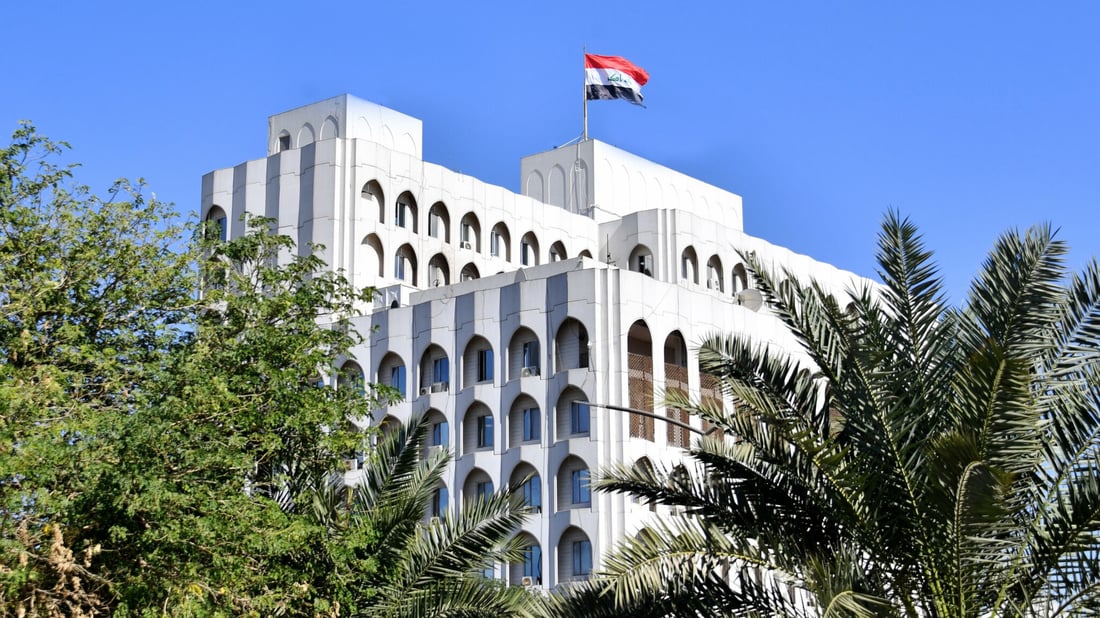
The Iraqi Foreign Ministry building in Baghdad
Iraq repatriates 70 migrants from Libya, warns of trafficking risks
BAGHDAD — Iraq’s head of mission to Libya said Monday that the Iraqi embassy has completed voluntary repatriation procedures for 70 Iraqi migrants who entered Libya illegally, as authorities step up efforts to track missing citizens and warn against the dangers of irregular migration.
Ahmad al-Sahhaf said the embassy is providing food, medicine and basic assistance to Iraqi migrants while arrangements are made for their return. He said embassy staff also help migrants contact their families and ensure their immediate needs are met during the process.
Al-Sahhaf said Iraqi diplomatic efforts are continuing “at a high level” to determine the fate of dozens of other Iraqis in different parts of Libya, working in coordination with Libyan authorities. Those authorities, he said, transfer migrants to designated shelters before repatriation procedures are completed.
He warned that human smuggling and trafficking networks remain active, targeting young Iraqis seeking to leave the country. “Networks of smuggling and human trafficking continue to target young Iraqis,” al-Sahhaf said, calling for intensified efforts to curb irregular migration routes.
He also urged families not to expose their children to the risks of illegal travel, citing repeated cases of detention, abuse and exploitation along migration paths.
The latest group returned amid a series of recent incidents involving Iraqis attempting to use Libya as a transit point to Europe. In recent months, 12 Iraqi citizens were intercepted while trying to migrate through Libya, according to Iraqi officials.
In late October, 40 people from the Raparin administration in Sulaymaniyah returned to Iraq’s Kurdistan Region after spending more than two months in Libyan detention. Several described harsh conditions, including food shortages and lack of medical care. “It was truly a disaster. Our living conditions there were terrible,” one returnee told 964media at the time.
Libya remains a major transit hub for migrants attempting to reach Europe across the central Mediterranean, despite increased enforcement, joint operations with European states and a rise in detentions and returns. Iraqi and Kurdish migrants also continue to attempt irregular journeys through Turkey and by sea toward Italy and Malta.