
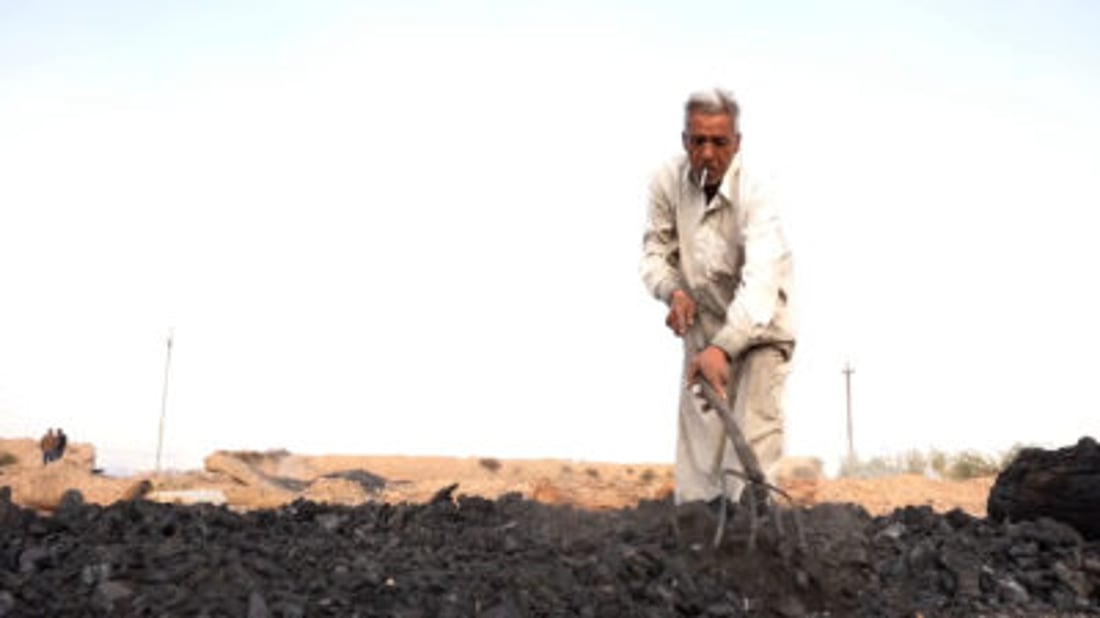
Locals produce charcoal in Wasit. (Photo: 964media)
Kut
Wasit craftsman uses traditional pit method to produce charcoal
WASIT — In the rural area of Al-Shuwayja, near Kut in Wasit, local charcoal maker Ali Abdullah continues a family tradition of producing charcoal through a method distinct from those used in other Iraqi governorates.
Known locally as the “naggar” or pit method, the technique avoids the use of above-ground kilns and instead relies on underground pits to create high-quality charcoal over the course of about a week.
Abdullah said the process begins by digging pits two to three meters deep and filling them with wood. The wood is then burned for two to three days to form embers. The second stage involves covering the pit with metal sheeting and soil to cut off oxygen for another two to three days, resulting in fully formed charcoal.
“We open the pit, extract the charcoal using metal sheets, separate out the unprocessed pieces, then pack and distribute it based on demand,” he told 964media.
He emphasized that the wood is sourced often through calls from property owners asking for old or unwanted trees to be removed. Charcoal producers also seek out suitable trees in rural farms and orchards.
Abdullah rejected claims that charcoal makers in the region damage the environment. He said the work is carried out far from residential areas and produces minimal smoke. “We never cut trees from streets or public parks without permission,” he said, noting that government offices sometimes request their services when clearing space for new projects or removing dead trees.
Restaurants in Kut reportedly prefer charcoal, citing its density and clean burn that avoids sparking, which is considered ideal for grilling kebabs. Citrus wood charcoal is preferred for shisha use due to its distinct flavor, and also favored for grilling fish, though it is less commonly available in the region.