
Halabja installs warning signs at water sites after girl’s drowning
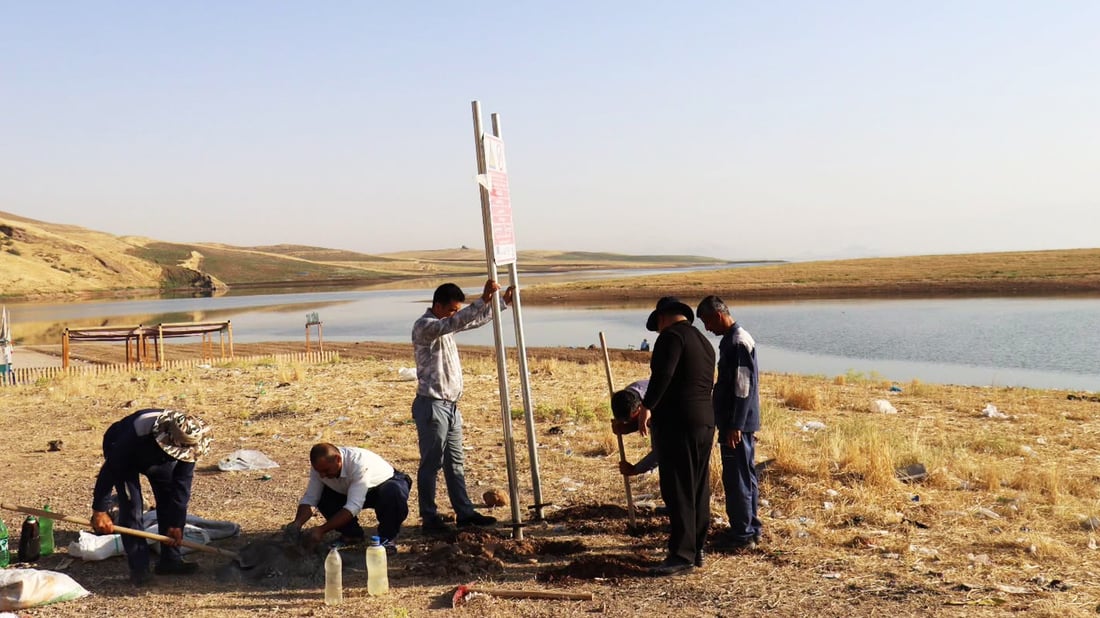
HALABJA — Halabja’s Directorate of Tourism has begun installing warning and guidance signs at tourist sites across the governorate to improve visitor safety, particularly around hazardous water sources.
The directorate said joint teams from the tourism directorate and the Civil Defense Directorate spent the past two days placing signs at locations with water risks, especially at the Ahmad Awa resort, Zalm, Dwanza Imam, Nawroli and Sazan.
The signs are meant to warn visitors not to approach water sources or swim in them to prevent accidents, the directorate said, urging people to follow the safety instructions and stay away from the edges of springs and other water sources.
The Kurdistan Region saw higher rainfall and snowfall and lower temperatures this winter than in previous years, raising water levels in dams, ponds, rivers and lakes. Residents and tourists often visit these sites to cool off in summer, sometimes leading to drownings, and civil defense authorities have repeatedly warned against swimming in open water.
On June 17, the body of a 12-year-old girl from Karbala who disappeared in the Zalm stream near Ahmad Awa Waterfall was found, nine days after an extensive search by civil defense teams and volunteers. Residents across Halabja and the Hawraman area gathered the next day to bid farewell to the girl, lining streets and markets to honor her before she was returned to her family in southern Iraq.
Volunteer ambulance crews from Sulaymaniyah transported the body to Karbala free of charge, while another team of volunteers accompanied the convoy south to support the family and attend condolence ceremonies. The girl’s father, overwhelmed by the response from residents of Sharazur and Hawraman, expressed his gratitude during the procession. “I ask God to make this effort and hardship a reward for you on the Day of Judgment,” he said. Karbala governorate later named one of its main streets after Halabja in recognition of the humanitarian response by Kurdistan Region residents.