
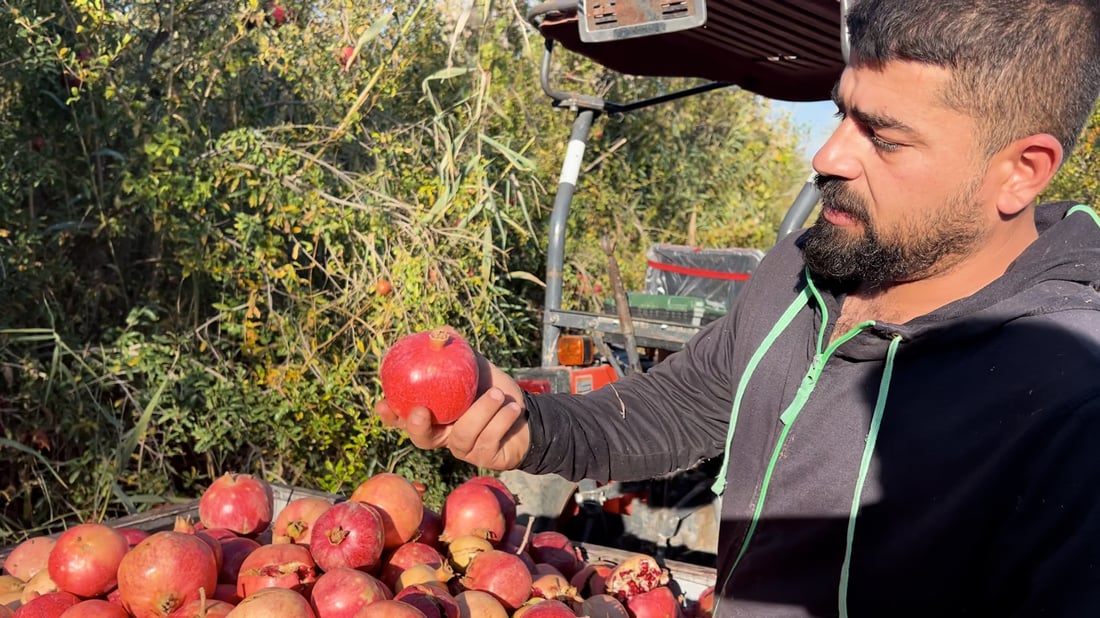
Kurdish farmer Roj Azad. (Photo: 964media)
Daquq
Palm trees help Kirkuk farmer double pomegranate harvest
KIRKUK — A Kurdish farmer in Daquq, Kirkuk, says his pomegranate harvest has roughly doubled after he planted rows of palm trees to shield his orchard from heat and dehydration.
Roj Azad, who owns a farm southwest of Daquq, told 964media that shade from more than 250 palm trees has created a more humid microclimate for his fruit trees. He said the change boosted both output and quality compared with previous years.
“This year’s pomegranate production is different from past years due to the high quantity and improved quality, which I attribute to the shade provided by the palm trees,” Azad said.
The farm now has more than 1,000 pomegranate trees. Azad said he currently harvests about 250 kilograms of fruit a day and plans to plant additional palms after what he described as a successful experiment. Irrigation comes from deep wells that reach between 110 and 120 meters.
Most of the harvest is sold to nearby villages in the Iftikharat area, where residents say the mix of low prices and flavor keeps demand high. “The price per kilo is 1,000 dinars (less than $1) or sometimes less,” said local resident Taher Tawfiq, who praised the taste and affordability.
Despite the improved yield, Azad said delayed rainfall posed challenges. “Pomegranates rely heavily on rain, which makes the fruit more tender and water-rich. Lack of rain causes the fruit to dry out,” he said.
The farm produces three varieties of pomegranates: sweet, medium and sour. Sour types are commonly used to make pomegranate molasses.
Azad’s use of palm trees in a northern area such as Daquq also reflects broader climatic shifts. The success of palms in a region where they traditionally struggled underscores how rising temperatures and prolonged drought are reshaping agriculture in Iraq.