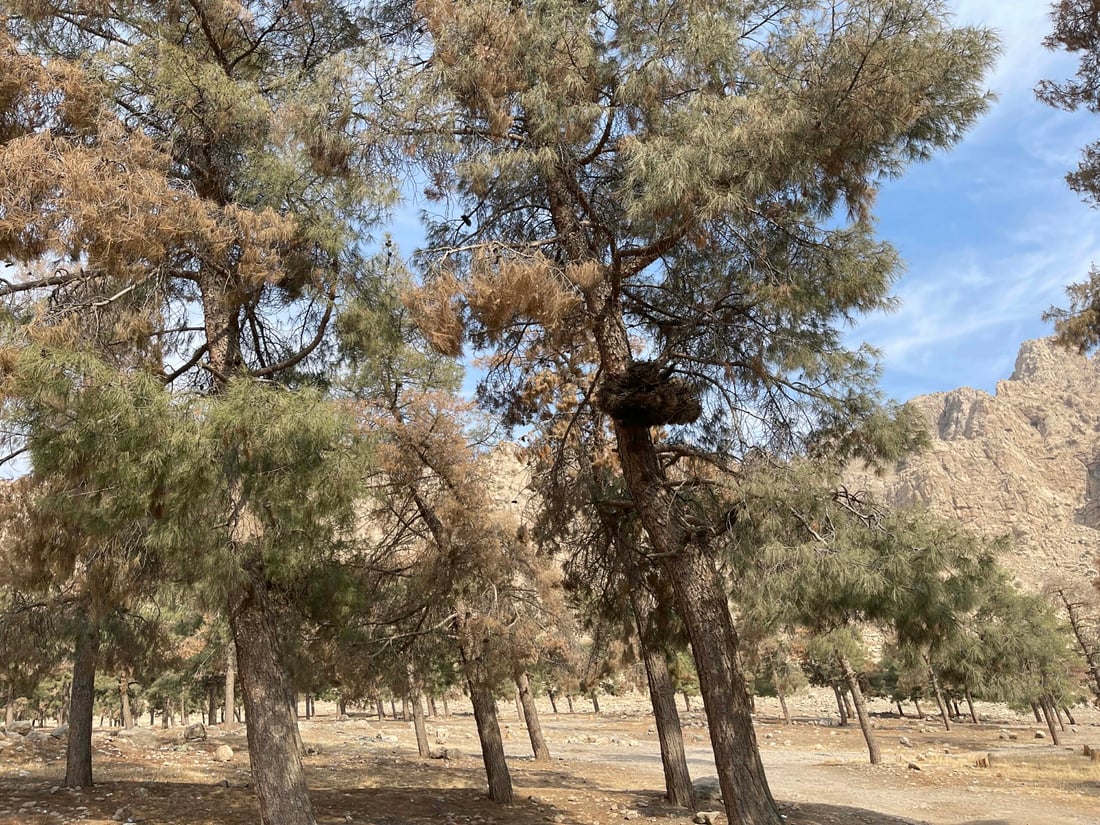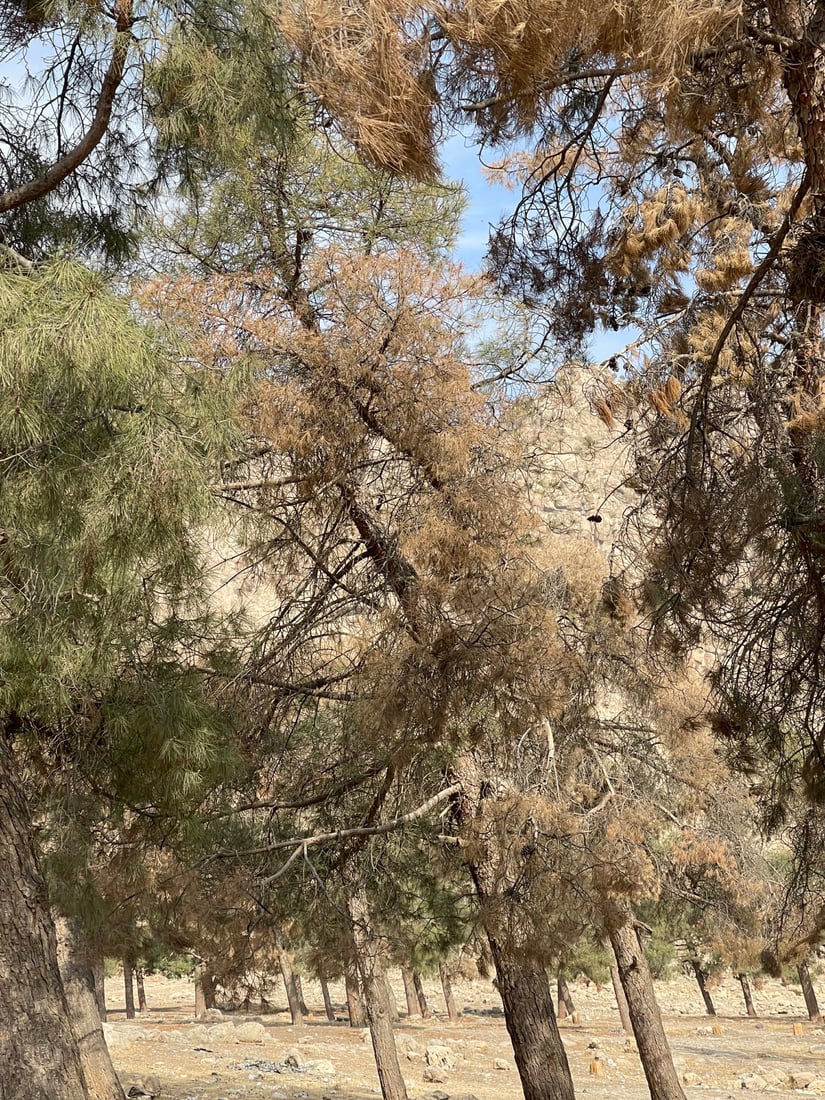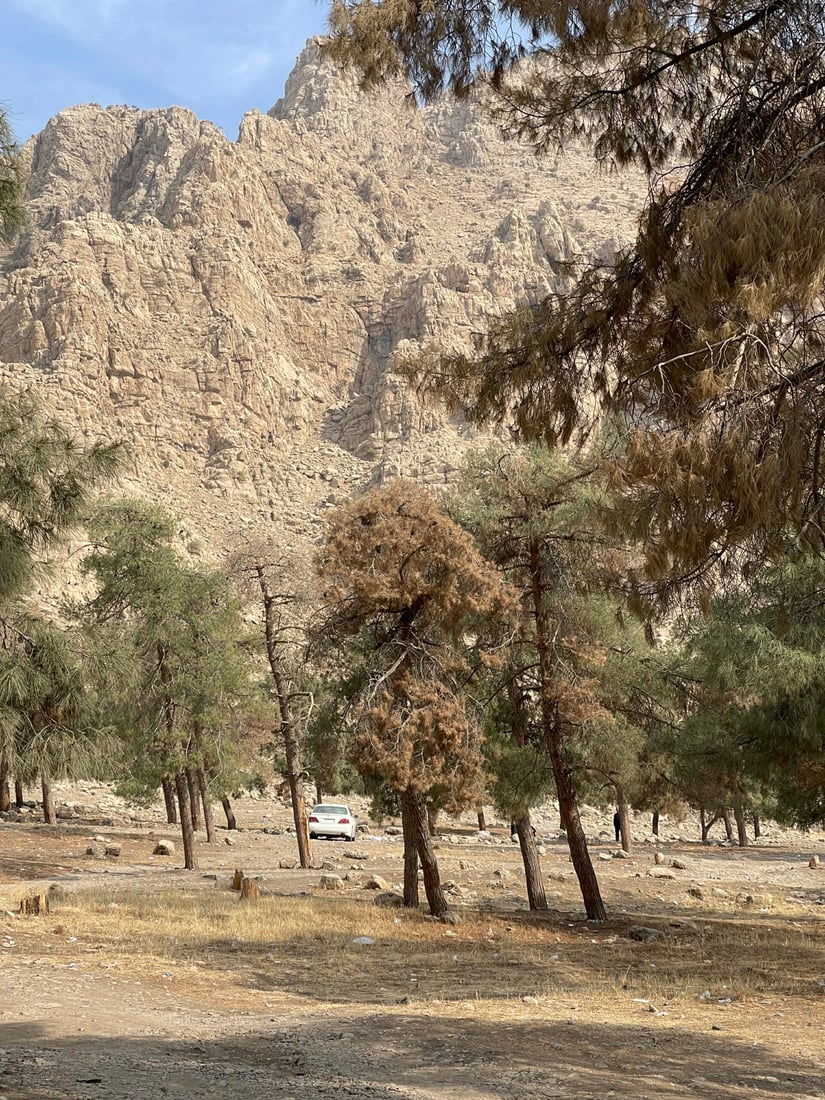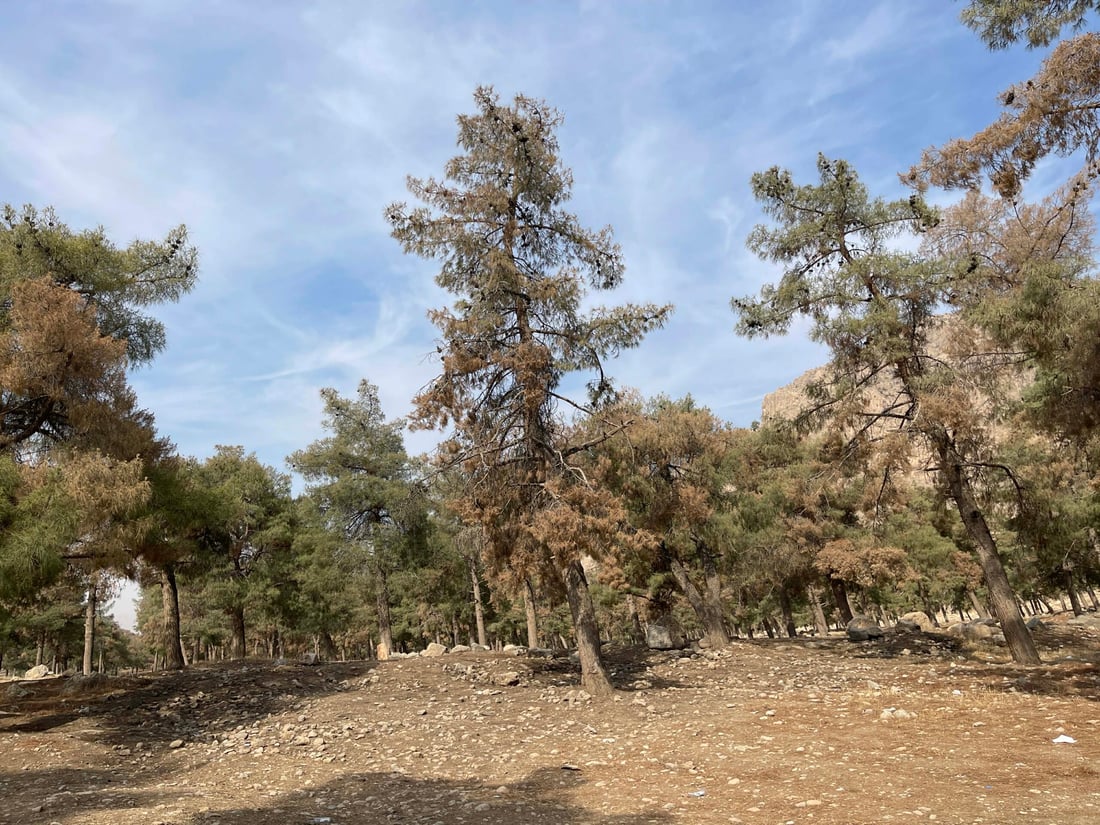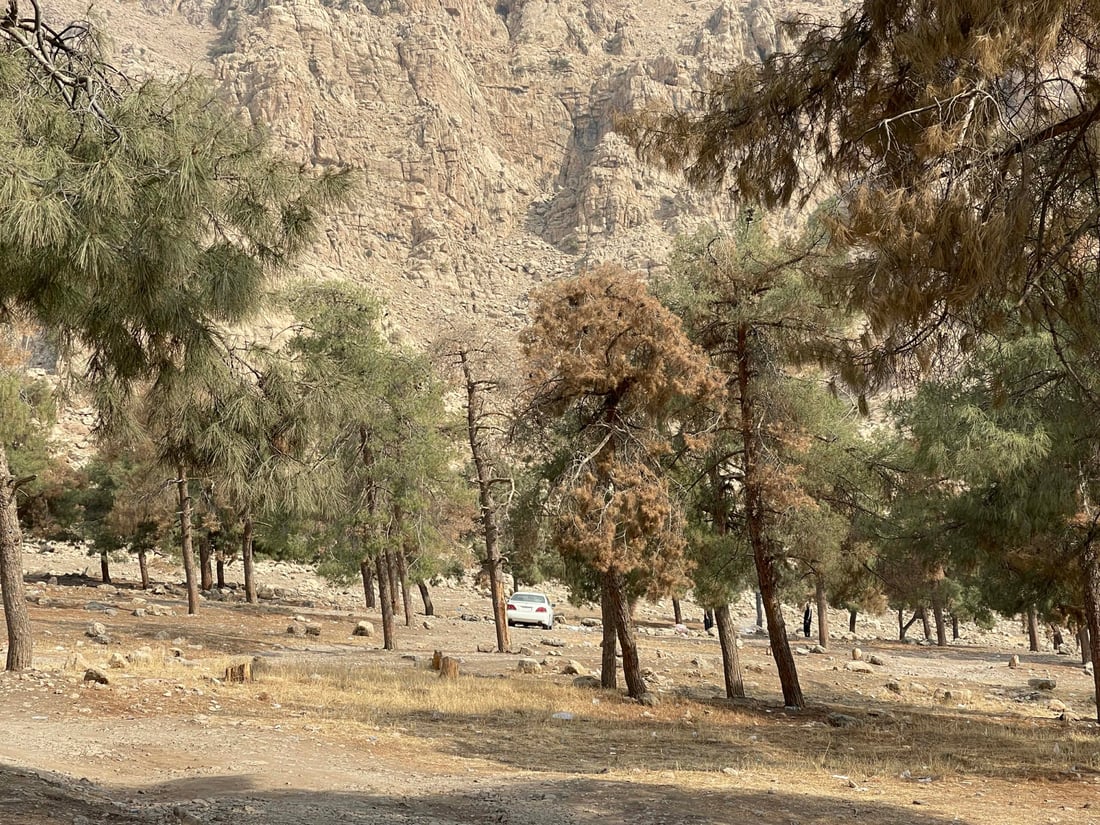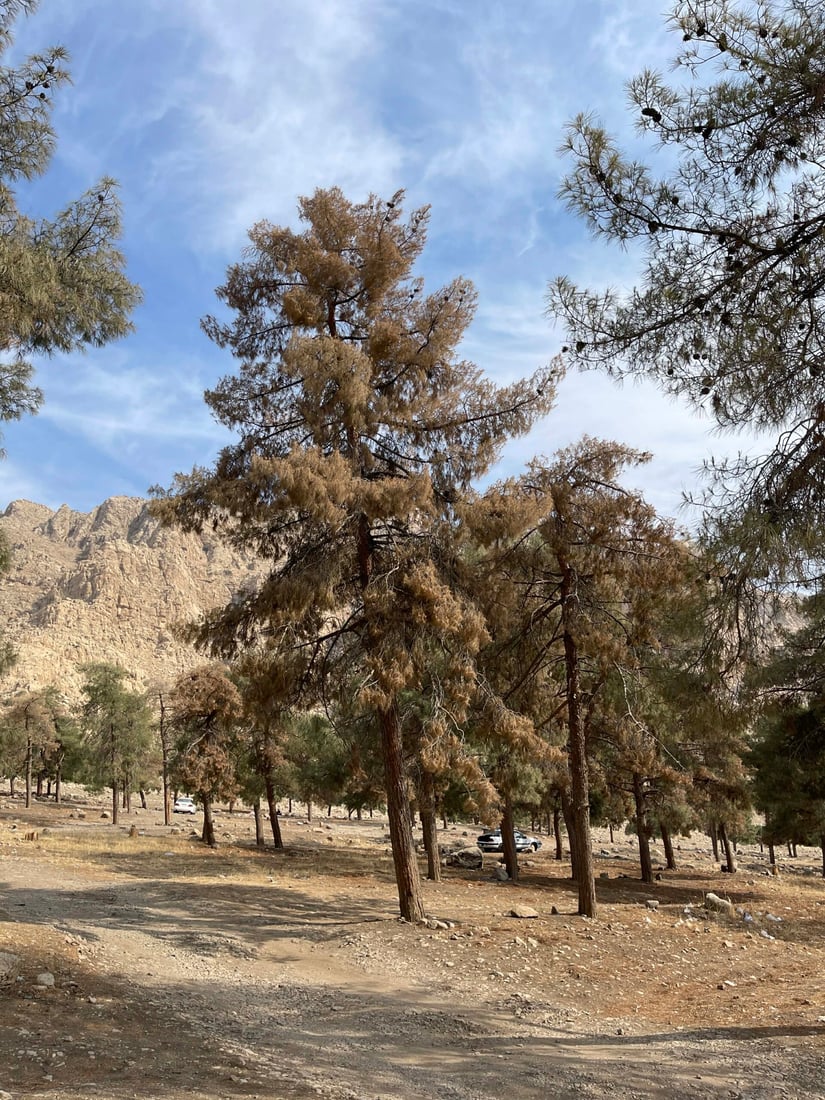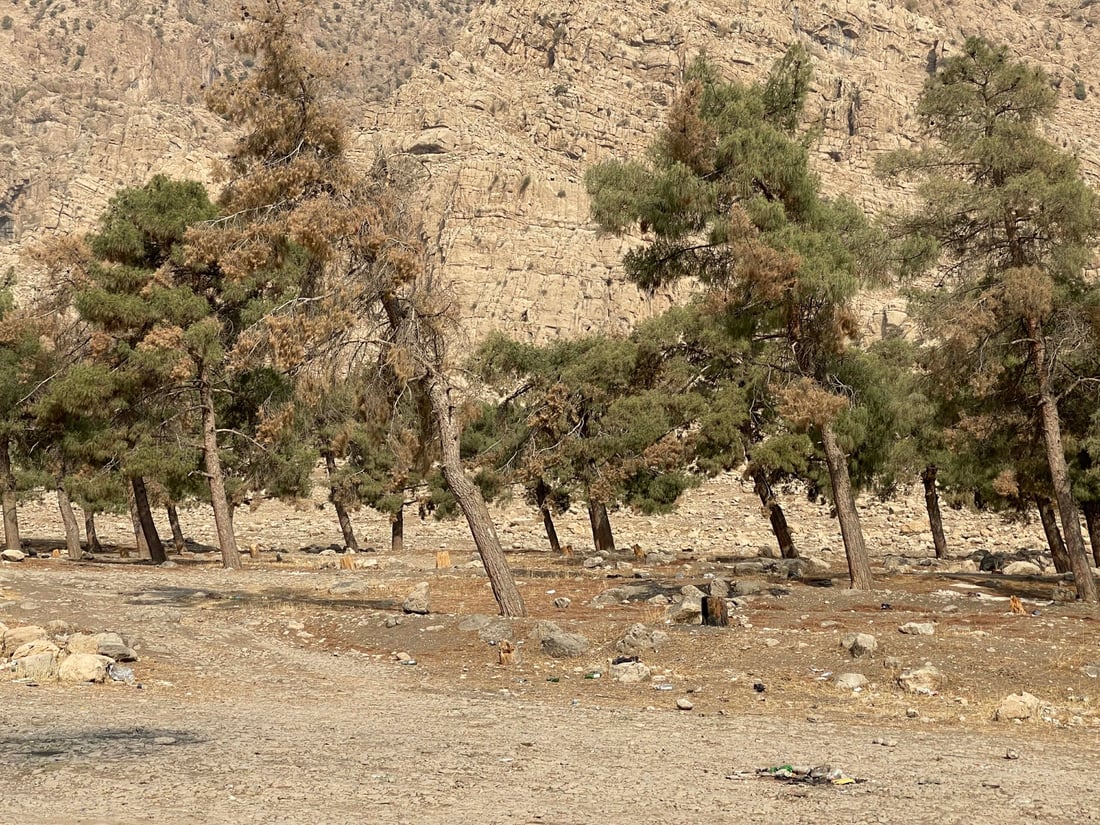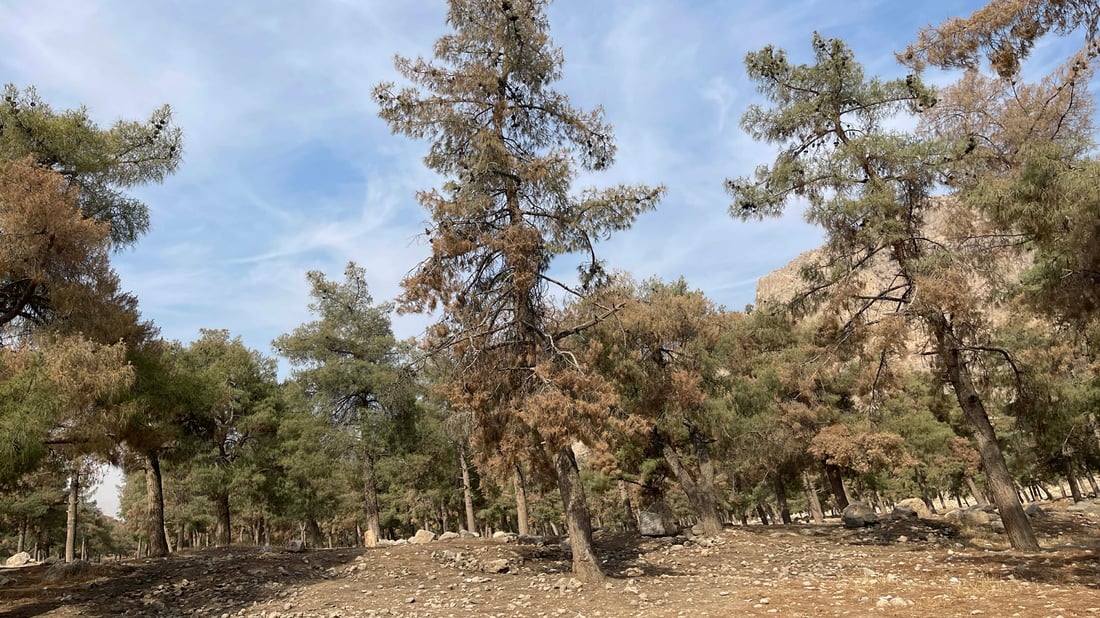
Drought-stricken trees stand dry and discolored in one of Raperin’s artificial forests in Sulaimaniyah governorate.
Sulaymaniyah
Thousands of trees dry out in Raparin forests as drought and neglect take toll
RAPARIN — Thousands of trees across the Raparin autonomous administration in Sulaymaniyah governorate have dried out over the past year, including large sections of the area’s artificial forests as well as trees in parks and streets. Local environmental officials blame both prolonged drought and a lack of maintenance.
Sawin Salih, director of the Raparin Environment Department, told 964media the drying of urban trees is primarily due to “neglect,” and said his office is coordinating with Raniya’s municipality to find solutions. He added that drought and low rainfall are the main factors behind the decline of trees in the artificial forests, where a special committee has been formed to address the issue.
Ismail Taha, director of the Raparin Forest and Environment Police, said many of the dried trees are beyond recovery. “We know they are dry,” he told 964media. “They are cut and later sold by the relevant authorities, with new trees planted afterward.”
Environmental activist Shkar Rasul warned that the situation has already caused serious damage. “This disaster has a heavy impact on the area’s environment,” he said. “These problems must be solved as soon as possible, otherwise the disaster will grow.”
The artificial forests in the Raparin administration cover about 5,500 dunams and are home to roughly 660,000 trees. Officials estimate that more than 6,000 have dried out so far, while disease has begun to spread among trees and plants in parks and along streets.
The crisis reflects the broader impact of Iraq’s ongoing drought — one of the harshest in decades. The Green Iraq Observatory described it as “the most severe crisis in 90 years,” warning that the country needs more than three months of steady, heavy rainfall to restore water levels in the Tigris, Euphrates, and depleted reservoirs. Iraq’s water reserves have fallen from 55 billion cubic meters in 2019 to less than four billion in recent months.
Communities across several governorates have held Salat al-Istisqa, the traditional prayer for rain, as farmers warn their fields are at risk. Officials hope the approaching storm system forecast for this weekend will bring relief. The Department of Atmospheric Forecasting said the first autumn rainfall is expected to begin Friday evening, starting in western regions and spreading across much of Iraq through Monday, possibly bringing heavy rain to northern areas after what experts describe as the driest year since 1933.