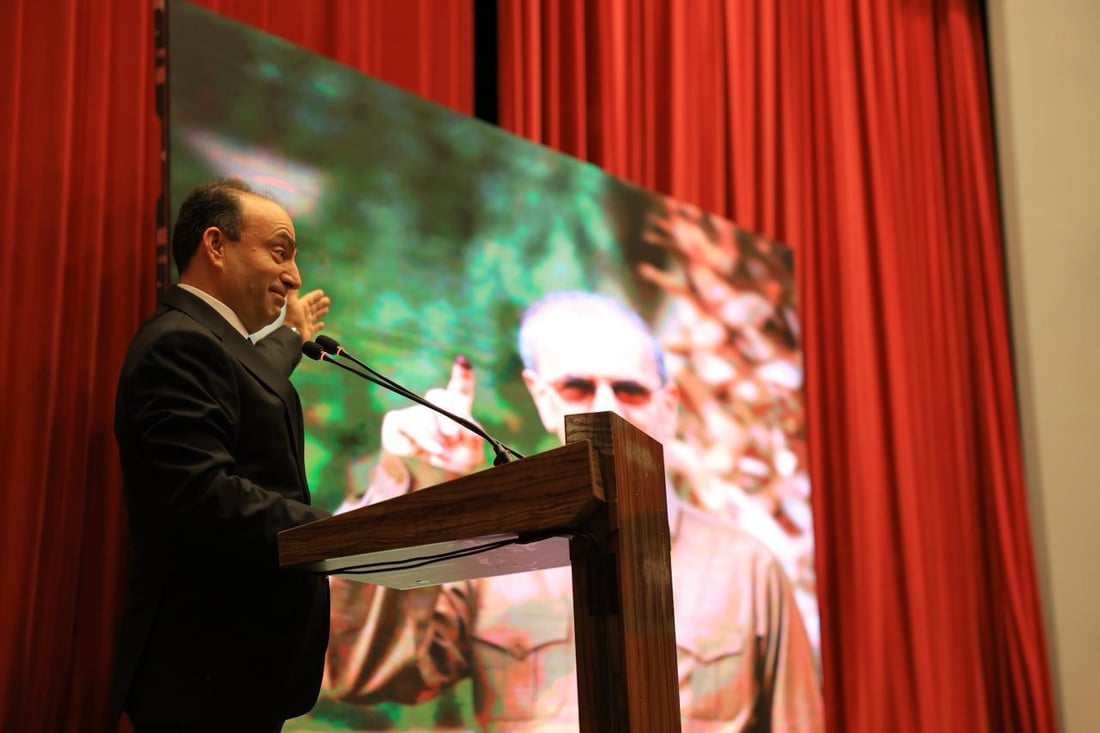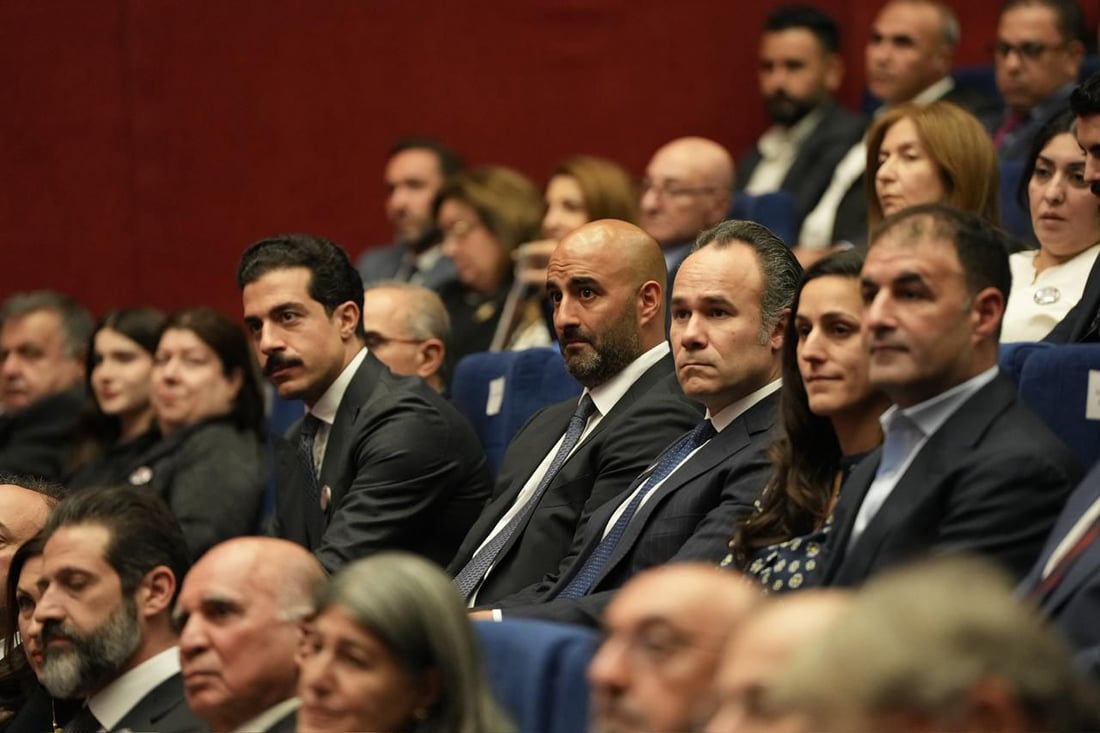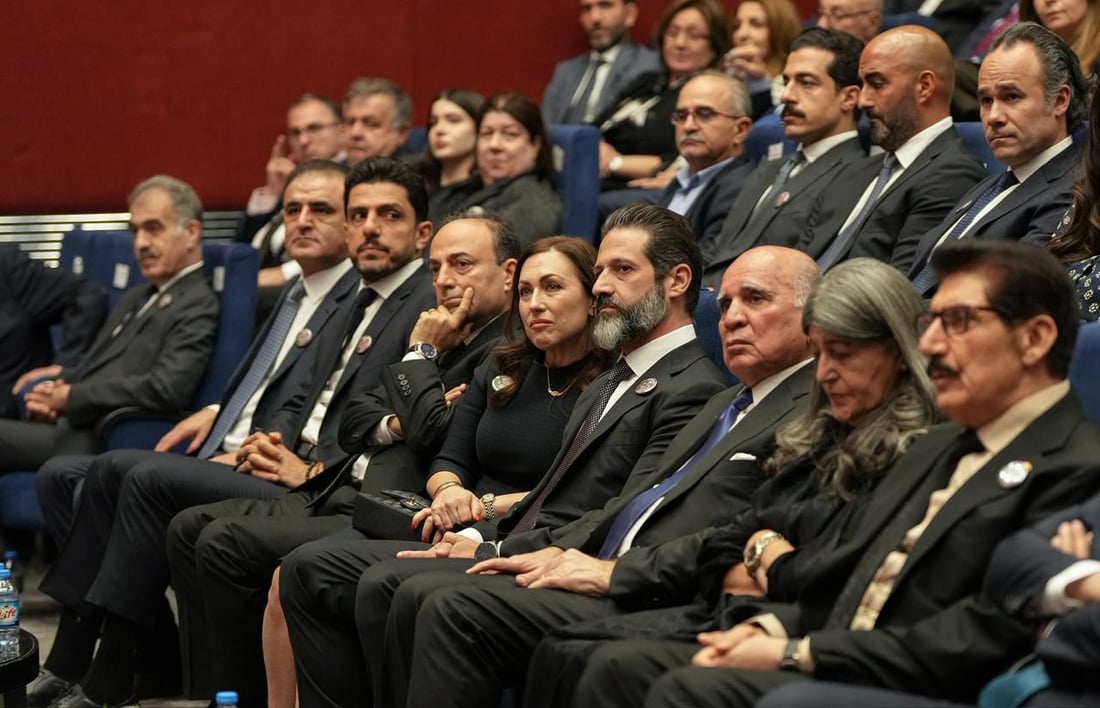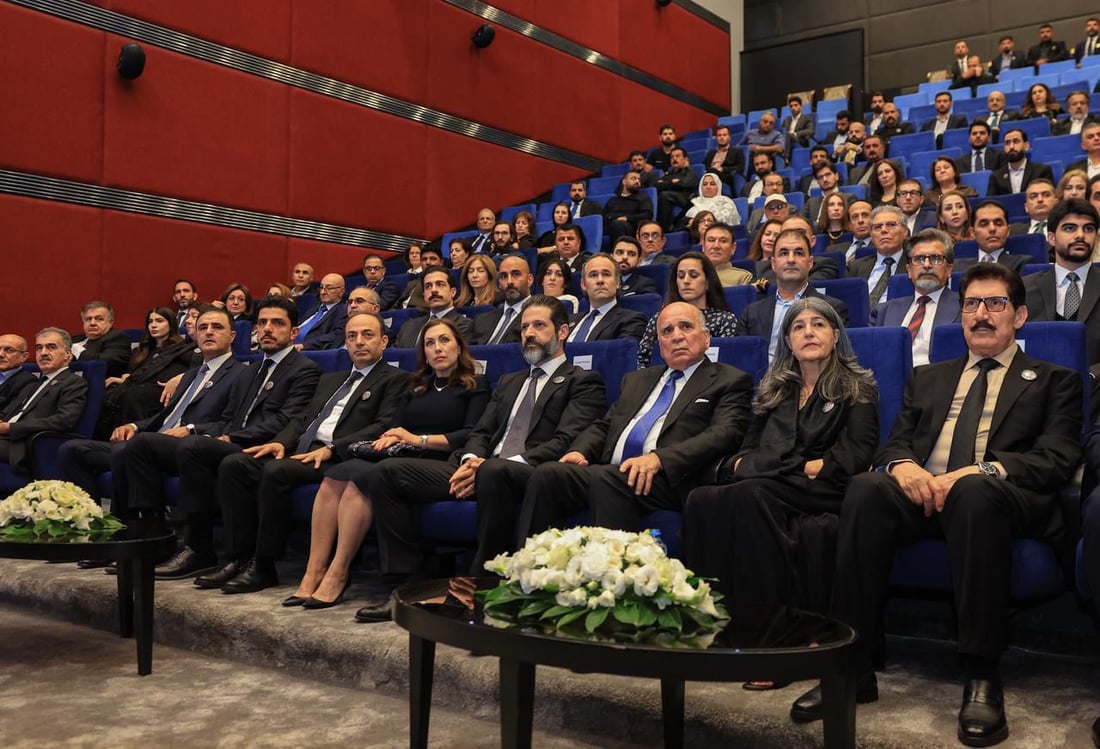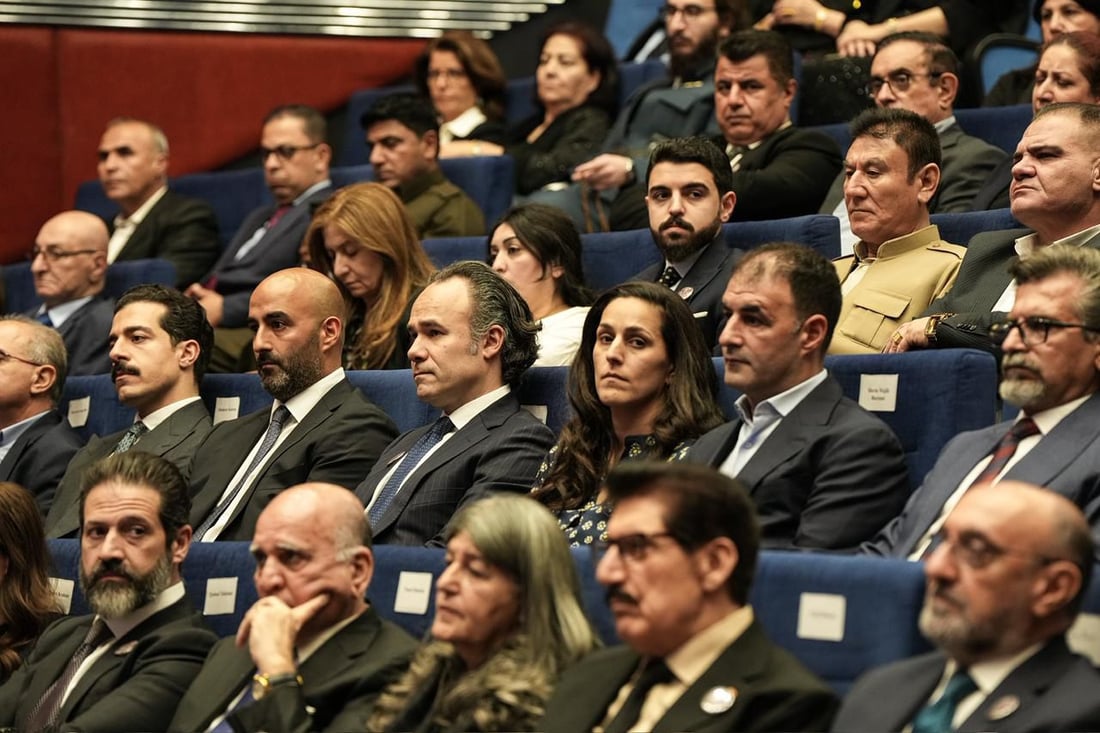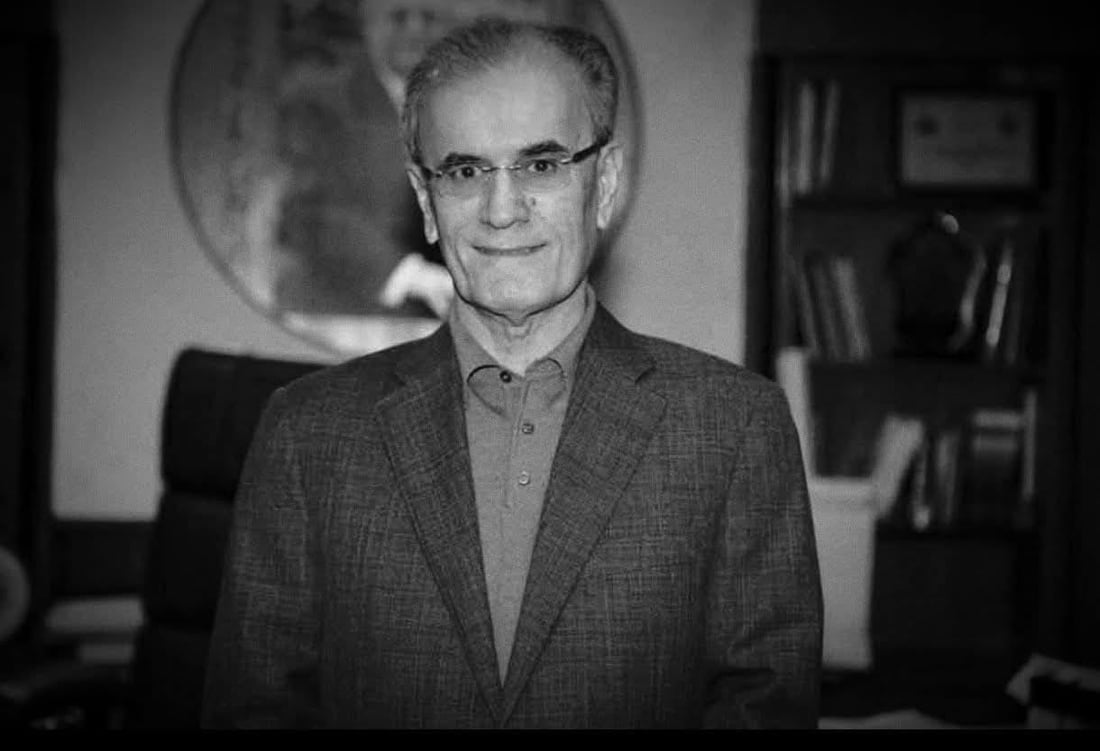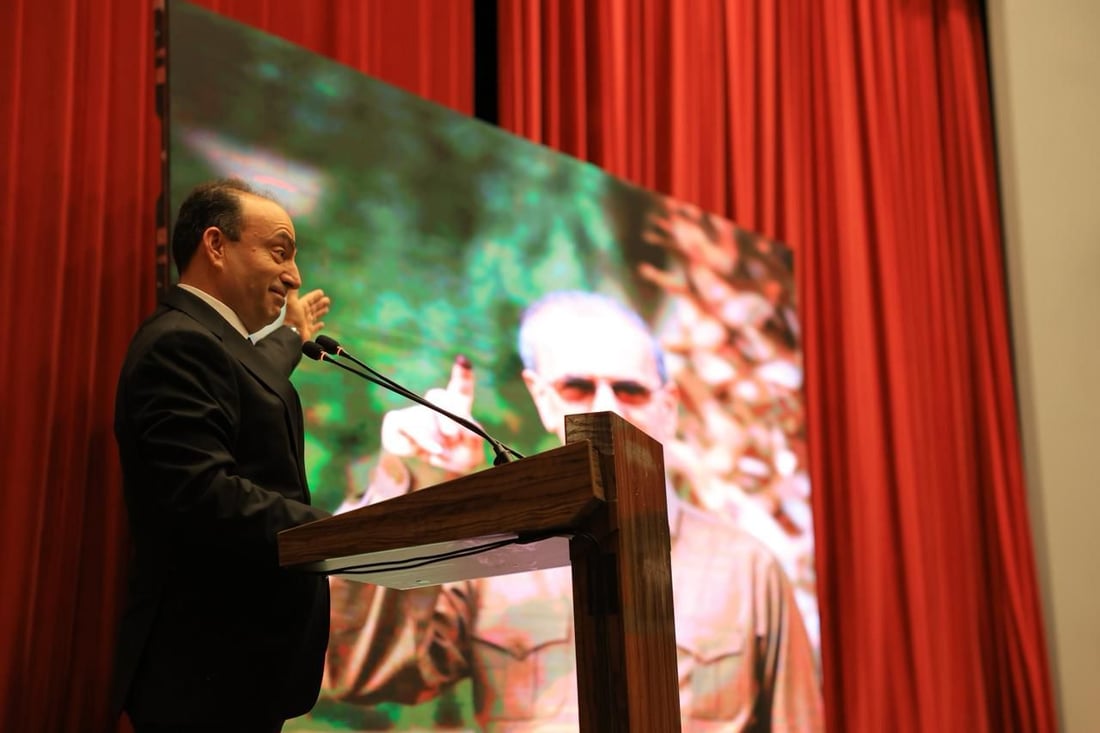
Osman Baydemir speaking at the memorial event for Najmadin Karim on Thursday, Oct. 30, 2025.
'He saved my neck'
Kurdish leaders honor late Kirkuk governor Najmadin Karim in Erbil memorial
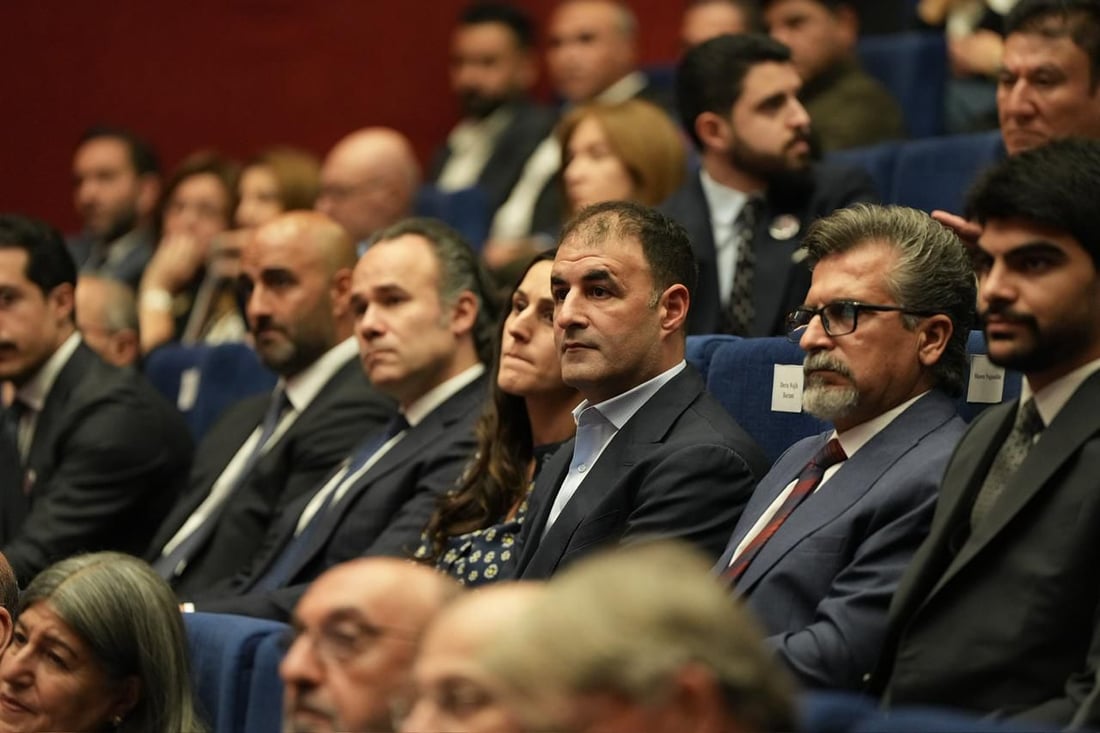
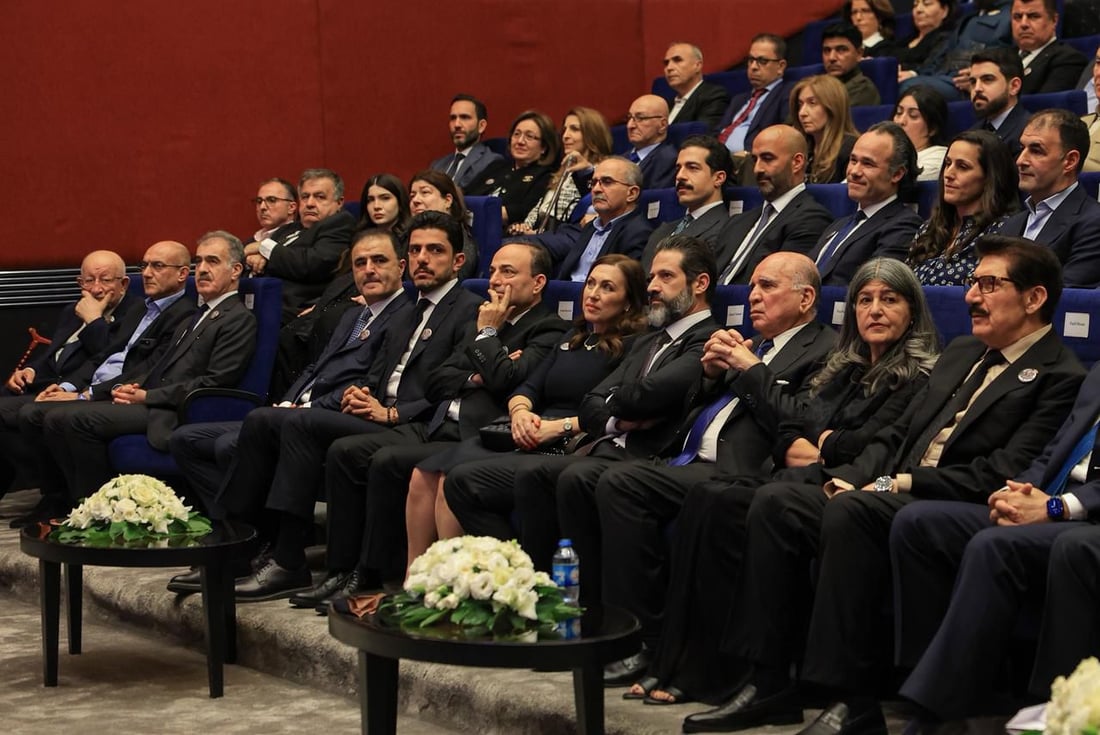
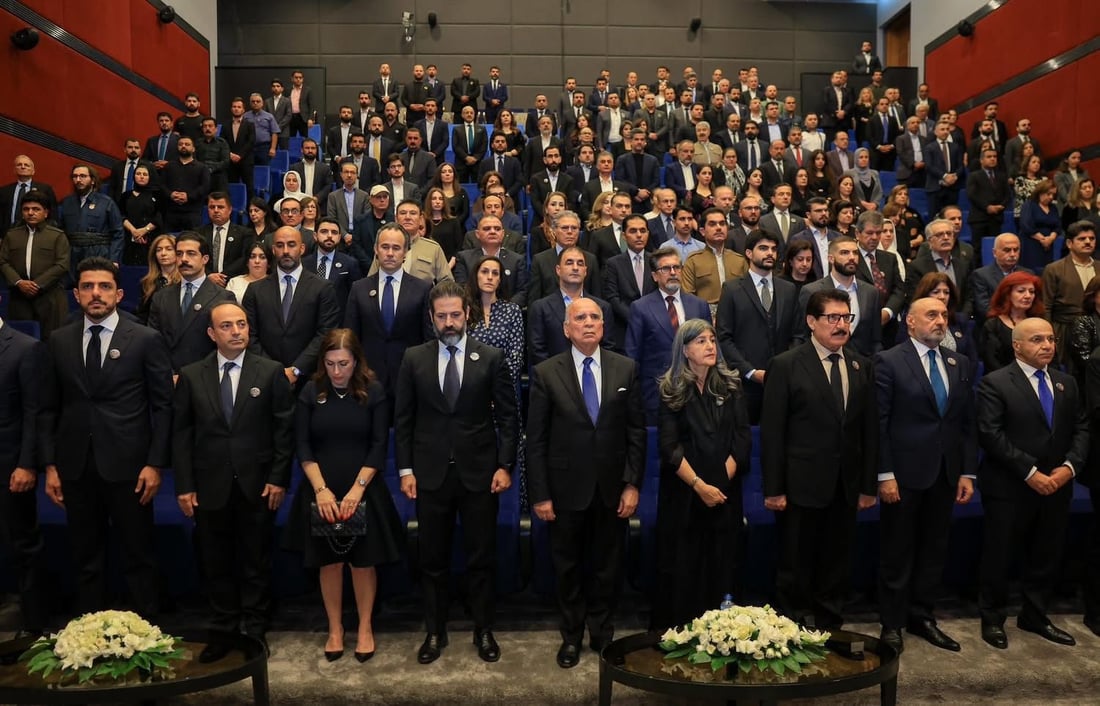
ERBIL — Kurdish political leaders and dignitaries from across the political spectrum paused their parliamentary election campaigns on Thursday to gather at Saad Abdullah Hall in Erbil for a memorial service honoring the late Dr. Najmadin Karim.
Karim, a prominent Kurdish politician and former governor of Kirkuk, served from 2011 to 2017 and died in Washington in 2020 at the age of 71. Today was the fifth anniversary of his passing.
The ceremony, attended by representatives of all major parties, featured a documentary chronicling Karim’s life and legacy. Speakers reflected on his work as a physician, political figure, and advocate for Kurdish rights in Iraq and abroad.
Fazil Mirani, a member of the Kurdistan Democratic Party’s political bureau, described his long friendship with Karim. “I will talk about his nationalism, not his politics. This meeting is an indication that he was a sincere person,” he said. “He was a very good lobbyist. We saw how he worked in D.C. and in Congress.”
Iraqi Foreign Minister Fuad Hussein recalled meeting Karim in 1970 through the student union. “We immediately became friends,” Hussein said. “Most of the time we discussed Kirkuk. He did not belong to one party or one part of Kurdistan.” He also noted Karim’s role in facilitating dialogue between the KDP and PUK in Paris. “He loved Kirkuk. He realized his dream and served Kirkuk people. What happened in Kirkuk affected him a lot. His departure was a great loss to all of us.”
Following the 2017 independence referendum in the Kurdistan Region, Karim was removed from his post as governor by Iraqi authorities. He left Kirkuk shortly after federal forces took control of the governorate in mid-October 2017, days after the vote for independence was held despite opposition from Baghdad.
Kurdistan Regional Government Deputy Prime Minister Qubad Talabani shared personal memories, describing Karim as both mentor and family. “In 2000, when I moved to the USA, Dr. Najmadin was my uncle,” Talabani said. “He was my mentor. He opened America’s doors for the Kurds. Setting his politics aside, imagine the amount of people he saved.”
Karim studied medicine in Iraq and later moved to the United States, where he completed neurosurgery training.
Osman Baydemir, a Kurdish politician in Turkey, emphasized Karim’s broad national connection. “He was as Amedi as he was Kirkuki. He was Bakuri as much as Bashuri,” Baydemir said. “What he used to call for is still needed today. As a Kurd, I see myself indebted to him.”
Among Kurds, Bakur, meaning “North,” refers to Kurdish areas inside Turkey, and Bashur, meaning “South,” refers to the Kurdistan Region of Iraq and its surrounding disputed territories.
Dr. Kendal Nezan, president of the Kurdish Institute of Paris, described a friendship spanning more than three decades. “He was a great Kurd. He served many people,” Nezan said. “He worked in the WKI to promote the Kurdish cause in the USA. He was a good doctor and a good governor.” He recalled celebrating their 70th birthdays together in Vienna and said Karim never complained about his illness. “He existed for 70 years but he will live with us for a long time. We thank him for his service to Kirkuk and Kurdistan.”
Former U.S. diplomat Peter Galbraith spoke about Karim’s influence in Washington. “Najmadin changed my life. As a result, Kurdistan has become part of my life,” he said. “He was a one-man lobby. He explained Kurdistan to Washington and explained Washington to the Kurdish leaders.” Galbraith also shared anecdotes, including a March 30, 1981, surgery involving Ronald Reagan’s press secretary James Brady. “He did not live to see independence, but much of what we have today is owed to him.”
Galbraith also quoted journalist Jonathan Randal saying “he saved my neck” after an operation.
Chalak Barzinji, a former colleague, recalled working with Karim in the same hospital. “He wasn’t just a neurosurgeon. He was the chief medical officer at the hospital,” Barzinji said. “His house was the house of all Kurds. He was the Kurds’ Qandil in D.C.”
The service concluded with expressions of gratitude and remembrance, highlighting Karim’s medical career, political service, and lasting impact on Kurdish advocacy in the United States.