
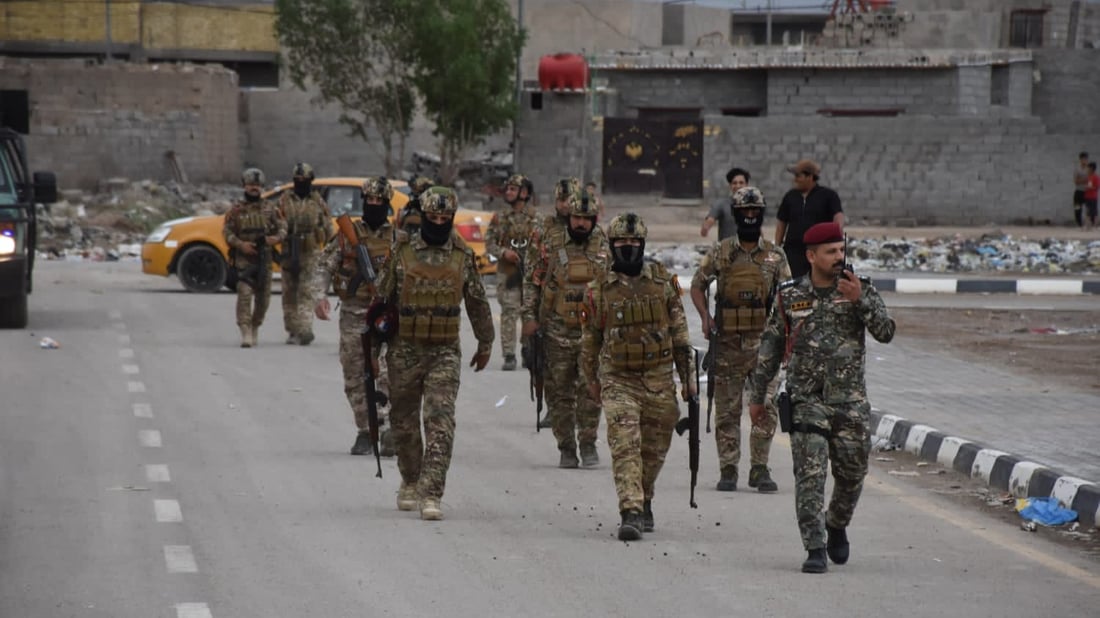
Iraqi security forces patrol a neighborhood in Baghdad
Iraqi intelligence arrests five terrorism suspects in Baghdad
BAGHDAD — Iraq’s Military Intelligence Directorate said Wednesday it had arrested five terrorism suspects in separate operations across the capital.
In a statement, the directorate said its units, “in cooperation with other security agencies, arrested five terrorists in Baghdad with arrest warrants issued under Article 1/4 of the Anti-Terrorism Law.”
Three of the suspects were detained in southern Baghdad in the area of the 17th Infantry Division, one was arrested in the north within the 6th Infantry Division, and a woman was arrested in western Baghdad in the area of the Baghdad Operations Command Commando Brigade.
“These operations confirm the continued efforts of the Military Intelligence Directorate to pursue the remnants of terrorism and dry up their sources in order to safeguard the security of the capital and citizens,” the statement said.
The detainees were handed over to the relevant authorities in line with legal procedures.
Although ISIS lost control of territory in Iraq in 2017, remnants of the group remain active in remote areas and continue to stage attacks. Iraqi security forces maintain pressure through routine raids and coordinated intelligence-led operations targeting suspected members and their support networks. Courts issue arrest warrants under Iraq’s Anti-Terrorism Law, which allows charges against those accused of joining or assisting outlawed groups.
In July, Iraq’s Counter-Terrorism Service announced the arrest of 10 suspected ISIS members during operations across several governorates, including Anbar, Diyala, Salah al-Din, Nineveh, Kirkuk, and Sulaymaniyah. Security forces also destroyed six ISIS hideouts in the deserts of Rawa and south of Rutba in Anbar. The service said the arrests were part of ongoing efforts “to pursue the remnants of terrorist ISIS and dry up their sources.”
Less than a month later, in August, the Counter-Terrorism Service reported the arrest of 11 more suspects on terrorism charges and the destruction of hideouts, tunnels, and caves in Nineveh, Kirkuk, Sulaymaniyah, Salah al-Din, and Diyala. The operations, conducted in coordination with the National Intelligence Service and Kurdistan Region security forces, were supported by army aviation and involved the clearance of dozens of sites containing explosives and ammunition. The agency emphasized that these missions were conducted under judicial authority, linking intelligence monitoring with preemptive action against terrorist cells.