
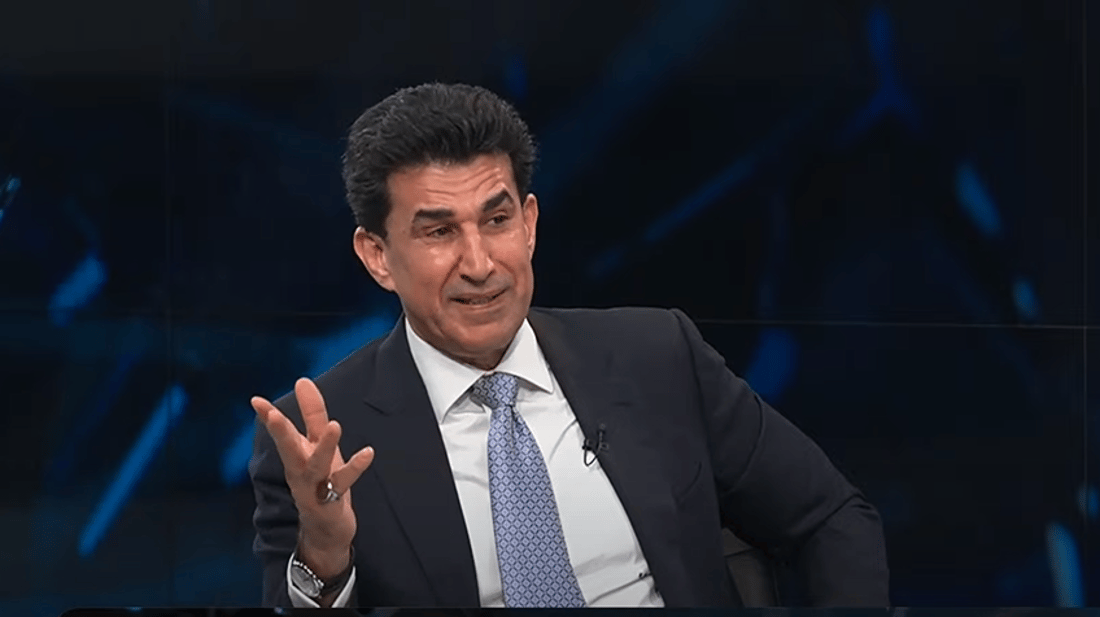
Khalid Al-Yaqubi during an interview on Dijlah TV
Media Monitor
Security adviser to Iraqi PM says Syria ties focused on security, downplays ISIS threat
BAGHDAD — Khalid Al-Yaqubi, senior security adviser to Prime Minister Mohammed Shia Al-Sudani, said Iraq’s relationship with Syria is now defined by security concerns rather than political engagement, warning that developments across the border have direct implications for Iraq’s stability.
“Our relations with Syria today are more security-oriented than political,” Al-Yaqubi told Dijlah TV in an interview. “The security concern in Syria outweighs the political one—even for the new regime. The repeated visits of the Iraqi intelligence chief to Damascus are focused on these issues. What matters most to us is the situation of minorities in the new Syria, as this directly touches on our national security.”
Some excerpts of Al-Yaqubi’s interview with Dijlah TV:
Our relations with Syria today are more security-oriented than political. The security concern in Syria outweighs the political one—even for the new regime. The repeated visits of the Iraqi intelligence chief to Damascus are focused on these issues. What matters most to us is the situation of minorities in the new Syria, as this directly touches on our national security. Developments there inevitably reflect on conditions here in Iraq.
There is cooperation and willingness on the Syrian side to address certain issues concerning the Alawites, but their ability to implement solutions remains limited. We must not underestimate the challenges facing the new Syrian regime. The actions of the Zionist entity are not minor—its strikes, infiltrations, bombardments, and violations of sovereignty are ongoing. This entity has not yielded even to major powers so far, and the world itself is moving in ways that are unclear, without a stable framework for predicting what will happen next.
I do not believe a new war will erupt between Iran and Israel. The region simply cannot endure another war. Renewed fighting seems unlikely. What Israel endured was significant—it suffered painful strikes, though it conceals the extent of its losses. Iran, for its part, managed to recover within hours after the assassination of its senior military leaders and the bombardment of most of its air defenses. We must recognize that launching even a single ballistic missile is no easy feat under Israel’s complete aerial and space dominance. Yet the Iranians launched hundreds of missiles. I recall colleagues from the Military Academy during the 1991 war who struggled to fire even one missile under U.S. air control.
The elections will be held on schedule. Speculation about postponement is exaggerated. They will take place as planned unless Iraq becomes directly involved in a major war—which is highly unlikely.
The Iraqi government has neither knowledge of nor involvement in any Iraqis fighting alongside Russia. If an Iraqi living in Russia fights with them, what could we possibly do? And if an Iraqi in Ukraine fights on their side, what could we do in that case? The government has no knowledge of such matters and no information whatsoever about them.