
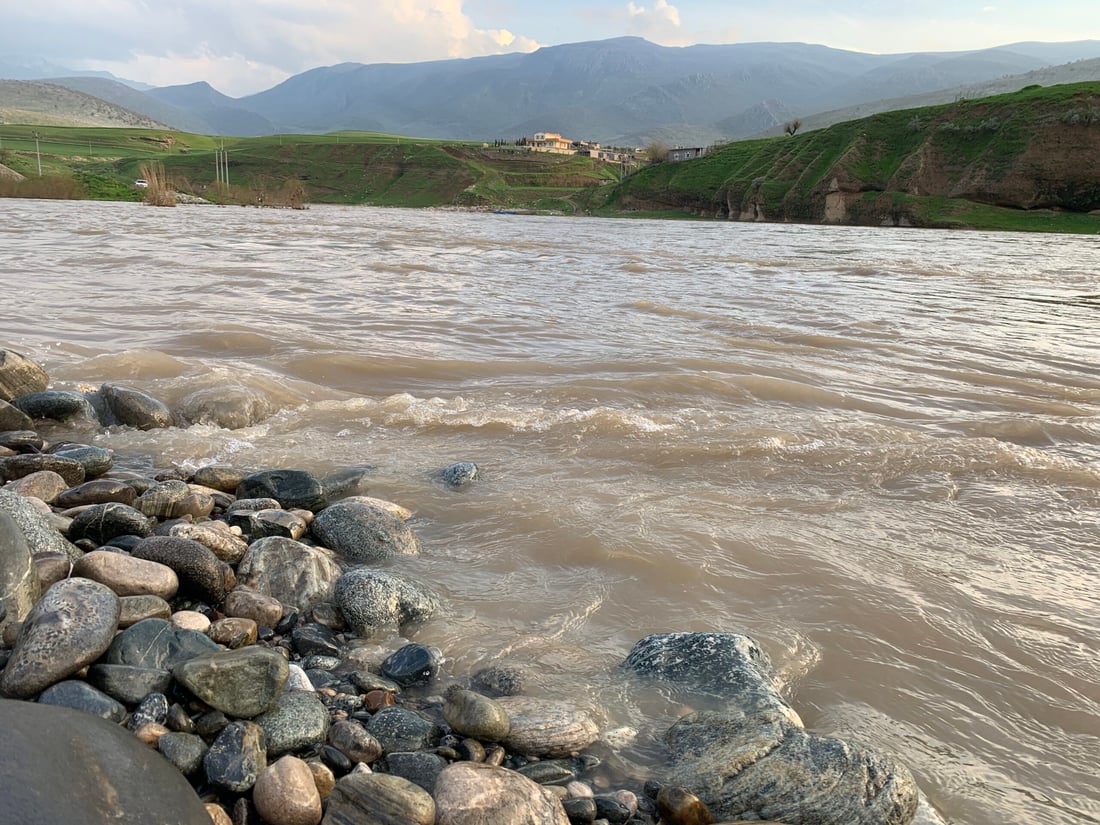
View of the little Zab River near Harzena village in Pshdar district, Sulaymaniyah governorate.
Sulaymaniyah
Kurdish officials warn of danger from unannounced Iranian water releases at Sardasht Dam
QALADZE — Authorities in Sulaymaniyah’s Raparin administration are raising alarms over Iran’s uncoordinated control of water flows from the Sardasht Dam, saying the unpredictable releases into the Little Zab River threaten both public safety and water supplies in the Kurdistan Region.
Marf Mahmood, head of the Qaladze Water Directorate, told 964media on Thursday that Iranian authorities provide no notice before altering water levels. He said the changes are linked to hydroelectric generation. “Whenever they need more electricity, they release the water,” Mahmood said. “But the Kurdistan Region is never informed, which creates risks for people along the river.”
The Sardasht Dam, located in Iran’s West Azerbaijan province, feeds the Kolase River, a key source of the Little Zab. Mahmood warned that abrupt surges or drops in flow pose dangers, particularly in summer when locals and tourists visit the area. “It becomes more dangerous when the timing is unknown,” he said. “Tourists go there to enjoy their time, and a sudden water surge puts them at real risk.”
He said this summer, water was withheld and then released at random intervals, with no prior notice. “This summer, we weren’t informed at all,” Mahmood said.
Despite the hazards, he noted that officials are relieved the river is flowing again amid severe seasonal dryness. “Ninety-five percent of Qaladze’s drinking water comes from the Khas project, which depends on this river,” he said. “If the water stops, we’ll face serious shortages.”
The Little Zab runs nearly 400 kilometers into the Kurdistan Region, entering at Harzena village in Pshdar district. In addition to supplying drinking water to Qaladze and Sulaymaniyah, the river supports fish farms and thousands of acres of farmland.