
Wasit
Kut fire memorial plans draws local criticism as political fallout continues
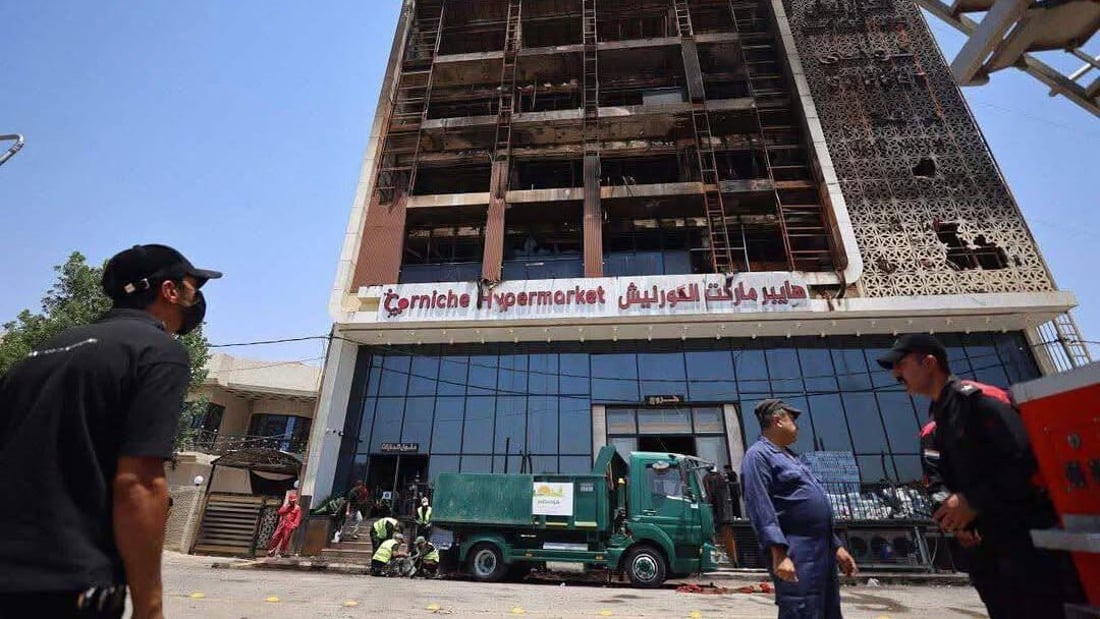
WASIT — A decision by the Wasit Provincial Council to purchase and demolish the site of Kut’s deadly fire and replace it with a permanent memorial has sparked debate among residents of Kut. Many have called for holding those responsible accountable before moving forward with commemorative efforts.
The fire at a shopping center in Wasit’s Kut resulted in the deaths of at least 61 people and triggered public outrage and protests. Relatives of the victims and locals began nightly protests outside the governorate building, escalating to an open-ended sit-in on July 22 to demand the dismissal and prosecution of local officials. The following day, Wasit Governor Mohammed Jameel Al-Mayahy submitted his resignation.
The plan involves acquiring the property and building a monument to honor the victims of the blaze. However, some residents see the move as a premature response that diverts attention from the investigation and accountability efforts. Critics also raised concerns that buying the property could be interpreted as a reward to its owner, whose building was the site of the deadly incident.
Speaking to 964media, lawyer Mashriq Ali explained that under Law No. 12 of 1981 on expropriation, the state has the right to acquire property either through mutual consent or by judicial order.
“Voluntary expropriation requires agreement between the parties if the property is privately owned. Judicial expropriation requires filing a request with the court in whose jurisdiction the property lies,” he said. “Therefore, the matter depends on the property owner’s consent.”
Activist Ali Al-Waeli told 964media the council’s decision to allocate a plot of land to each victim and turn the building site into a memorial is seen as a way to “absorb public grief and anger over the tragedy,” but also raises questions.
“The public is asking whether the decision amounts to rewarding the owner of the building, whose property was the scene of the disaster,” he said. “Installing a monument there could become a permanent reminder of the tragedy and ongoing grief for the victims’ families.”
Al-Waeli described the decision as hasty and urged the local government to focus instead on holding those responsible accountable. He added that the hypermarket owner could donate the building as a goodwill gesture.