
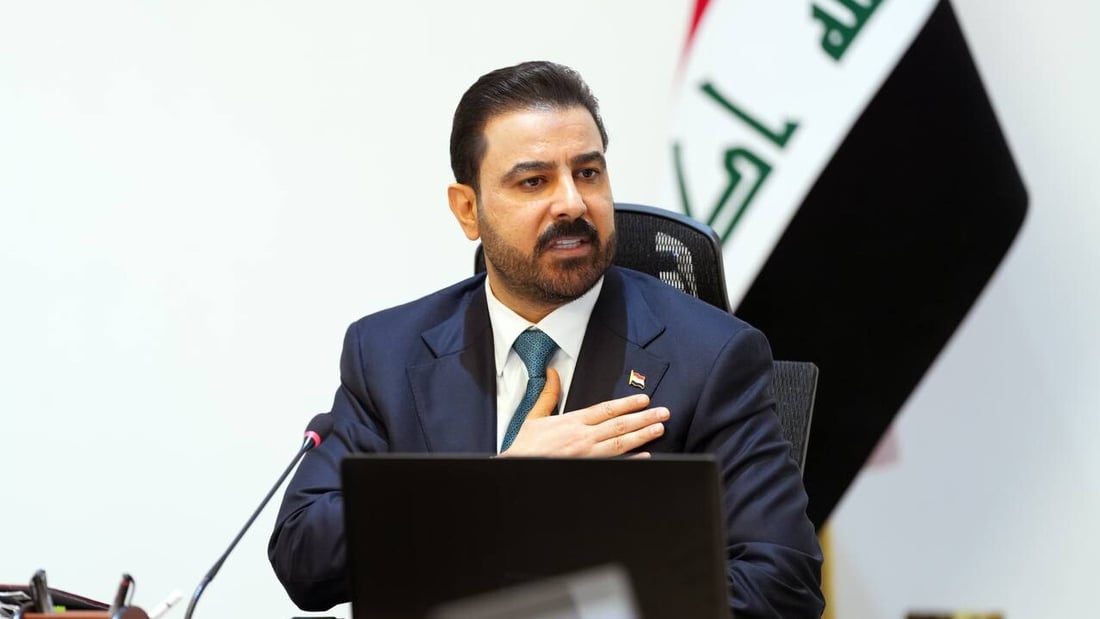
Prime Minister Ali al-Zaidi
Al-Zaidi raises security alert as armed factions threaten response to airstrikes
BAGHDAD — Prime Minister Ali al-Zaidi has ordered Iraq’s military and security forces to raise their combat readiness and hold training exercises, the Security Media Cell said Thursday, two days after the end of the pilgrimage that armed factions said they would wait out before responding to U.S. and Saudi airstrikes themselves.
The Security Media Cell said Zaidi issued the directive as commander-in-chief, and that the measures were meant to “maintain the high level of readiness of all security formations and enhance their ability to carry out their duties, contributing to strengthening security and stability and protecting citizens and public interests.” It did not say what prompted the order.
The Islamic Resistance in Iraq, an umbrella name used by Iran-aligned factions, said after the strikes that its response “will inevitably come” once Arbaeen ended, and gave the government a deadline to show it could defend Iraqi sovereignty without armed groups. Arbaeen fell on Tuesday. Iraq’s national security council had said responding to the strikes was “the exclusive responsibility of the Iraqi government”.
The order also comes a day after the governing coalition said armed activity outside state authority after Sept. 30 would be treated under the Anti-Terrorism Law, and on the same day the chief justice met the heads of the Office of the Commander-in-Chief and the Counter-Terrorism Service.
U.S. and Saudi aircraft struck Popular Mobilization Forces sites in Baghdad, Wasit, Nineveh, Basra, Kirkuk, Karbala and Diyala in late July, killing at least 20 members and wounding 32, according to the force. U.S. Central Command said it and Saudi forces hit weapons-storage and logistics sites linked to Iran-backed groups after more than 30 drone attacks it attributed to Iran’s Revolutionary Guard, and Saudi Arabia said the drones were launched from Iraqi territory. Neither named a faction.
Factions under the Islamic Resistance umbrella have claimed repeated drone, rocket and missile attacks on U.S. targets in Baghdad and the Kurdistan Region since the regional war began in late February, without Iraqi government authorization. Saudi Arabia, Kuwait, Bahrain and the United Arab Emirates have all protested attacks or incursions they say came from Iraqi territory, and on July 14 an Iraqi delegation in Riyadh undertook that Iraq would not allow its territory or airspace to be used against Gulf states.