
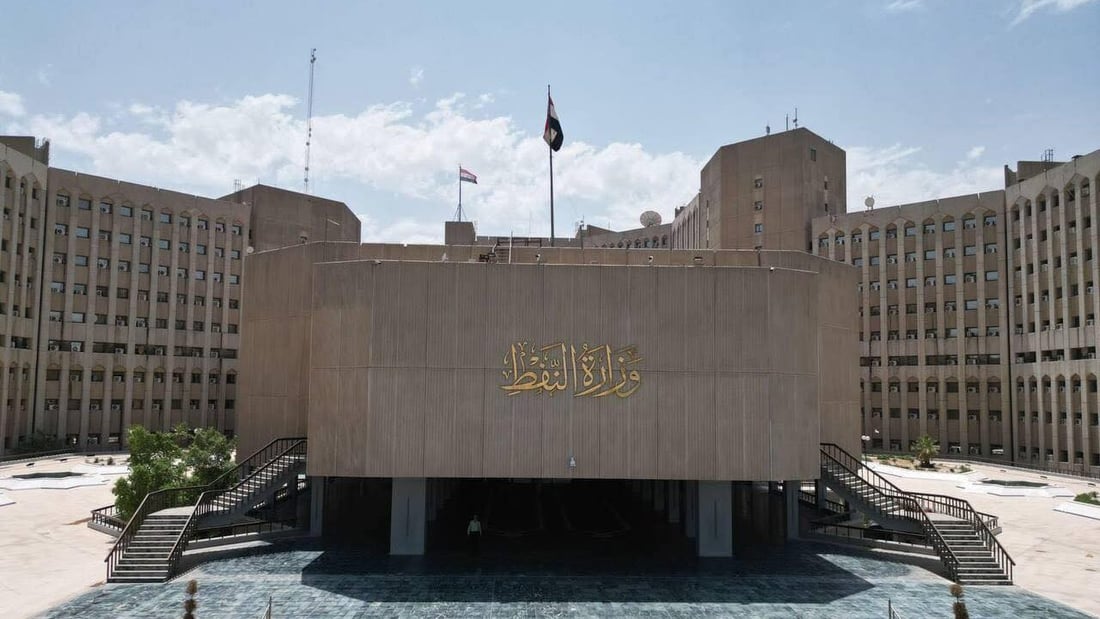
Iraq's Ministry of Oil headquarters
SOMO letter to NSS
Iraq’s state oil marketing body warns of ‘high-risk’ unauthorized tanker activity
BAGHDAD — Iraq’s State Oil Marketing Organization has warned the National Security Service of suspected smuggling operations involving multiple tankers conducting unauthorized oil transfers off the coast, according to an official letter confirmed by two officials to Reuters.
Marked “very urgent,” the letter highlights suspicious tanker movements in and around the ports of Umm Qasr and Khor Al-Zubair, as well as within Iraq’s territorial waters. The document, first reported by Reuters, has not been independently verified by 964media, but two Iraqi officials confirmed its authenticity.
SOMO said data from global tracking platforms — including Kpler, Platts/Sea Web, and Vortexa — showed that several vessels may have loaded petroleum products through “camouflaged and unauthorized means.”
“The tracking data shows the use of advanced techniques to manipulate the Automatic Identification System,” the letter stated, citing “AIS spoofing” to conceal vessel locations or alter route data. It also said tankers delayed disclosing cargo or destination information.
“These activities fall within the high-risk category,” SOMO said, adding that the vessels likely engaged in “dark ship-to-ship transfers” and other non-compliant and illegal operations.
SOMO noted that none of the tankers are listed in Iraq’s official export schedules for crude or petroleum products, raising “doubts about the legality” of the shipments. The agency urged the National Security Service to investigate and “take appropriate actions.”
Iraqi economist Nabil Al-Marsoumi said these activities are part of the broader smuggling of “black oil” — a byproduct of refining — driven by Iraq’s subsidized fuel allocation system for industrial facilities.
In a statement following SOMO’s disclosure, Al-Marsoumi claimed Iraq produces about 18 million tons of fuel oil annually. Of that, more than 12 million tons are exported through official channels, while the rest is either used domestically or smuggled abroad.
“The real reason behind the smuggling of [fuel] oil lies in the quotas received by construction-related factories, especially brick and cement plants,” he said. Al-Marsoumi estimated that more than 1,000 licensed and unlicensed facilities receive over 9 million liters daily.
These factories purchase fuel oil at heavily subsidized prices — 100,000 dinars per ton for brick plants and 150,000 dinars for cement plants — which Al-Marsoumi said is just 20% of global market rates.
He warned that the pricing gap has enabled “a wide smuggling network” that transports fuel oil from refineries to Iraqi ports, where it is shipped abroad aboard tankers.
“These operations yield enormous profits reaching billions of dollars annually,” Al-Marsoumi said.