
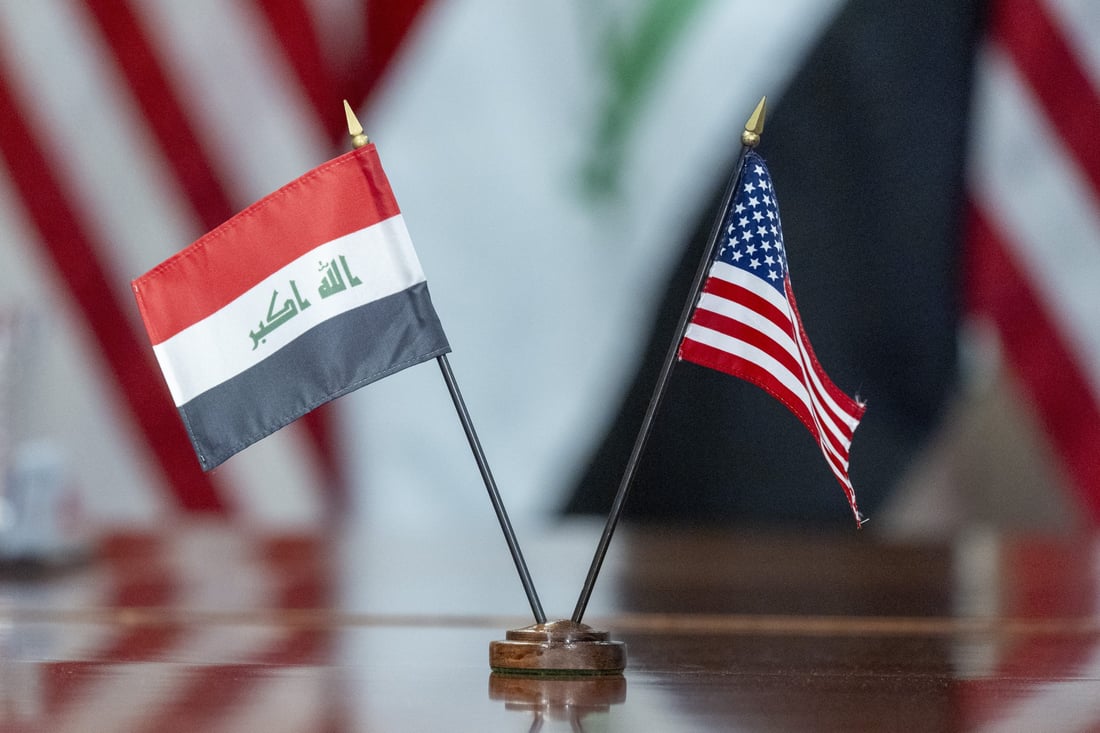
Miniature Iraqi and U.S. flags displayed during a bilateral meeting.
Monitor
Trade Ministry: US tariffs unlikely to affect Iraq’s oil exports but may impact revenues
BAGHDAD — Iraq’s Ministry of Trade said recent U.S. tariffs are not expected to directly impact the country’s oil exports but warned of potential indirect effects on global energy markets and national revenues, according to a statement Wednesday from ministry spokesperson Muhammad Hanoun.
“Iraq’s non-oil exports to the United States are minimal,” Hanoun told the Iraqi News Agency. “The U.S. tariffs may indirectly affect global oil prices, and thus government revenues from oil sales, which is an indirect impact.”
He stressed that Iraq is exempt from the tariffs on oil, which make up the majority of its exports to the United States.
However, Hanoun cautioned that the new U.S. measures could lead to a “relative decline” in global oil prices. He urged the government to reinforce efforts to boost non-oil revenues in light of shifting market conditions. Hanoun also pointed to rising global inflation as another pressure point, saying it is affecting oil market dynamics and weakening supply-demand balances, which in turn “affects economic growth and the state budget.”
The United States recently imposed a 30% tariff on imports from Iraq as part of measures targeting several countries, including Algeria, Libya, and Sri Lanka, with rates ranging from 20% to 50%.
The spokesperson for the Ministry of Trade’s statement to Iraqi News Agency:
Iraq’s non-oil exports to the United States are minimal, and the U.S. tariffs may indirectly affect global oil prices, and thus government revenues from oil sales, which is an indirect impact.
Iraq is exempt from the tariffs on oil exports, which constitute the vast majority of its exports to America.
The effects of the tariffs may be on global oil prices and could potentially lead to a relative decline, which reinforces the importance of government measures to support the strengthening of non-oil revenues.
The global increase in inflationary pressures leads to pressure on oil markets and changes in the rules of supply and demand, and thus a possible decrease in crude oil prices, which affects economic growth and the state budget.
The government had earlier taken a wise preemptive step by responding swiftly with urgent orders to enhance trade exchange with Washington through banking coordination and political negotiations with Washington in an attempt to restore balanced trade dialogue.
The American decision to impose a 30% tariff is based on a bilateral trade deficit, not on an increase in tariffs by Iraq.