
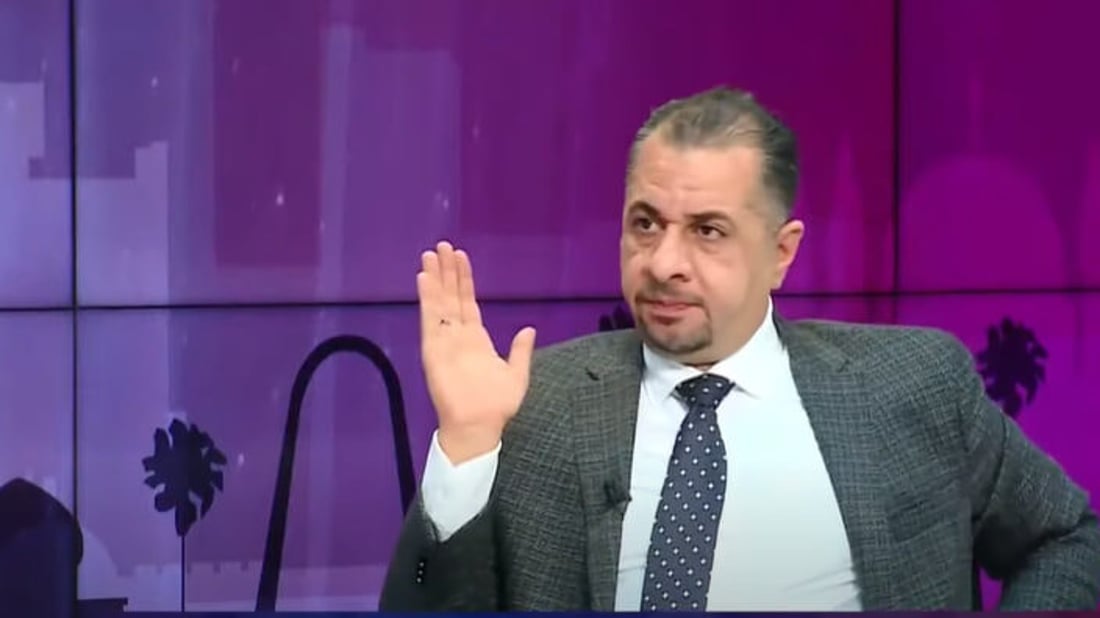
Fadi al-Shammari, the political advisor to the Iraq's Prime Minister
Media Monitor
PM’s advisor highlights Iraq’s efforts to ‘maintain peace’ amid regional tensions
BAGHDAD — In an interview with Al-Sumaria TV, Fadi Al-Shammari, advisor to Prime Minister Mohammed Shia Al-Sudani, emphasized the Iraqi government’s efforts to shield the country from the ongoing regional conflict, especially in light of growing tensions in the Middle East. Al-Shammari also noted that the United States and the international coalition had played a key role in protecting Iraq from potential Israeli strikes. He predicted that while the region will experience fluctuations in the near future, it is moving toward a settlement after the U.S. elections.
Al-Shammari praised Iraq’s diplomatic achievements, including its influence over European organizations to reconsider military support for Israel. Despite concerns over potential strikes, he reaffirmed Iraq’s commitment to peace and stability, rejecting any involvement in military escalation.
The recent conflict between Israel and Hezbollah in Lebanon has significantly escalated, raising fears of a broader regional war. The confrontation began in October 2023, with Hezbollah launching rockets into northern Israel in solidarity with Hamas after the group’s attack on southern Israel. The situation has since worsened, with frequent cross-border missile exchanges.
Tensions have also heightened as Iraqi militias increased their rhetoric following drone and missile strikes from Iran targeting Israel. In response, Israeli officials have warned of potential retaliatory measures.
Excerpts from Al-Shammri’s interview with Al-Sumaria Tv:
In the face of a volatile region and the presence of a reckless fool like Netanyahu, who has tied his political existence to the expansion of the war, the Iraqi government has succeeded in relatively sparing Iraq from the war. It is working on three paths, supported by the religious authority and the Coordination Framework, which holds the majority decision.
We do not want Iraq to enter the military path; neither the Shiite consensus accepts this, nor does the national consensus. The Iraqi government is responsible for shaping Iraq’s foreign policy, and our diplomatic work in raising awareness of what is happening in Gaza has yielded results. One Dutch organization informed us of a decision against its government to stop supplying Israel with some spare parts for ‘F-35’ aircraft, and there are clear demands in France and Italy to stop exporting weapons to the Israeli entity.
There are pressures on the U.S. and the international coalition, as they are responsible for protecting Iraq’s airspace, despite their failure to do so on several occasions. However, they have contributed to sparing Iraq from potential Israeli strikes. Although we have not received direct messages regarding Israel’s target list, we expect anything, given the reckless actions of Netanyahu.
We had information that Israel might target some sites in Iraq, but the factions sent messages denying that the Golan operation was launched from Iraqi territory. However, Israel confirmed this to expand their operational area, considering they have failed to achieve any goals despite a year passing since October 7.
We respect our neighboring countries and will not allow, under any circumstances, any targeting of the Gulf states. Threats from some parties about targeting them were likely part of psychological operations. The Coordination Framework and the State Administration Coalition will not allow Iraq to return to previous stages. Our security forces are not weak and will not permit such actions.
Some unknown accounts, like Abu Ali Al-Askari and others, that issued these threats do not have governmental, political, or even legitimate cover to carry out their threats. While we understand the positions of some factions regarding the Israeli massacres, Iraq’s position is important, and no one can fulfill it on the humanitarian or diplomatic level, nor in its relationships with conflicting regional and international parties.
We are engaging in direct and indirect dialogues with some factions of the resistance. There are questions about the expected benefit of Iraq engaging in the military path, given the presence of active and influential resistance fronts. These parties need a diplomatic path, and who but Iraq is capable of that, both in the East and the West? In addition to Qatar, with whom we are also in contact regarding this matter.
The region will witness fluctuations until the period after the U.S. elections, which will determine the course of global events. What is happening in the Middle East reflects on the entire world, but the region is ultimately heading towards a settlement.