
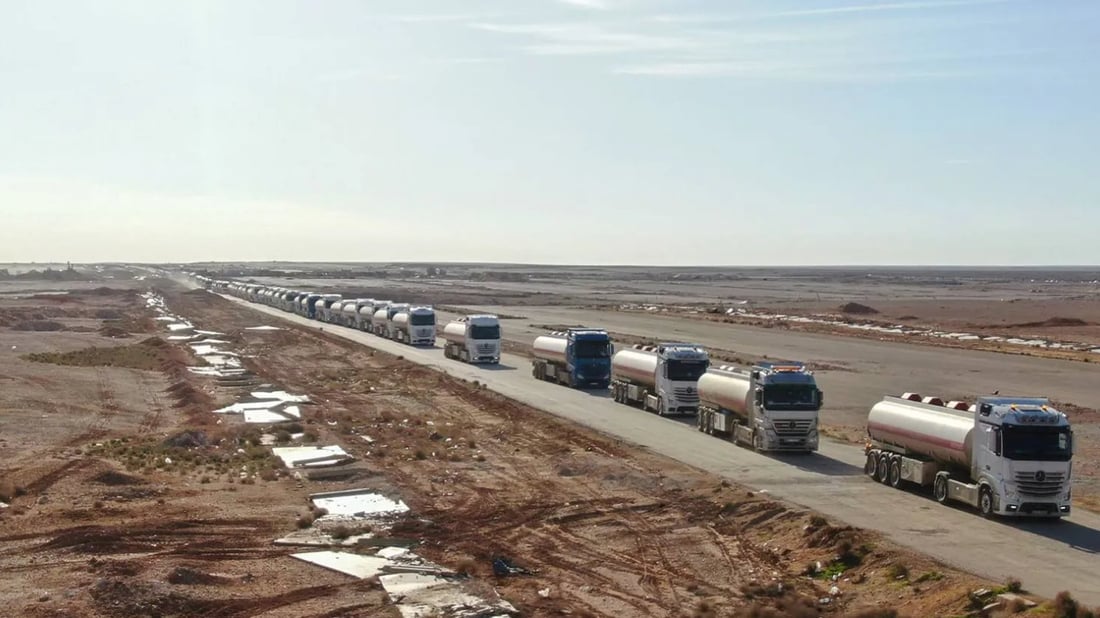
A long convoy of tanker trucks stretches across a desert roadway in western Iraq, highlighting the scale of fuel transportation operations in the region. Photo by 964media.
Harvest
Anbar wheat harvest brings long queues to Ramadi silo despite booking system
ANBAR — Long lines of wheat-laden trucks have formed outside the Shari’ al-Jamia Silo in Ramadi days into what officials describe as a strong harvest season, as farmers across Anbar governorate increasingly choose to sell their crops to the government rather than private traders.
Local authorities decided to accept the entire wheat crop at a rate of 1,200 kilograms per dunam instead of 900, provided quality standards are met, following directives from the Ministry of Agriculture and the formation of joint committees from agricultural divisions and the Grain Trade Company. The raised ceiling encouraged more farmers to market through state channels, according to the Anbar Agriculture Directorate.
Iraq purchases wheat directly from farmers through government-operated silos as part of a long-running food security policy, using the grain to supply the country’s subsidized food distribution system and maintain strategic reserves. The government typically pays procurement prices above commercial rates to encourage domestic production, support farm incomes and reduce reliance on imports.
Anbar Agriculture Director Ammar Mallouk told 964media that lands included in the agricultural plan reached 462,000 dunams and that no crop from outside the plan had been received. He said wheat cultivation covered 650,000 dunams last year and that by May 30 authorities had received 306,000 tons. “These are indicators of achieving production greater than the previous season because of climatic changes and rainfall, with expectations of reaching and even exceeding self-sufficiency,” he said.
Anbar has four main wheat receiving sites: the main silo in Ramadi, the storage complex, the Ana marketing center and the al-Khairat marketing center in Karma. Together the facilities can handle between 15,000 and 16,000 tons per day, with each site allocated between 125 and 150 trucks daily through an electronic pre-booking system.
Hazem Aswad, director of the Anbar silo, told 964media that receiving begins in the early morning and continues until the last truck registered in the booking system. Officials say the system has improved organization and reduced problems from previous seasons, when farmers waited days outside facility gates.
Aerial footage captured by a 964media correspondent, however, showed long queues outside the main silo after working hours. Farmer Salman Saud said organization had improved but that he had been waiting three days for his turn under the electronic booking system. Another farmer, Khudr Badiwi, who arrived from Amiriyat Fallujah after reserving a slot online, said facilities and procedures were organized.
About 20 kilometers north of Ramadi, golden wheat fields stretch across Tharthar district, where harvesting began several days ago. Farmers relied on Euphrates River water for the first two irrigation cycles, while late March and April rainfall provided a final watering that helped revive the crop.
Farmer Abd Mohammed al-Shaabani said he hopes rainy seasons continue so farmers can eventually do without irrigation water, which is often unreliable due to fluctuations in river levels. He said he chose to bring his harvest to Ramadi after hearing reports of improved organization, rejecting offers from private traders of between 350,000 and 400,000 Iraqi dinars ($229-$261) per ton.