
Kurdish Model Farmer Pioneers Research on Winter Tomato Cultivation
Renowned farm
Sulaymaniyah farmer leads project to cultivate winter-resistant tomatoes
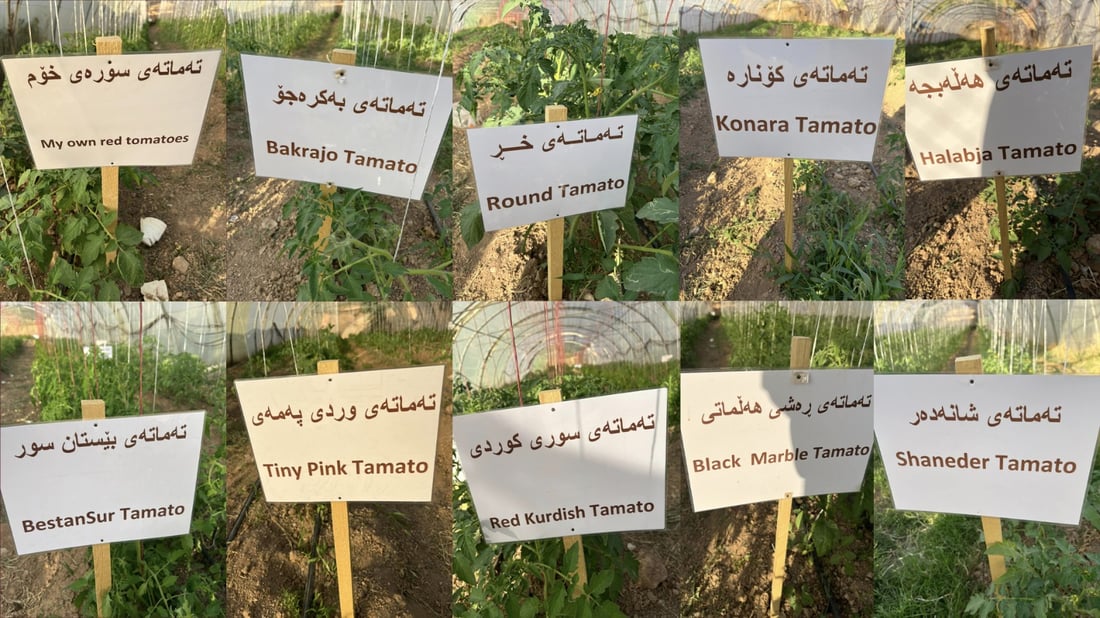
SULAYMANIYAH – Sheikh Jamal Krbchna, one of Kurdistan’s most renowned model farmers, is leading an innovative project aimed at cultivating a variety of tomatoes that can withstand harsh winter conditions. His goal is to develop resilient and sustainable crops, and he has planted 25 different types of tomatoes as part of extensive research on their growth and adaptability.
Sheikh Jamal, recognized in May 2024 as a top farmer by the Global Network of Lighthouse Farms, an initiative supported by Wageningen University & Research in the Netherlands, is conducting the experiment on his 40-hectare farm in Krbchna village, in the Sangaw sub-district of Chamchamal, Sulaymaniyah governorate. Ten hectares are dedicated to breeding and experimentation, while the remaining land is used for crop and vegetable production.
“I want to determine which of these 25 tomato varieties can withstand the cold so that they can be cultivated during the winter season,” Sheikh Jamal told 964media. He emphasized that heating greenhouses in the Kurdistan Region during the winter is both costly and challenging, and his research focuses on finding varieties that can naturally adapt to the local climate without heavy reliance on artificial heating.
The tomatoes are being tested for their resilience and quality by exposing them to cold temperatures, with the aim of identifying the best variety for winter cultivation. This is the first time such research has been conducted in the region, according to Sheikh Jamal. Some of the varieties are self-developed and adapted to local conditions.
The typical tomato growing season in the Kurdistan Region runs from late spring to early fall, with peak harvests occurring between July and September. While some farmers extend the growing season into late fall and early winter using greenhouses, the local supply often falls short of demand during the colder months. To help meet winter demand, the Kurdistan Regional Government removes taxes on imported tomatoes during this period to alleviate market costs.