
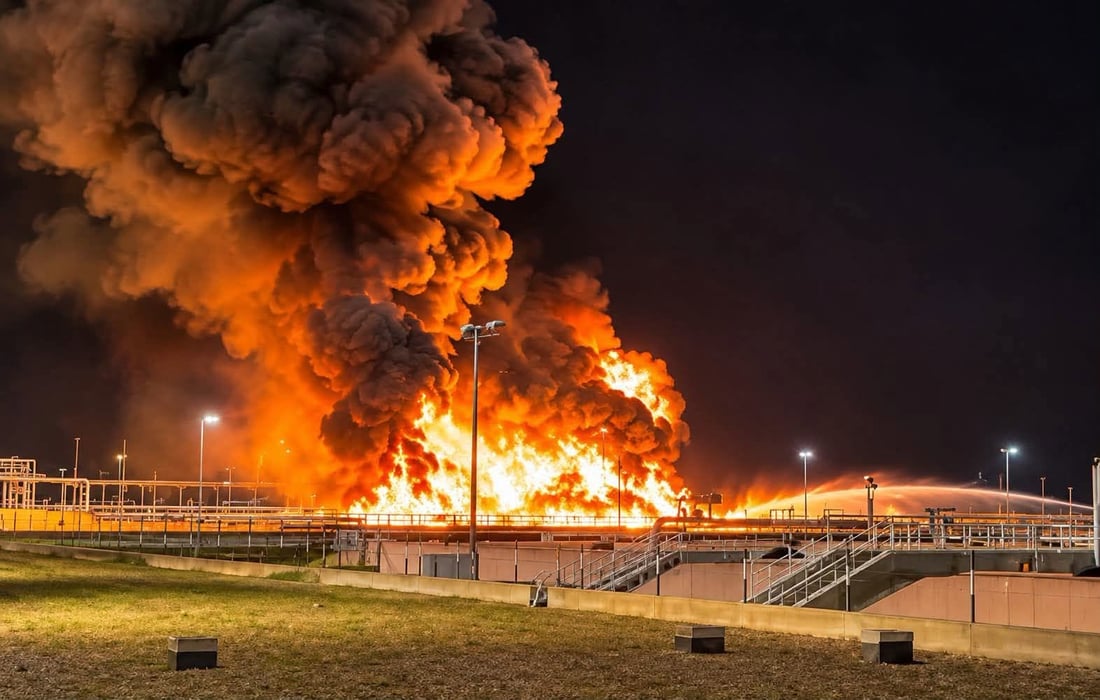
'Terrorist act'
Khor Mor attack cuts nearly 3,000 MW as PM Zaidi orders joint probe
SULAYMANIYAH — An attack on the Khor Mor gas field late Sunday knocked nearly 3,000 megawatts of generation off the Kurdistan Region’s grid, halting gas supplies to its power stations and cutting electricity in parts of Erbil, Duhok and Zakho.
Prime Minister Ali al-Zaidi, the commander-in-chief of the armed forces, ordered a joint investigation with the relevant authorities in the Kurdistan Region into the circumstances of the attack on the field in Sulaymaniyah governorate’s Chamchamal district, his office said early Monday.
The Kurdistan Regional Government’s ministries of Natural Resources and Electricity said in a joint statement that the field was attacked at 11 p.m. in what they called “a terrorist act.” The ministries said they were working to keep the attack’s effect on power supply hours as small as possible and to return supply to normal as soon as they could.
The attack stopped the gas supplies that feed the Region’s power stations, causing a sharp drop in the electricity supplied, KRG Electricity Ministry spokesperson Omed Ahmed told 964media. The ministry has given a figure of nearly 2,800 megawatts.
Ahmed said the ministry was trying to avoid a blackout across the Kurdistan Region, cutting power first to places that do not need it and to households only as a last resort. The ministry was also turning to other sources, he said: the hydropower stations at the Dukan and Darbandikhan dams and plants that can run on other fuels, which keep hospitals, water stations and other critical sites supplied.
The attack set off a fire and caused heavy damage, a source at the field told 964media.
“There is a lot of damage, but because of the bad situation, nothing is clear to us,” the source said.
The alarm sounded and all workers were told to move to protected areas, where many took shelter underground, the source said. The source said the attack targeted a gas production section known as Ka1.
A second source, who asked not to be named, told 964media that workers were moved to concrete shelters as soon as the alarm sounded and that crews were working to bring the fire under control. It was not yet certain whether a drone or a rocket hit the field, the source said, though pieces of debris collected at the site suggested a drone.
Operations at the field were shut down and gas production for the power stations was temporarily halted, the second source said. Once the fire is out, the pipelines will be inspected: if the damage is extensive, production will stay halted until repairs are made, and if it is limited, the field will restart.
The same source said the attack hit the field’s loading section for liquefied petroleum gas, the household gas used for cooking and heating, which loads 1,500 metric tons a day. The section is served by 172 tankers, with four at the loading point at any one time.
When Khor Mor production was suspended in July, the two ministries said household cooking gas supplies would not be interrupted, after the federal Oil Ministry agreed to meet the Region’s daily demand.
There was no immediate claim of responsibility, and it was not immediately clear whether anyone was hurt.
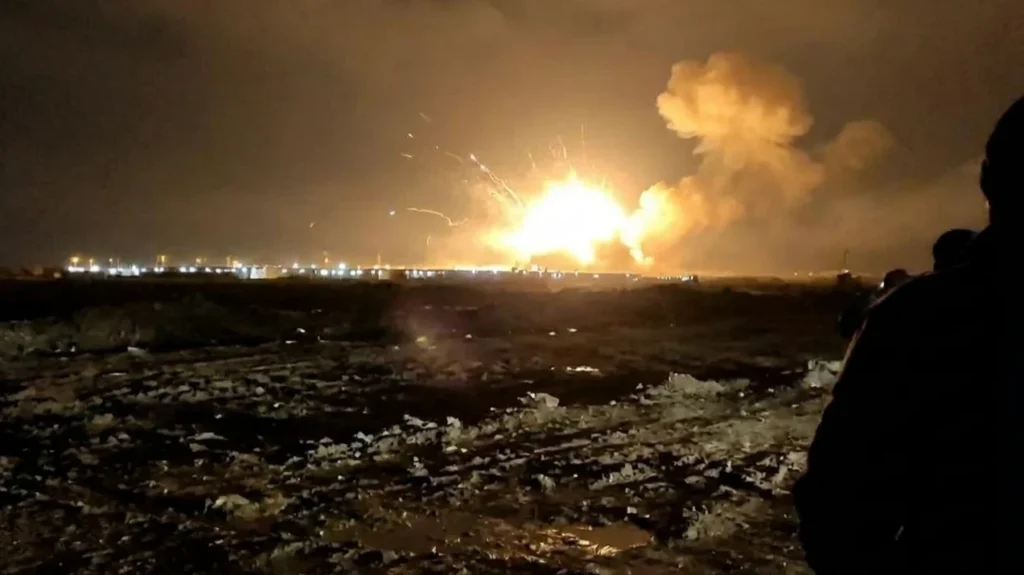
Khor Mor, in the Qadir Karam subdistrict of Chamchamal, produces about 750 million cubic feet of natural gas a day. Its operators, the UAE-based Dana Gas and Crescent Petroleum, say it fuels more than 80% of the Region’s electricity generation. The attack came a week after the scheduled end of the field’s annual monthlong maintenance, which was set for Oct. 2 to Nov. 2.
The field has been hit by repeated rocket and drone attacks. A drone strike in April 2024 killed four Yemeni workers, and a drone strike on Nov. 26, 2025, set a main storage tank on fire, cutting about 2,600 megawatts, Ahmed said at the time.
A federal investigation found that two drones launched from areas east of Tuz Khurmatu, in Salah al-Din governorate, carried out the November attack, which it said was the 11th on the field from the same area. It said suspects had been identified and arrest warrants issued for several of them.
This year, Dana Gas suspended production from Feb. 28 until mid-April after the outbreak of the U.S.-Israeli war with Iran, and halted it again in July, citing security threats, when the Region lost 2,500 megawatts of generation.