
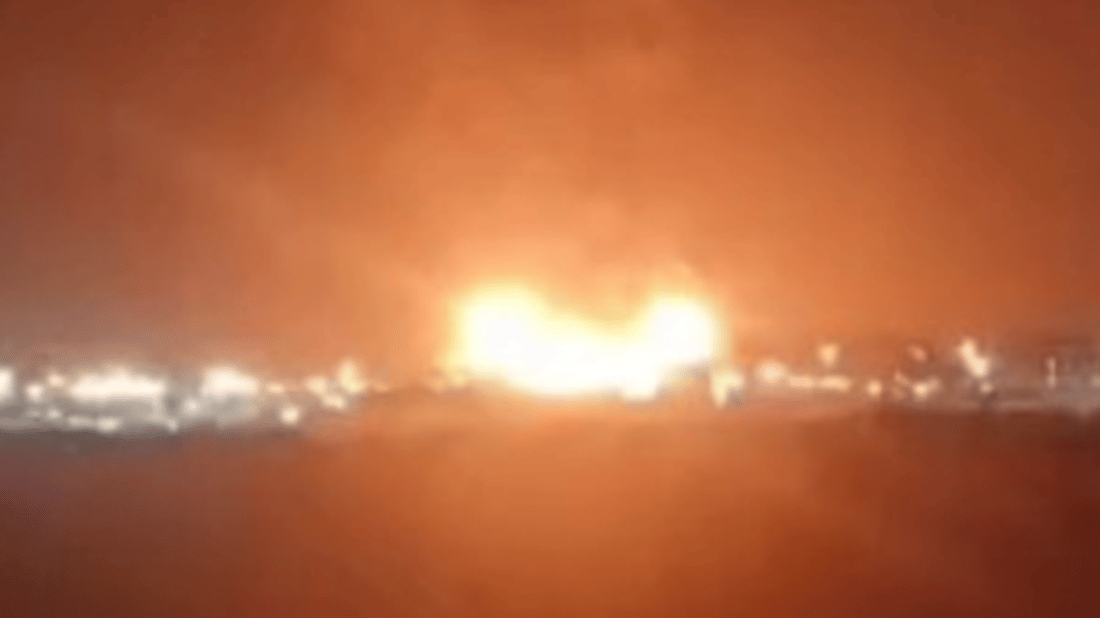
A view of the Khor Mor gas field following a drone strike on November 26, 2025.
Joint committee findings
Probe says strikes on Khor Mor were launched from Tuz Khurmatu, vows tighter security
BAGHDAD — Iraq’s federal government said Wednesday that two drones launched from areas east of Tuz Khurmatu targeted the Khor Mor gas field in Sulaymaniyah on Nov. 26, confirming that suspects have been identified and that further arrest warrants have been issued.
The investigative committee, chaired by Prime Minister Mohammed Shia Al-Sudani in his capacity as commander in chief of the armed forces, said one drone struck the field while the second crashed outside the site. Debris from both drones has been secured for forensic analysis.
The committee includes representatives from federal and Kurdistan Region security, intelligence and defense agencies. It had initially pledged to release its findings within 72 hours, but the deadline passed without a public statement.
Khor Mor supplies much of the natural gas used to generate electricity across the Kurdistan Region. The Nov. 26 drone strike hit storage facilities, forcing a full shutdown that officials said removed an estimated 2,600 to 3,000 megawatts from the grid and caused widespread blackouts in Erbil, Sulaymaniyah and other areas. Regional and federal leaders, along with foreign governments and international organizations, condemned the attack and voiced support for the joint investigation.
According to the official statement, “the perpetrators of this attack have been identified. They are outlaws, and judicial arrest warrants have already been issued for several of them. Security forces are currently pursuing the suspects.” The statement did not name the alleged perpetrators.
The committee said the Nov. 26 incident was the eleventh recorded attack on the gas field originating from the same region.
In response, the federal government, in coordination with the Kurdistan Regional Government, has approved new measures to secure the site. These include redeploying security forces within the East Salah Al-Din Operations sector to close security gaps and establish a unified command structure. Commanders in the area will be replaced with new leaders from the Defense and Interior ministries, as well as the Popular Mobilization Commission.
The government also plans to strengthen intelligence coordination between federal and regional agencies, deploy air-defense systems at the gas field, and tighten regulations on drone use, allowing their operation only with official authorization.
The deployment of air defenses has been a longstanding demand of Kurdish officials. “I also urge our American and international partners to provide the defensive equipment necessary to protect our civilian infrastructure, and to support us in taking serious action to deter these attacks on our people and our progress,” Kurdistan Regional Government Prime Minister Masrour Barzani said following the strike.
“The committee’s work remains ongoing until all individuals involved in this attack… are apprehended,” said Sabah Al-Numan, spokesman for the commander in chief. He described the attack as an attempt “to obstruct and delay the efforts underway to establish security and economic stability.”