
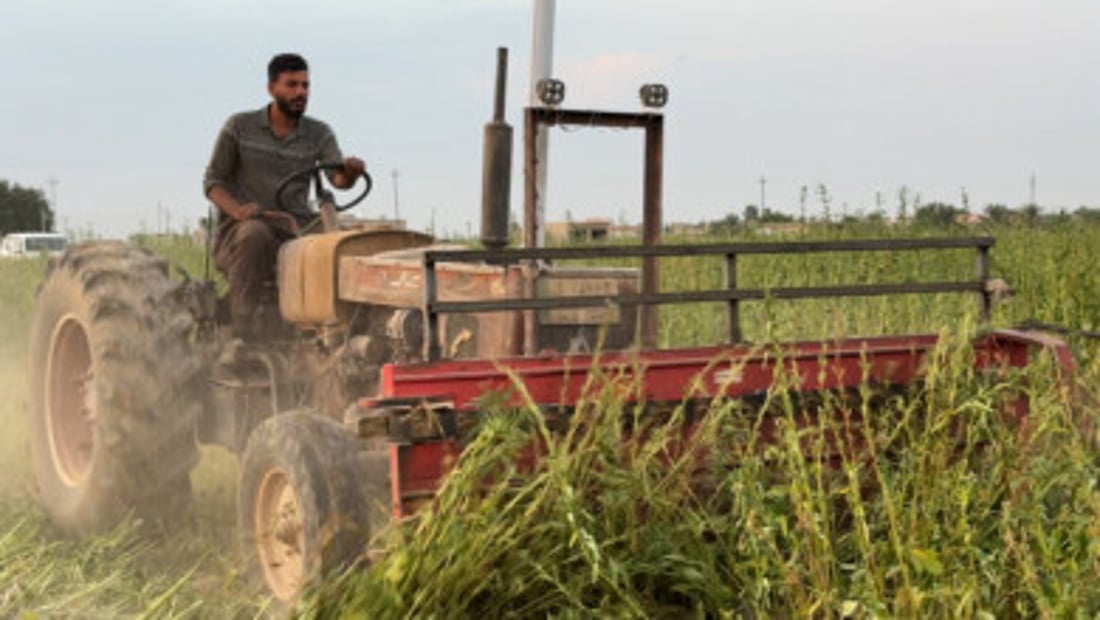
Diyala farmers harvest sesame grown on well water after wheat losses
DIYALA — Farmers in Bani Wais, a village in the Saadiya area of eastern Diyala, have begun harvesting sesame, a crop they turned to after years of losses on wheat and one they grow entirely on well water, farmers told 964media.
The crop is planted in July and harvested in early autumn, when the plants reach about 60 centimeters. Farmers sell the seeds to traders until December.
“Farmers started turning to this crop after previously depending mainly on wheat. Over time, growing wheat began causing losses for farmers in this area,” Yousif Abdul Munim, a farmer from Bani Wais, told 964media.
Sesame takes a lot of work, he said, all the more because farmers depend on groundwater rather than river irrigation. “This entire crop was produced using well water. If water had been available in the rivers, the plants would have grown taller than they are now, and production would have been better,” he said.
The plants flower first, and the flowers fall as the seed pods form, Abdul Munim said. Once the seeds mature, farmers cut the plants by hand or with harvesting machines and gather them into piles, a step known locally as tajseer. They then shake out the seeds, clean them and pack them into sacks for traders.
Sesame from the area goes into rashi, as tahini is known in Iraq, into madkooka, a traditional pounded sweet, and into cooking oil.
Salih Ibrahim, who has grown sesame for 50 years, said harvesting has changed over the decades. “In the past, we harvested sesame by hand, then gathered the plants into piles. After that, we spread a large piece of cloth on the ground, which we called a chadir, and shook the sesame plants over it so the seeds would fall,” Ibrahim told 964media.
Farmers then collected the seeds and sold them in local markets, he said. “All stages of harvesting depended on manual labor, and women also participated in harvesting sesame. Today, machines have been introduced and are used in harvesting operations,” he said.
Sesame is not the only crop on the rise in the area: Saadiya farmers have also returned to mung beans for their low costs and short season. Last year, sesame growers in Salah al-Din described long days of harvesting by hand, with scarce water, no modern machines and no government support.
Iraq produced about 1,150 metric tons of sesame in 2024, up from 782 tons in 2023 but well below the 5,665 tons of 2020, according to UN Food and Agriculture Organization figures.