
Mung bean farming makes comeback in Diyala as growers seek quick profits
DIYALA — Farmers in Diyala are increasingly planting mung beans, the crop many Iraqis ate in place of lentils during the sanctions years, drawn by its low costs, 70-day growing cycle and the chance to harvest twice a year.
Cultivation has spread across the Hamrin Basin, particularly in Al-Saadiya and nearby villages, where farmers earn from both the beans, known locally as mash, and the dried stalks, sold as livestock feed. The crop goes to traders supplying Baghdad and, growers say, is exported to Afghanistan. It is selling for 700 to 750 dinars (about 42 to 45 cents) a kilogram, down from the start of the planting season.
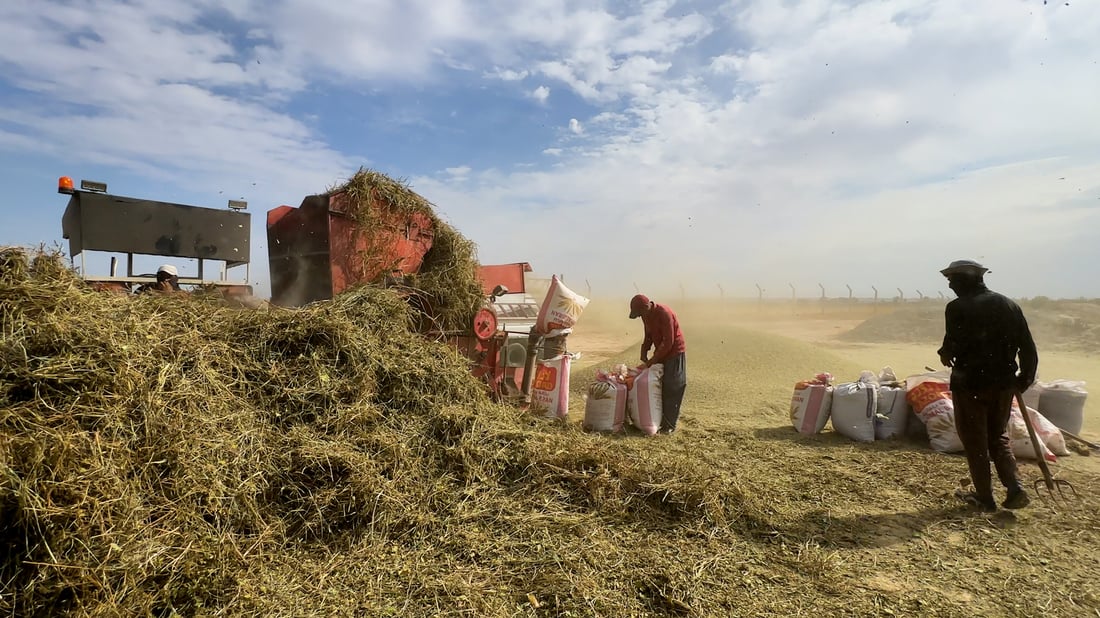
Mung beans can be planted twice a year, said Jumaa Hussein, a farmer in Marjana village in Al-Saadiya, with the first crop sown in April or May and harvested in July, and the second sown in July or August and harvested in late September or October. Farmers plow and sow about four to five kilograms of seed per dunam, he said, since planting too densely cuts yields. After harvest, by hand or machine, the plants are left in piles to dry before a threshing machine known locally as a garodha separates the beans from the stalks, which are sold to livestock owners. Farmers grow Iraqi and hybrid varieties, and prices generally rise during planting and fall as the harvest reaches market, he said.
Hadi Mahmoud, a farmer who owns a threshing machine, said growers were now processing their harvest, separating the beans for traders and the stalks for feed. Three types are sold locally, he said: the finer Iraqi Khadrawi, which is in demand; a Ukrainian variety; and a coarser type distributed through the public food ration system. The beans are used in soups and other dishes and for oil extraction, and cultivation has picked up again after a decline because of the low costs and short season, he said. Seed sold for about 2,500 dinars (about $1.50) a kilogram early in the season, against about 750 dinars for the harvested beans now, and he expects prices to rise again.
Cultivation is concentrated in Qulai, Al-Tabaj and Al-Saadiya, said Abdul Salam Shawkat, a local herbalist and trader. The beans are used as animal feed and as a protein-rich food, particularly in soups in place of lentils, he said. They became a household staple in the 1990s, when sanctions and shortages pushed Iraqis toward cheaper alternatives. Prices have fallen from about 2,000 dinars (about $1.20) a kilogram at the start of the planting season to 700 to 750 dinars at harvest, Shawkat said, but demand remains strong from traders supplying Baghdad and buyers abroad, particularly in Afghanistan, where mung beans go into rice dishes and soups.