
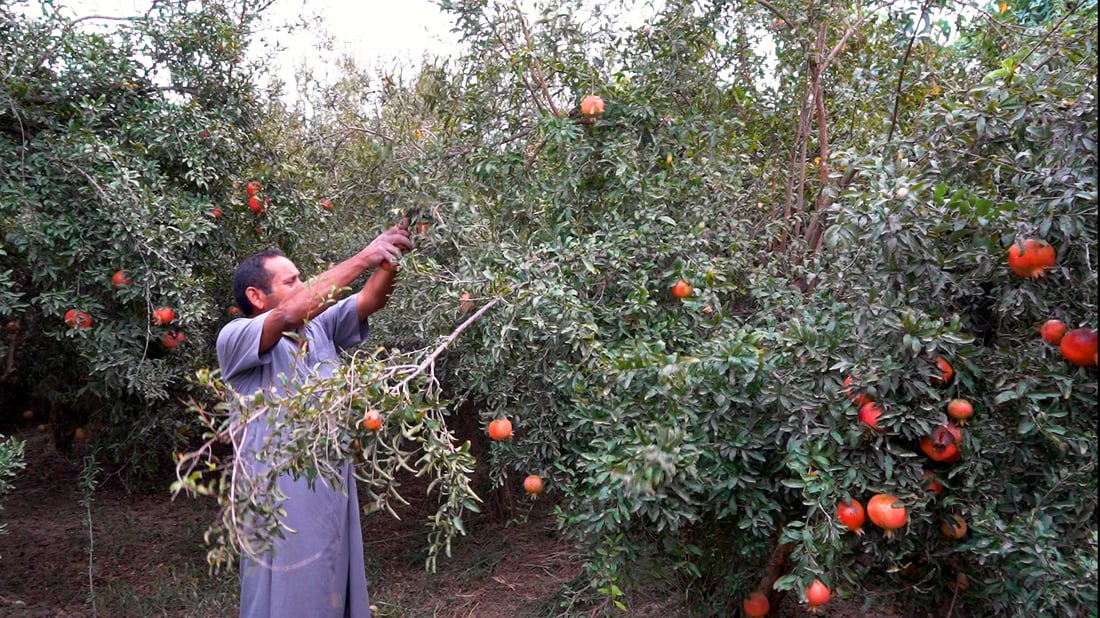
A farmer reaches into a pomegranate tree to harvest ripe fruit in an orchard in Beshikan village, Duluiyah district, Salah Al-Din governorate, where growers report a bumper harvest and improved fruit quality this season. (Photo: 964media)
Pomegranate growers in Salah al-Din village report bumper, disease-free crop
SALAH AL-DIN — Farmers in Beshikan, a village in Duluiyah district, are bringing in a bumper pomegranate harvest this season, with better fruit, plenty of water and none of the diseases that hit their orchards in recent years.
The harvest started a little later than usual and is now sending out about 100 baskets a day to markets in Balad, Dujail and Baghdad. Beshikan pomegranates are known for their size, white or pink skins and sweetness, and farmers grow several varieties, including Salimi, Abu Rukayba, Makasir and sweet and sour types.
The village’s humid conditions and access to river water mean growers do not need wells, farmer Faraj Farhan told 964media. The fruit is sorted by size and quality and packed into baskets of about 28 kilograms, and two baskets sell for 30,000 to 35,000 dinars (about $18 to $21) depending on quality. The late start had been offset by higher yields and better fruit, he said, making this season more productive than previous ones.
Growers are picking the sweet variety now, and the Salimi will be ready in November, said another farmer, Kamil Hamad. Some of the crop goes to juice. Local pomegranates can match imports for size, flavor and quality at a fraction of the price, he said: some imported fruit sells for about 2,000 dinars (about $1.20) each, against about 500 dinars (about 30 cents) for local fruit. His orchards had none of the diseases of previous seasons, he said.
Beshikan’s growers could supply markets from Faw in the south to Mosul in the north if demand for local fruit grew, said Dhiya al-Dulaimi, another farmer, and could compete with pomegranates imported from Syria, Yemen and Egypt thanks to the orchards’ direct access to river water. This year’s crop was free of the diseases reported over the past three years, he said, quoting a saying among the village’s farmers: “A Beshikan pomegranate is guaranteed to be first-class.”