
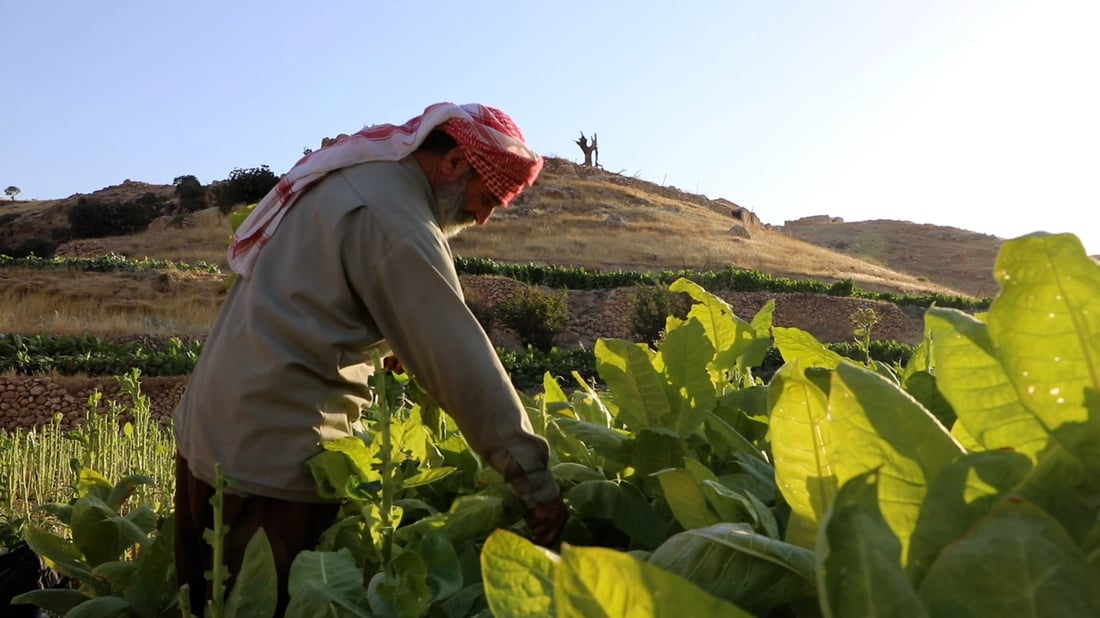
A farmer tends tobacco plants in the Karsi area of Sinjar, where around 200 families depend on tobacco cultivation for their livelihoods. Photo by 964media.
Sinjar’s tobacco growers: a crop that needs ‘the work of a tailor’
SINJAR — About 200 families in the Karsi area of Sinjar live off tobacco, a crop that takes months of careful work before it is dried, cured and sold to buyers from Nineveh, Duhok and the south.
Planting starts in February or March, with varieties including Belted, Balout and Ben Af sown in small seedbeds. Once the seedlings are about a handspan tall they are moved to fields fertilised with animal manure. “It is a delicate craft, like the work of a tailor,” said farmer Ali Babir, describing the care needed until the September harvest. It is less about hard labour than precision and experience, he said, because the plant is sensitive at every stage.
At harvest the leaves are sorted by where they grew on the plant: upper leaves are known locally as rashk and lower ones as zark. They are bundled and hung in the sun to dry, then lightly dampened, stacked and left until they develop the aroma that tells growers they are ready to sell. Larger plots can pay well, Babir said.
Buyers from elsewhere in Nineveh, Duhok and southern governorates call during the season to reserve quantities before they run out, said resident Ali Shamo. Tobacco sits alongside honey and figs as Sinjar’s main seasonal crops, he said, and growers depend largely on their own resources, with little support from the government or aid organisations. He suggested an annual festival to promote the three and draw visitors.
The piece comes as Baghdad and Ankara agree to restore full state authority in Sinjar, and Iraq’s national security adviser has asked Washington for support in rebuilding it.