
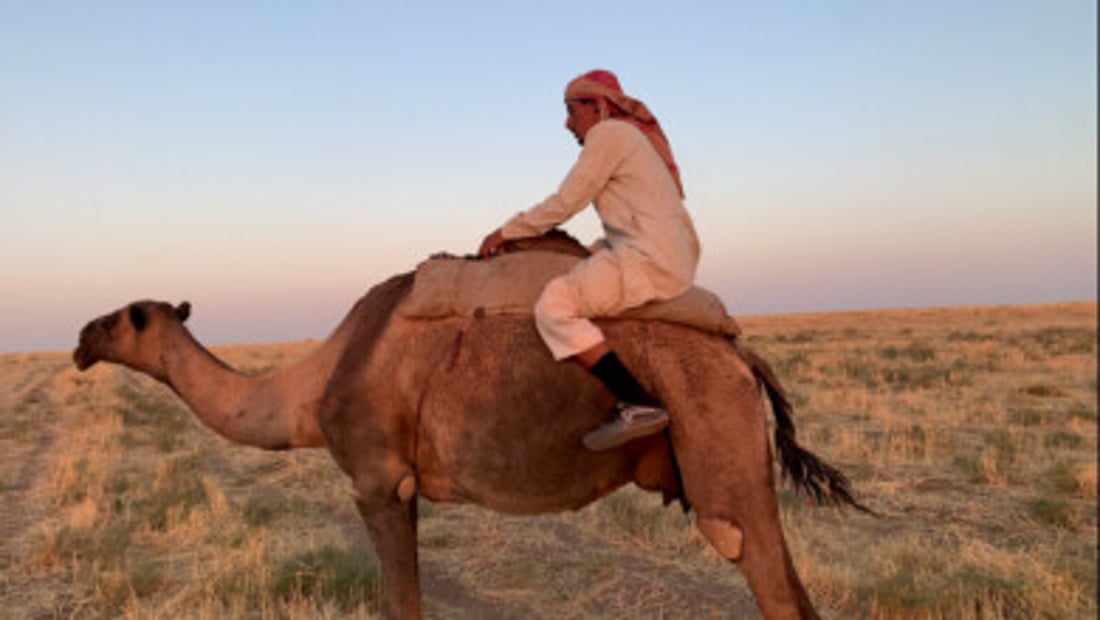
Nineveh camel herders turn to desert shrubs for summer grazing. (Photo: 964media)
'Ships of the desert'
Camel herders in Rabia move to the desert edge as summer forage runs out
NINEVEH — Camel herders in the Rabia desert are moving their animals toward grazing on the desert’s edges in search of wild plants, with the shrubs they rely on in winter gone for the season.
Camels feed on the shrubs known locally as zreeqa and aqool through the summer, breeder Dhaidan Yassin told 964media, while ramth is what they prefer in winter. Ramth grows in the Jazira area and is the best plant for the animals’ health, he said. Camels can go without water for between 10 days and a month in spring, and about 20 days in summer. Winter is the hardest season for breeders, he said, because of shortages of fodder and rainfall.
Breeder Munif Dhiab said choosing a stud comes down to origin, bloodline and colour, and that herders work to keep their lines intact, avoiding mating with animals brought in from elsewhere, including the Samawah desert. Training a camel to carry a rider takes continuous work, he said, and not every animal is suited to it.
Dhiab said camel racing does not happen in the Rabia desert, which he put down to a lack of support and interest in the sport in Iraq despite the number of breeders in the area.
Before our reporter left the pasture, herder Munif Mohammed recited traditional verses about camels, calling them gifts from God and ships of the desert, and describing men who died defending their herds with spears and swords.