
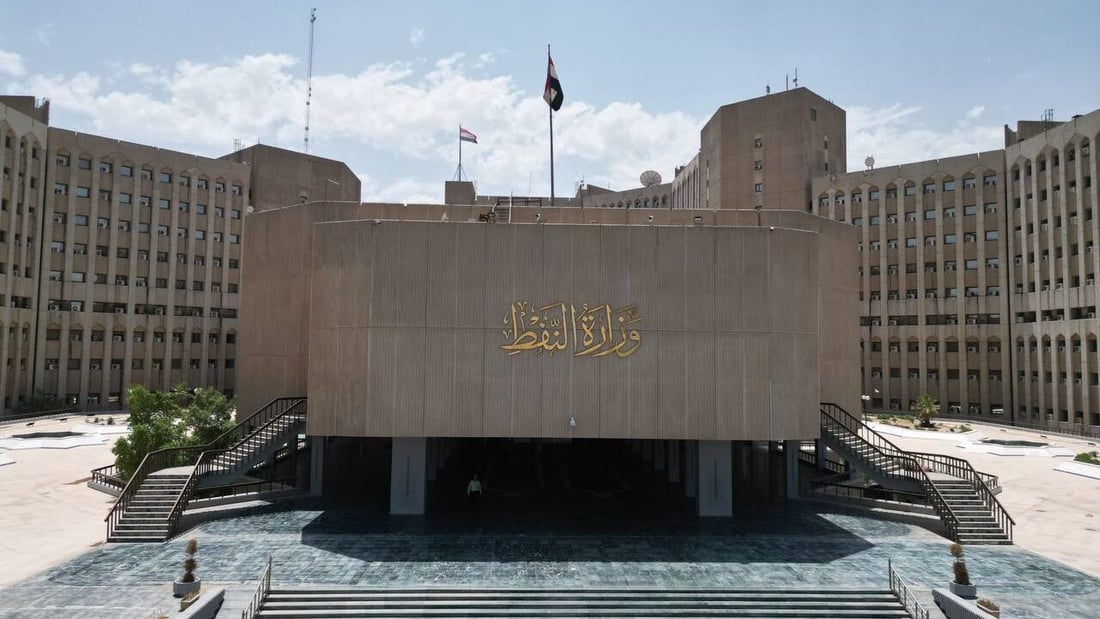
The Iraqi Ministry of Oil headquarters in Baghdad
Iraq’s March oil exports collapse to 18.6 million barrels as Hormuz closure hits revenues
BAGHDAD — Iraq’s oil exports fell sharply in March to 18.6 million barrels, generating just over $1.95 billion in revenues, compared with more than 99 million barrels exported in February, as the closure of the Strait of Hormuz severely disrupted southern terminal operations, the Oil Ministry said Monday.
Of the total March exports, 14.56 million barrels came from central and southern fields, 2.77 million from Kirkuk via Turkey’s Ceyhan port and 1.27 million from the Kurdistan Region through the same route.
The collapse in output came after the escalation of conflict involving the United States, Israel and Iran led to the effective closure of the Strait of Hormuz, through which Iraq normally ships the vast majority of its crude. As tanker movement slowed and storage filled, Iraq was forced to reduce production sharply while scrambling for alternative export routes.
Baghdad and the KRG reached an agreement in March to resume flows through the northern Kirkuk-Ceyhan pipeline following a public dispute, adding hundreds of thousands of barrels per day to offset some of the southern losses. Iraq also began trucking oil through Syria toward the Baniyas port and reopened the al-Waleed border crossing with Syria for the first time in 11 years as part of the emergency export drive.
Oil accounts for around 90 percent of Iraq’s government revenue, making the March figures — a fraction of normal monthly income — a stark illustration of the fiscal damage inflicted by five weeks of regional conflict.