
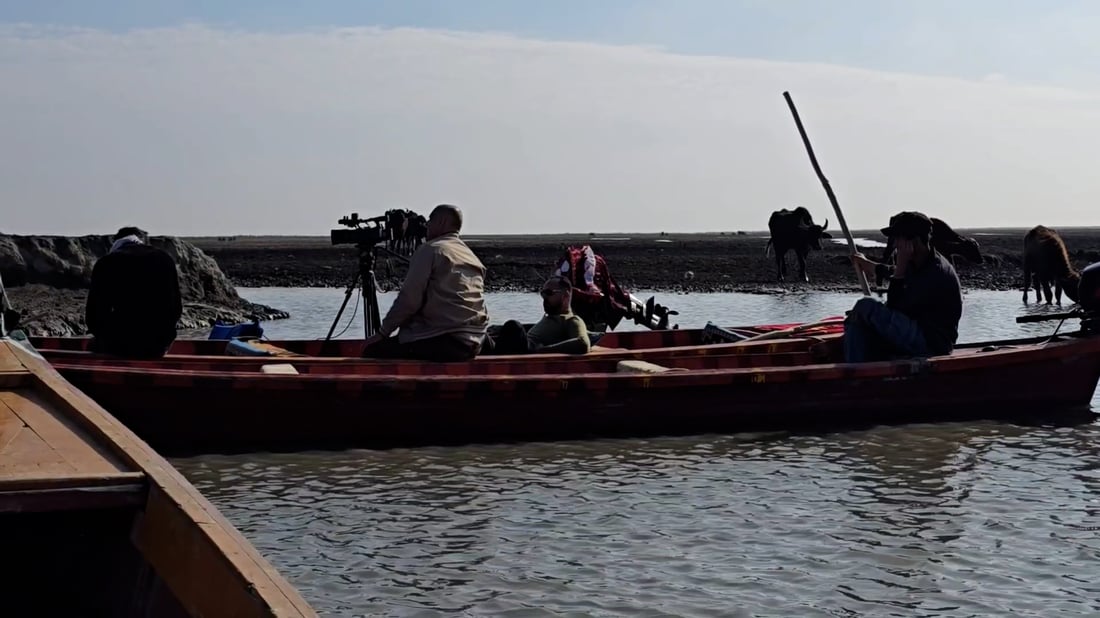
FILES: Journalists travel by wooden boat through the Al-Chibayish marshes in Dhi Qar during a UNDP-organized media tour documenting shrinking waterways and the impact of water shortages on local communities. (Photo by 964media)
Dhi Qar authorities release confiscated birds into marshes, seize hunting gear
DHI QAR — Environmental authorities in Dhi Qar said they have seized illegal hunting equipment and released confiscated birds into the Al-Chibayish marshes, part of efforts to curb wildlife trafficking and protect the region’s biodiversity.
Dhi Qar’s Environment Department said a technical team carried out a field visit Saturday to return birds that had been seized from Baghdad’s Al-Ghazl market.
“The birds were released into their natural environment in the marshes, accompanied by the environmental police and official,” Muwafaq Hamed, director of Dhi Qar’s Environment Department, told the Iraqi News Agency.
Hamed said the actions were carried out under Article 18 of Law No. 27 of 2009 on the Protection and Improvement of the Environment, which bans the hunting, sale and trade of endangered animals and birds.
“All equipment used in illegal hunting has been confiscated, and official letters were sent to the Dhi Qar Police Directorate to follow up,” Hamed said.
He described illegal hunting as an environmental threat. “This dangerous phenomenon threatens the ecological diversity in the marshes,” he said.
The announcement follows warnings from the Green Iraq Observatory, which said earlier this week that more than 1,000 migratory birds have been killed this month due to illegal hunting in Iraq’s southern marshlands. The group called on authorities to arrest hunters rather than focusing enforcement only on street vendors.
Regarding recent reports about flamingos, Hamed said authorities had not documented the birds during recent monitoring visits. “During our visits to the Al-Chibayish marshes in recent days, we did not observe any flamingos or signs of them being hunted,” he said.
Iraq is a signatory to the Convention on the Conservation of Migratory Species and has domestic wildlife protection laws that prohibit harmful hunting methods such as nets and poisons. Penalties can include fines and prison terms, though enforcement has been uneven and conservation advocates have called for stronger monitoring.