
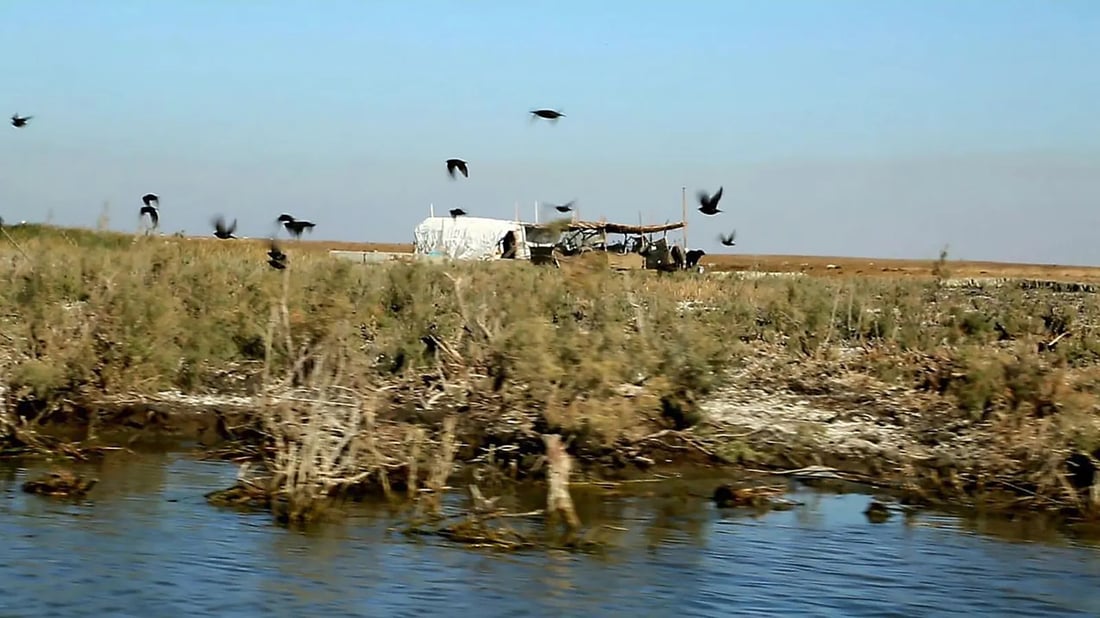
Observatory says hunting killed more than 1,000 migratory birds in southern marshes
BAGHDAD — Over 1,000 migratory birds have been killed this month due to illegal hunting in Iraq’s southern marshlands, the Green Iraq Observatory said Saturday, calling on authorities to arrest the hunters rather than only targeting street vendors.
“These birds migrate in winter from distant places to the marshes, which are among the warmest areas in the world and suitable for nesting and breeding,” the observatory said in a statement. “But they are instead met by hunters’ nets, and all warnings issued by the government and Interior Ministry have failed to stop them.”
The Iraq Green Observatory is a platform focused on environmental issues, climate change data, and related public awareness in Iraq.
The group criticized the Environmental Police for focusing enforcement efforts only on sellers at Baghdad’s bird market. “The Ministry and Environmental Police are arresting vendors in the market without addressing the root of the problem—arresting the hunters in the marshes who carry out these acts relentlessly and by various means,” the observatory said.
It questioned what happens to the confiscated birds, asking, “If the birds are released, what guarantees are there that they won’t be captured and sold again once they return to the marshes?” The statement added that the sale of birds is not limited to local markets but occurs across Iraq.
The group warned that ongoing hunting practices have already deterred several bird species from returning to Iraq. “Some of these birds are used in documentary filmmaking to track migration routes, behavior, and reproduction,” it said, urging stronger enforcement to curb clandestine sales and protect migratory bird populations.
Iraq is a signatory to the Convention on the Conservation of Migratory Species and has domestic wildlife protection laws that prohibit harmful hunting methods like nets and poisons. Penalties can include fines and prison terms for violators. However, enforcement has been limited, and conservation advocates argue stronger implementation and monitoring are needed.