
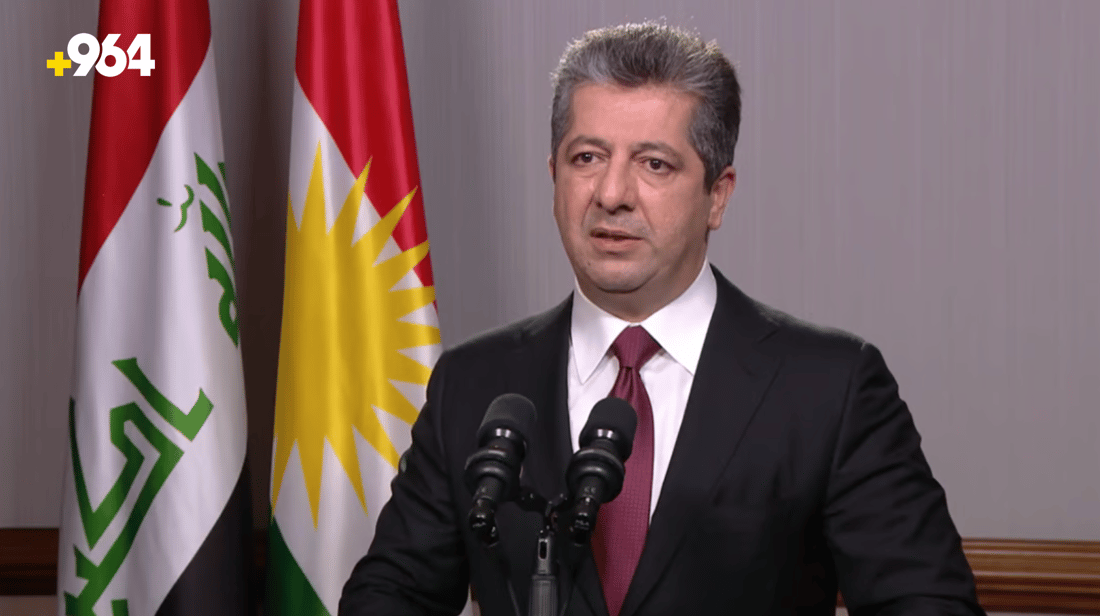
KRG Prime Minister Masrour Barzani
'Extraordinary circumstances'
KRG agrees to resume oil exports through Kurdistan Region pipeline
ERBIL — Kurdistan Region Prime Minister Masrour Barzani announced Tuesday evening that the KRG will allow oil to flow through the Kurdistan Region pipeline “as soon as possible,” ending a standoff with Baghdad that had blocked one of Iraq’s few remaining export routes as southern terminals remain disrupted by the regional war.
“Given the extraordinary circumstances facing the country, and the responsibility we all share to get through this difficult chapter, we have decided to allow oil to flow through the Kurdistan Region’s pipeline as soon as possible,” Barzani wrote on X.
He said discussions with Baghdad would continue “with urgency” to lift restrictions on imports and trade into the Kurdistan Region and to secure guarantees for oil and gas companies to safely resume production — two issues the KRG had said must be addressed alongside a resumption in exports. Barzani also thanked “our partners in the United States for their role and support in this process.”
Barzani received a phone call from Tom Barrack — U.S. Special Envoy to Syria and Ambassador to Turkey — who conveyed President Donald Trump’s personal greetings and praised Barzani’s willingness to cooperate with the federal government to resume oil exports through Turkey. Barzani told Barrack he had directed the KRG team to provide all necessary facilitations to resume exports in the public interest. He also called on Washington to continue its observer and support role in the ongoing Erbil-Baghdad negotiations particularly on the customs dispute and the trade embargo.
The announcement came hours after Barzani said at a press conference that “the Kurdistan Region is not an obstacle to oil exports,” attributing the production shortfall to militia attacks on energy infrastructure and the dollar embargo Baghdad imposed on Kurdistan Region traders since January.
The pipeline connecting Kirkuk to Turkey’s port of Ceyhan has become critical to Iraq’s finances after regional conflict disrupted tanker traffic through the Strait of Hormuz, cutting off southern terminals near Basra that normally handle around 90 percent of government revenue. Oil prices have risen above $100 per barrel since U.S. and Israeli strikes on Iran began Feb. 28, with most commercial traffic through the strait effectively halted.
This article has been updated to add details from the call with Tom Barrack