
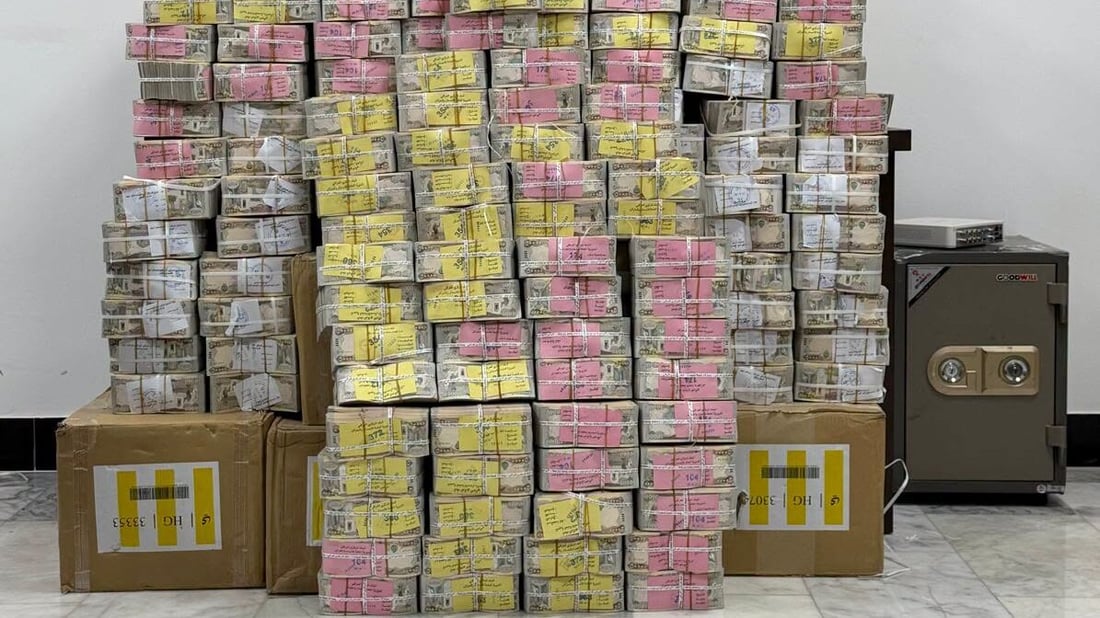
FILES: Bundles of Iraqi dinars seized by authorities in the corruption case involving former Deputy Oil Minister Adnan al-Jumaili are displayed after a raid in Tikrit.
Lebanon denies Iraq sought banking data in corruption cases
BEIRUT — Lebanon’s Finance Ministry denied that Iraq had asked for financial or banking information relating to corruption cases, saying no such requests or correspondence existed.
Reports that requests had been exchanged with Iraq over corruption cases “are completely and entirely untrue,” the ministry said, without identifying the outlets that carried them or which cases they concerned. Any such request “can only be made through official correspondence between the governments, ministries and competent authorities of the two brotherly countries, in accordance with established procedures and approved official channels.”
Lebanon’s parliament has lifted banking secrecy, the ministry said, but access remains subject to legal procedure and runs through legally authorised bodies rather than “randomly or directly.” Banking records “are not files that can be carried around and distributed upon request.” It called the reports fabrications with no connection to any official procedure.
Iraq’s anti-corruption campaign has widened since the arrest of former Deputy Oil Minister Adnan al-Jumaili in May, producing about 82 billion dinars and $152 million in cash and 484 kilograms of gold by mid-August, with investigators seizing a further 7 billion dinars, $5.5 million, 35 properties and six vehicles from his detained office director on Monday. Iraqi banks have separately been told to build databases covering politicians and relatives to the third degree.
Former Iraqi lawmaker Sajad Salem alleged in June that one unnamed Iraqi armed faction holds assets worth $6 billion to $10 billion outside Iraq, across Spain, Italy, Lebanon, Turkey, Iran, Gulf states and Russia, warning they “could face seizure.”