
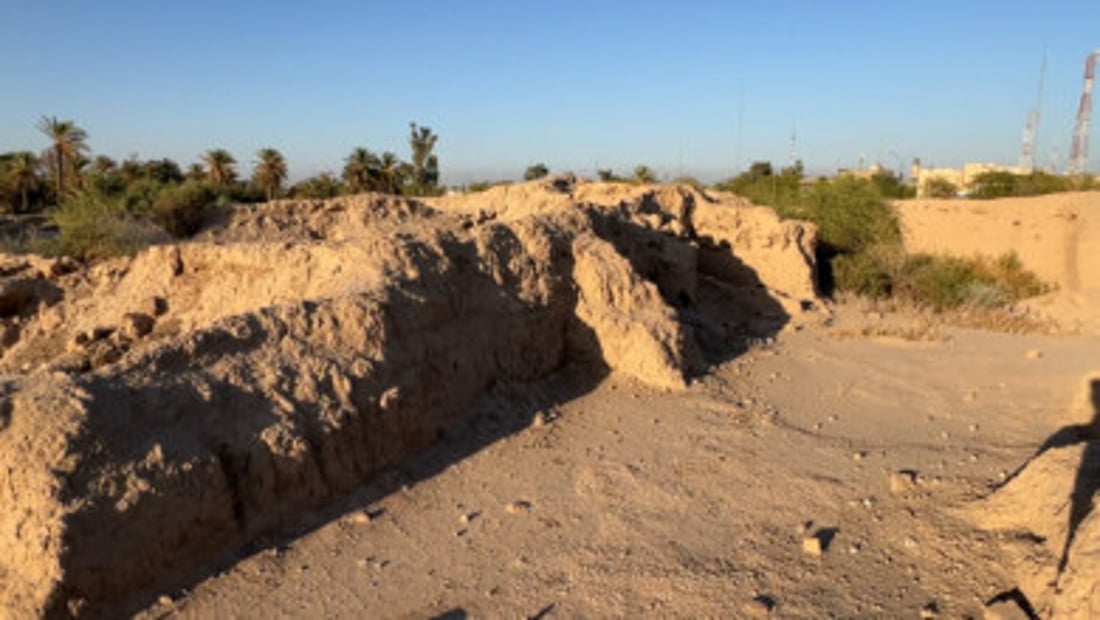
(Photo: 964media)
Fifty-seven ancient mounds recorded in Karbala district, with more expected
KARBALA — A survey has recorded 57 archaeological mounds in Husseiniya district in Karbala, all officially registered with the antiquities authority, and researchers say the figure could reach 100 if desert and remote areas are surveyed from the air.
The sites run along the ancient course of the Euphrates, reflecting how settlements developed along the river, archaeology researcher Hussein Yasser told 964media. “If the area is surveyed completely and modern equipment and aircraft are used, the number of sites could potentially double, exceeding 70 or reaching 100 archaeological sites because they are spread across desert and remote areas,” he said.
Excavations have found successive layers, with early Islamic and Ottoman material above Parthian and Sasanian levels and Babylonian below. The most prominent dig is at Tell al-Atishi in the district centre, where archaeologists uncovered what Yasser described as a Sasanian city called Barusma, with rooms and walls from Islamic, Sasanian and Parthian layers.
Researcher and historian Saleh Dhiab al-Manea said the district holds evidence of more than 70 archaeological and heritage sites, among them Tell Atish, Tell al-Jaziya, Tell al-Uqair and the Nineveh Remains. “Al-Husseiniya district represents the real history of Karbala because it contains evidence of more than 70 archaeological and heritage sites dating to ancient times,” he said. It has gone under-documented, he said, because “attention has always focused on central Karbala while neglecting the outskirts.” Manea set out to record it in his book on the district’s history, drawing on work by orientalists and Iraqi historians, and dates the mounds to the Chaldean, Babylonian, Parthian and Sasanian periods.