
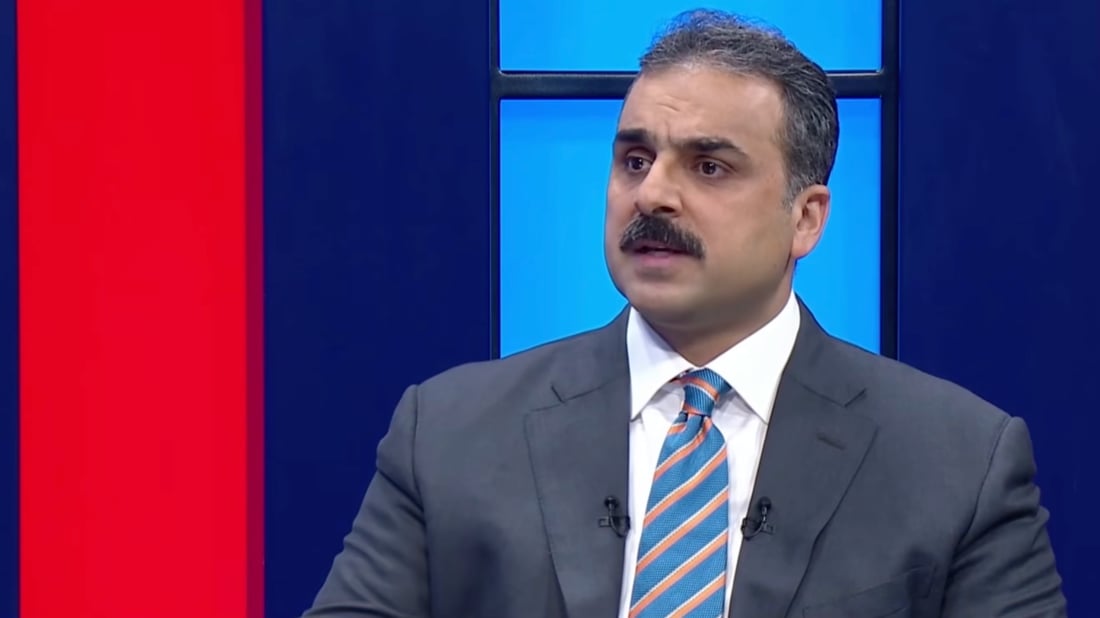
Border Ports Authority chief Omar al-Waeli speaks during an interview with Dijla TV on Aug. 24, 2026. (Dijla TV)
Border revenue in seven months already matches all of last year
BAGHDAD — Iraq collected more than 2.5 trillion dinars, about $1.89 billion at the official rate, in non-oil revenue at its border crossings in the first seven months of 2026 — roughly what it took in customs across the whole of 2025, the head of the Border Ports Authority said.
July alone brought in nearly 560 billion dinars, about $424 million, Omar al-Waeli told Dijlah TV. He credited an advance-payment system for customs and tax deposits with stopping currency smuggling and invoice inflation, and said political and partisan interference at crossings had ended. Customs took about 2.5 trillion dinars in all of 2025, up from about 2 trillion in 2024.
The growth came despite the closure of the Strait of Hormuz and the suspension of shipping to Basra’s ports, he said, with overland routes through Syria, Turkey and Jordan carrying food, construction materials and electrical goods instead.
Rabia in Nineveh is now Iraq’s third highest-earning crossing despite reopening only in April after about 13 years, Waeli said. Between 1,300 and 1,500 tankers carrying fuel oil cross toward Syria and the Baniyas refinery each day with about 1,500 empties returning, giving total traffic of 2,600 to 3,000 vehicles daily and creating thousands of transport jobs in Nineveh. Al-Waleed in Anbar reopened on April 2 after more than 11 years. The Council of Ministers has allocated 15 billion dinars, about $11.4 million, to upgrade Rabia, al-Waleed and Safwan.
Federal customs suspended manual declarations from Jan. 1, 2025 in favour of the ASYCUDA electronic system, and Baghdad and Erbil agreed in June to extend it to Kurdistan Region customs centres and move toward unified tariffs. More than 20 unofficial crossings have been closed, Waeli said, and more than 3,500 transit trips from Europe and Turkey have crossed Iraq bound for the Gulf.