
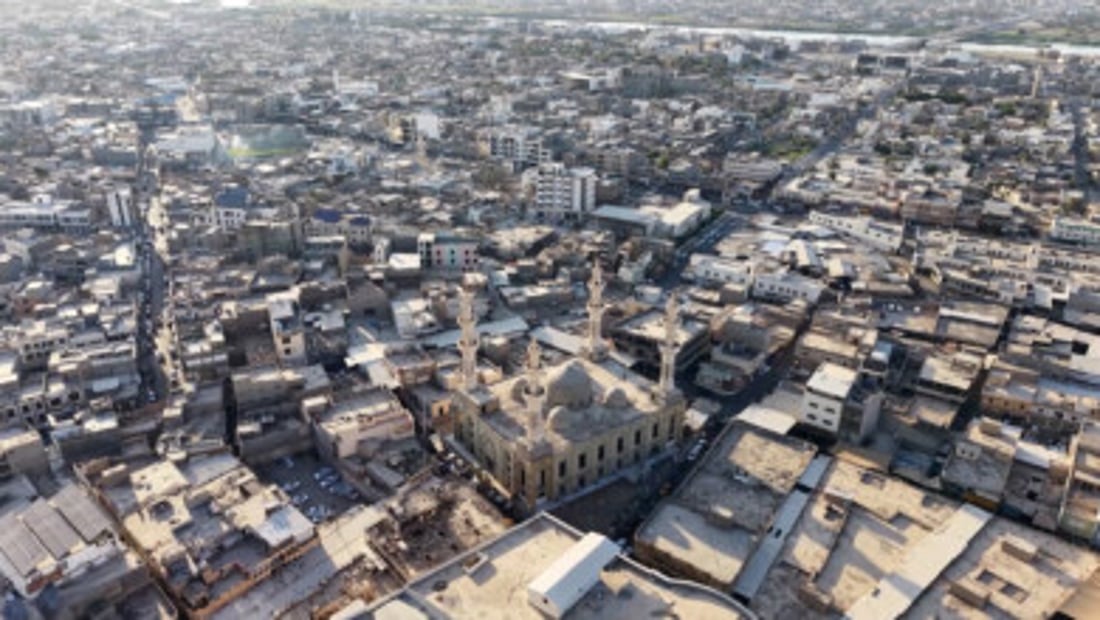
Ramadi’s oldest market rebuilt itself after rain brought part of it down
ANBAR — Traders at Ramadi’s al-Musqaf Market paid for their own repairs after heavy rain brought down part of the market about 18 months ago, with no restoration work carried out on a site they date to the 1870s.
Shop owner Mohammed Ali Marai said no exact founding date exists, but accounts tie the market to the building of the Grand Mosque of Ramadi, now the Saadi Mosque, where the first prayers were held in 1872. The market and nearby commercial areas including the old Ali Suleiman Market grew up in the same period, he said. Shops were held by prominent Ramadi families — the Marai, Mohammed Amin and Arran families among them — passing down the generations, with only a few changing hands in the 1970s and 1980s.
Abdullah Matar said the market began with fewer than 10 shops and just two spice sellers. His father opened the family spice shop in the 1950s and ran it until 1975, when Matar took over. It has since grown to an estimated 300 to 400 shops along with the Doctors’ Street commercial area, he said, though some of the closeness among merchants has gone.
Jabbar Alwan, a Ramadi resident, said the market is more than a century old and recalled accounts handed down of the 1930s and 1940s, when shops shut at sunset, worked by lantern light and ran on trust between merchant and customer. He named businesses long gone — Abu Bahjat, Daees, Majid al-Haddad, the Saffar, Marai and Mashhadani families, the grocer Ibrahim Rashid, and the tailors and fabric sellers who carried Ramadi’s trade. The city had fewer than 100 shops then, he said, and people came in from the countryside on wooden buses for their monthly supplies.
Jamal Faraj al-Dosari said al-Musqaf was Ramadi’s first market, built in traditional materials before being rebuilt by modern methods. Many of its early traders are dead, he said, but their names are still part of the city’s memory.