
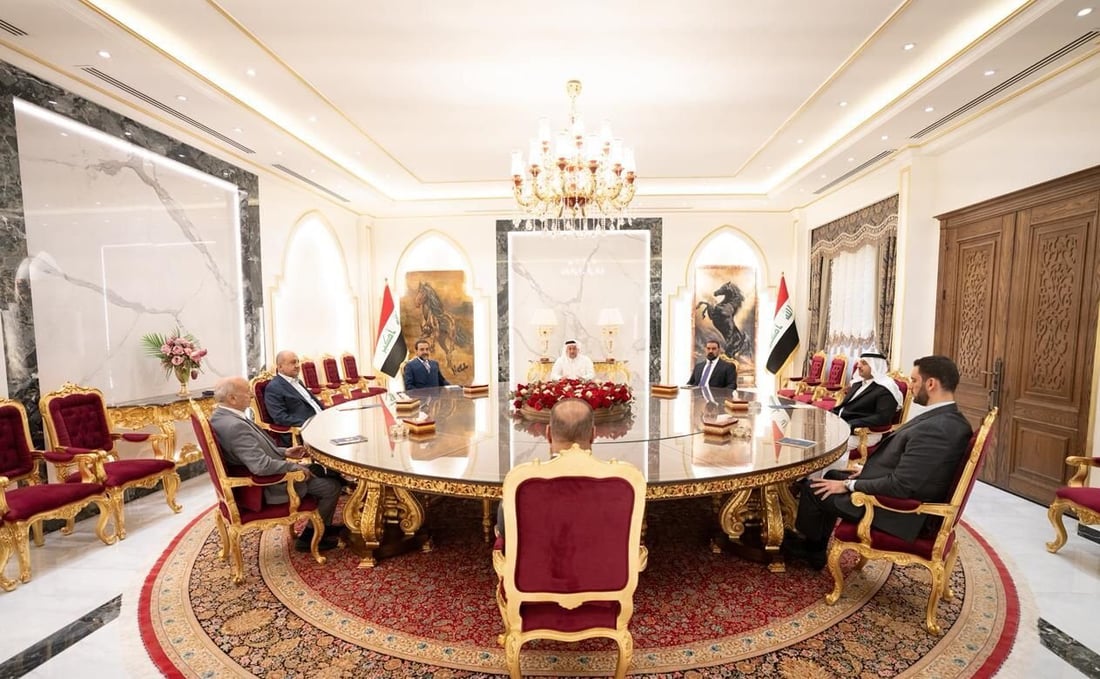
Members of the National Political Council, known as the Sunni Framework, meet in Baghdad on June 29, 2026.
Sunni bloc backs corruption campaign despite arrest of one of its own leaders
BAGHDAD — Iraq’s main Sunni political alliance endorsed the government’s anti-corruption campaign on Monday even though one of its founding figures, Azm Alliance leader Muthanna al-Samarrai, is among those arrested in the sweep.
The National Political Council, known as the Sunni Framework, set out its position after a meeting at the Baghdad residence of Sovereignty Alliance leader Khamis al-Khanjar, attended by Parliament Speaker Haibat al-Halbousi, Taqaddum leader Mohammed al-Halbousi and other senior figures. It said it valued the steps taken by Prime Minister Ali al-Zaidi, with the legislature and judiciary, to pursue corruption suspects and recover state funds, calling the campaign a step toward enforcing the law and accountability.
But the council coupled its endorsement with a warning, saying fighting corruption “cannot tolerate selectivity or politicization” and that success required applying the law “fairly and impartially to all those involved, without exception or discrimination.” The line carried particular weight given that the campaign has detained the council’s own co-founder, Samarrai, whose Azm Alliance a day earlier had called for respect for judicial procedures and warned against prejudging the investigations.
The council was formed after the November 2025 election by the major Sunni parties, including Taqaddum, Azm, the Sovereignty Alliance, the National Hasm Alliance and the Jamaheer Party.
The meeting followed the government’s announcement of dozens of arrests of current and former lawmakers, politicians and officials in what it called the first phase of a wider campaign. Authorities have publicly identified 15 detainees, spanning Sunni and rival Shia blocs, among them Samarrai. State media said the arrests were based on confessions by detained Deputy Oil Minister Adnan al-Jumaili, held this month over alleged financial irregularities in the oil sector.